
Table of Contents
Bapu is a name rich with paternal warmth and cultural significance. Originating from Sanskrit, this affectionate term for ‘father’ has transcended its literal meaning to become a symbol of respect and guidance. Most famously associated with Mahatma Gandhi, who was called ‘Bapu’ by millions, this name carries deep emotional and historical resonance in Indian culture.
Meaning of Bapu
Bapu directly translates to ‘father’ in several Indian languages, with its roots in the Sanskrit word ‘bāppā’. Unlike many names with abstract meanings, Bapu maintains its literal paternal significance while acquiring layers of cultural meaning. The term embodies not just biological fatherhood but also spiritual and national fatherhood, as demonstrated by Gandhi’s title ‘Bapu of the Nation’. Linguistically, it belongs to the Indo-Aryan language family and shares cognates with paternal terms across South Asian languages, maintaining consistent meaning through centuries of usage.
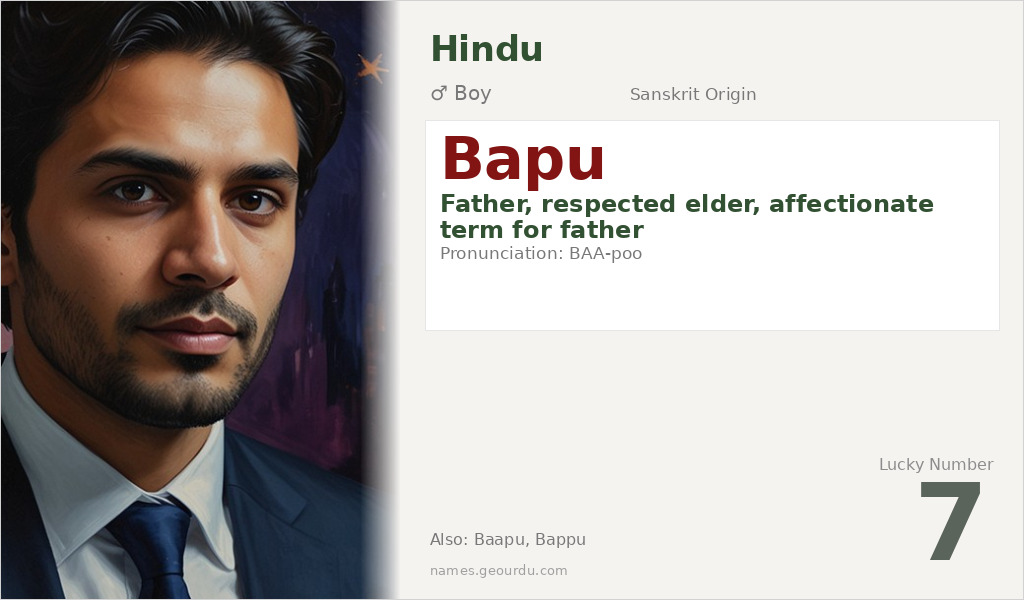
| 📛 Name | Bapu |
| 💎 Meaning | Father, respected elder, affectionate term for father |
| 👤 Gender | Boy |
| 🕌 Religion | Hindu |
| 🌍 Origin | Sanskrit |
| 🗣 Pronunciation | BAA-poo |
| ✍️ Urdu | باپو |
| ✍️ Arabic | بابو |
| 🔢 Numerology | 7 |
| ✨ Spellings | Baapu, Bappu |
Origin & Cultural Significance
Bapu originates from classical Sanskrit and has been used for centuries in various Indian languages, particularly in western and central regions. Its transition from a common noun to a proper name gained momentum during India’s independence movement, when Mahatma Gandhi was universally called ‘Bapu’. This cultural adoption transformed Bapu from merely meaning ‘father’ to representing idealized paternal qualities—wisdom, protection, and moral leadership. In Hindu naming traditions, while not among ancient Sanskrit names from scriptures, Bapu has earned place through cultural significance rather than religious texts.
Personality Traits
Those named Bapu often naturally assume leadership roles and are seen as pillars of their communities. They typically exhibit protective instincts, wisdom beyond their years, and a nurturing disposition that makes others seek their guidance. The name’s association with fatherly qualities often shapes both self-perception and social expectations, creating individuals who value responsibility, tradition, and caring for others.
Similar Names
If you like Bapu, consider: Pita, Pitaji, Abba, Baba, Papa
Famous People Named Bapu
- Mahatma Gandhi — Indian independence leader affectionately called 'Bapu' by the nation
- Bapu (artist) — Indian film director, painter, and cartoonist from Andhra Pradesh
Frequently Asked Questions About Bapu
What does Bapu mean?
Bapu means 'father' or 'respected elder' in Sanskrit and several Indian languages including Gujarati, Marathi, and Hindi.
Is Bapu a boy or girl name?
Bapu is exclusively a boy's name, as it literally means 'father' and carries masculine paternal connotations in all cultural contexts where it's used.
What is the origin of Bapu?
Bapu originates from Sanskrit (bāppā) and has been used for centuries in Indian languages, most famously as the affectionate title for Mahatma Gandhi, the father of the Indian nation.





