
Table of Contents
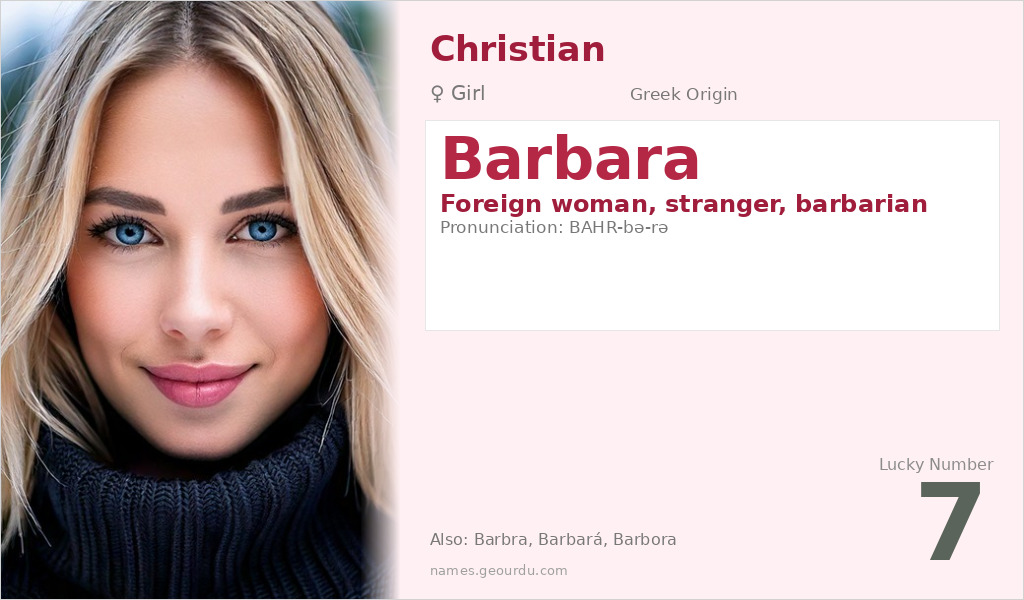
Barbara is a timeless name with deep historical roots in Christian tradition. Derived from ancient Greek, this name carries the meaning of ‘foreign woman’ or ‘stranger’ and has been cherished for centuries. Most famously associated with Saint Barbara, an early Christian martyr, the name has maintained popularity across generations and cultures. Its classic sound and rich heritage make it a meaningful choice for parents seeking a name with both elegance and substance.
Meaning of Barbara
The name Barbara comes directly from the Greek word ‘barbaros’ (βάρβαρος), which originally referred to anyone who did not speak Greek. To ancient Greek ears, foreign languages sounded like ‘bar-bar’—hence the term. The feminine form ‘Barbara’ specifically means ‘foreign woman’ or ‘stranger.’ This etymology reflects how ancient Greeks viewed non-Greek speakers. The name was later adopted into Latin and other European languages, retaining its core meaning. In Christian contexts, it gained additional layers of meaning through association with Saint Barbara’s story of faith and martyrdom.
| 📛 Name | Barbara |
| 💎 Meaning | Foreign woman, stranger, barbarian |
| 👤 Gender | Girl |
| 🕌 Religion | Christian |
| 🌍 Origin | Greek |
| 🗣 Pronunciation | BAHR-bə-rə |
| ✍️ Urdu | باربرا |
| ✍️ Arabic | باربرا |
| 🔢 Numerology | 7 |
| ✨ Spellings | Barbra, Barbará, Barbora, Varvara |
Origin & Cultural Significance
Barbara has its origins in ancient Greece, where the term ‘barbaros’ described foreign peoples. The name gained prominence in the Roman Empire through Latin adoption. Its most significant cultural impact came through early Christianity, particularly veneration of Saint Barbara, who was martyred in the 3rd century under Roman persecution. She became one of the Fourteen Holy Helpers in medieval Christianity. The name spread throughout Europe during the Middle Ages and remains popular in many Christian-majority countries. Various forms exist across languages, including Barbora (Czech/Slovak), Varvara (Russian/Greek), and Barbara (English/Spanish/Italian).
Personality Traits
Those named Barbara often embody strength, reliability, and practical wisdom. They tend to be grounded individuals who approach challenges with determination and common sense. Many Barbaras display nurturing characteristics while maintaining independence and resilience. The name’s historical association with Saint Barbara—who represents courage and faith—adds a layer of spiritual fortitude to its personality connotations.
Similar Names
If you like Barbara, consider: Barbara-Ann, Barbie, Babs, Varvara, Barb
Famous People Named Barbara
- Saint Barbara — 3rd-century Christian martyr and saint, patron of artillerymen, miners, and architects
- Barbara Bush — Former First Lady of the United States (1989-1993)
- Barbara Walters — American broadcast journalist and television personality
- Barbara Streisand — American singer, actress, and filmmaker
Frequently Asked Questions About Barbara
What does Barbara mean?
Barbara means 'foreign woman' or 'stranger,' originating from the Greek word 'barbaros' which described non-Greek speakers.
Is Barbara a boy or girl name?
Barbara is exclusively a feminine name. The masculine equivalent would be 'Barbarus' in Latin, but this is extremely rare as a given name.
What is the origin of Barbara?
Barbara originates from ancient Greek, specifically from the word 'barbaros.' It was adopted into Latin and spread through Christian tradition, particularly veneration of Saint Barbara.





