
Table of Contents
Basaveshwara is a profound Hindu name with deep roots in Indian philosophy and social history. This name specifically honors Basavanna, the 12th-century saint who founded the Lingayat tradition in Karnataka. More than just a name, Basaveshwara represents a legacy of spiritual reform and Shiva devotion. Understanding this name requires exploring both its linguistic components and its historical significance.
Meaning of Basaveshwara
Basaveshwara derives from two Sanskrit elements: ‘Basava’ meaning ‘bull’ (specifically referring to Nandi, Shiva’s sacred vehicle) and ‘Ishwara’ meaning ‘lord’ or ‘god’. The compound thus translates to ‘Lord Basava’ or ‘Lord of the Bull’. Historically, this name directly references Basavanna (1105-1167 CE), the philosopher-saint who established the Virashaiva/Lingayat movement in present-day Karnataka. In Kannada tradition, the name preserves the memory of this reformer who challenged caste hierarchies and emphasized personal devotion to Shiva. The ‘bull’ element connects to both Shiva’s iconography and the agricultural symbolism important in South Indian culture.
| 📛 Name | Basaveshwara |
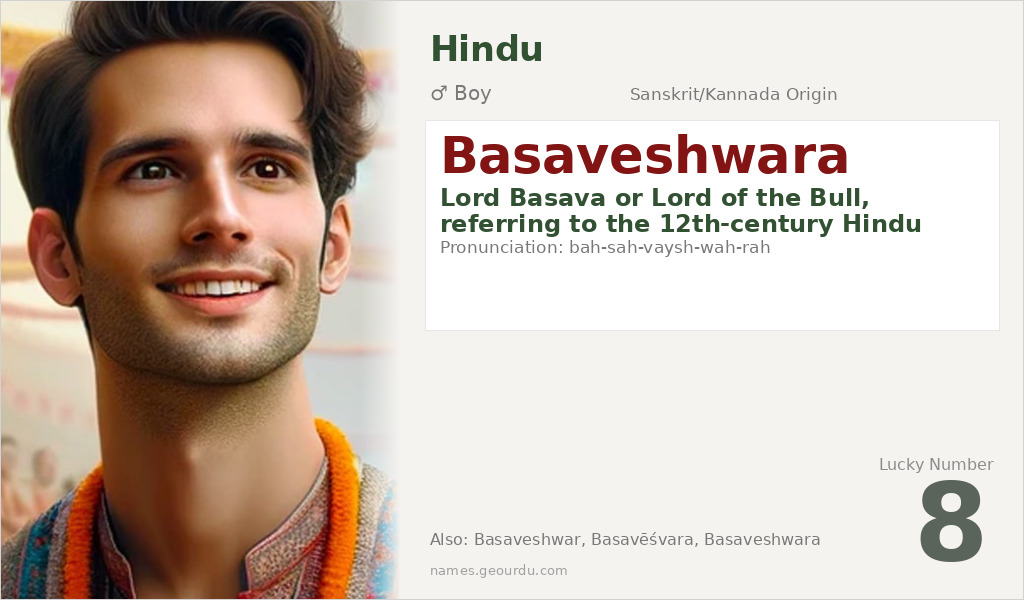
| 💎 Meaning | Lord Basava or Lord of the Bull, referring to the 12th-century Hindu philosopher-saint Basava who founded the Lingayat tradition |
| 👤 Gender | Boy |
| 🕌 Religion | Hindu |
| 🌍 Origin | Sanskrit/Kannada |
| 🗣 Pronunciation | bah-sah-vaysh-wah-rah |
| ✍️ Urdu | بسویشورا |
| ✍️ Arabic | باسافيشوارا |
| 🔢 Numerology | 8 |
| ✨ Spellings | Basaveshwar, Basavēśvara, Basaveshwara |
Origin & Cultural Significance
Basaveshwara originates from the Kannada-speaking regions of South India, specifically Karnataka, where the historical figure Basavanna lived and taught. The name emerged as an honorific for this 12th-century saint who founded the Lingayat tradition, a Shiva-focused movement that rejected ritualism and caste discrimination. Culturally, the name is most prevalent among Lingayat communities and in regions influenced by Virashaiva philosophy. Unlike many Hindu names from Sanskrit epics, Basaveshwara commemorates a specific historical reformer from the medieval Bhakti period. The name’s usage reflects the enduring influence of Basavanna’s teachings on social equality and devotional worship.
Personality Traits
Those named Basaveshwara often carry associations with the saint’s qualities: intellectual depth, spiritual seeking, and social consciousness. They may be perceived as natural leaders with strong ethical convictions, reflecting Basavanna’s role as both philosopher and social reformer. The name suggests someone who values equality, challenges conventions, and maintains deep spiritual commitments. These personality traits connect to the historical figure’s legacy of combining devotional practice with progressive social values.
Similar Names
If you like Basaveshwara, consider: Basava, Basavanna, Eshwara, Shiva, Lingaraj, Virabhadra, Virupaksha, Chennakeshava, Someshwara, Mallikarjuna
Famous People Named Basaveshwara
- Basavanna (1105-1167 CE) — 12th-century Indian philosopher, poet, and social reformer who founded the Lingayat tradition in Karnataka
- Various temples and institutions across Karnataka are named Basaveshwara in honor of the saint
Frequently Asked Questions About Basaveshwara
What does Basaveshwara mean?
Basaveshwara means 'Lord Basava' or 'Lord of the Bull' in Sanskrit/Kannada, specifically referring to the 12th-century saint Basavanna who founded the Lingayat tradition.
Is Basaveshwara a boy or girl name?
Basaveshwara is exclusively a boy's name in Hindu tradition, as it honors the male saint Basavanna and uses the masculine suffix '-eshwara'.
What is the origin of Basaveshwara?
Basaveshwara originates from Kannada/Sanskrit in South India, specifically Karnataka, where it emerged as an honorific name for the philosopher-saint Basavanna in the 12th century.





