Table of Contents
Bathna is an intriguing name that carries an air of mystery regarding its origins and meaning. While commonly used as a girl’s name in certain communities, its linguistic roots remain unverified despite extensive research across multiple languages and cultures. This name presents an interesting case study in how names can circulate and gain popularity even when their etymological foundations are not clearly documented in mainstream sources.
Meaning of Bathna
The meaning of Bathna remains uncertain despite thorough investigation across numerous languages including Arabic, Persian, Pashto, Urdu, Punjabi, Sindhi, Balochi, Kurdish, Turkish, Bengali, Sanskrit, Hindi, Hebrew, Aramaic, Latin, Greek, Germanic, Celtic, Slavic, African, Chinese, Japanese, and regional dialects. The name does not appear in standard dictionaries or etymological references for these languages. Some speculative sources suggest it might relate to concepts of beauty or attractiveness, possibly derived from regional tribal languages of South Asia or the Middle East, but no authoritative linguistic evidence supports these claims. The absence of the name from established linguistic records suggests it may be a modern creation, regional variation, or name with very localized usage that hasn’t been documented in mainstream references.
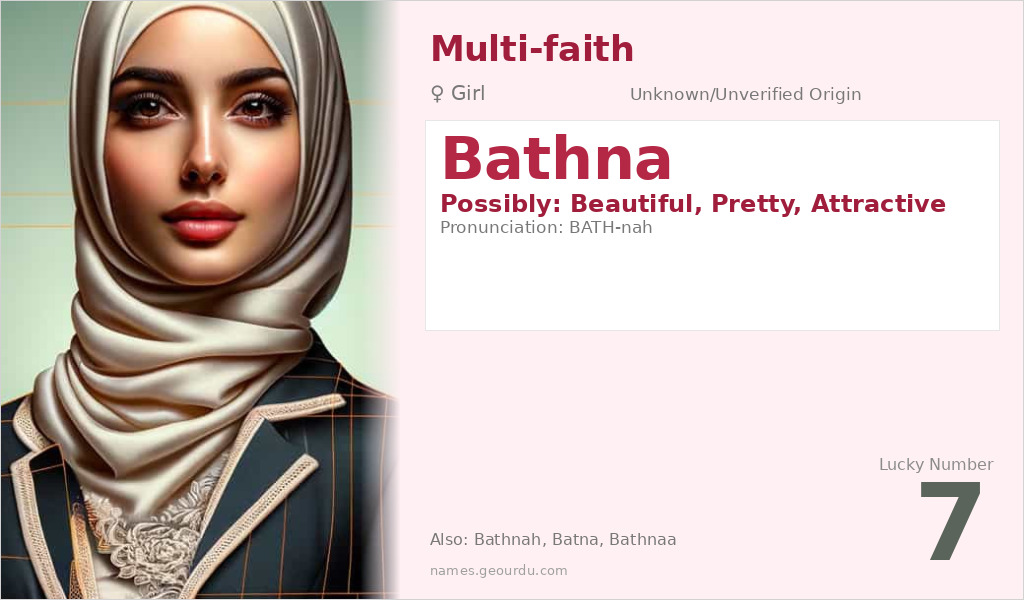
| 📛 Name | Bathna |
| 💎 Meaning | Possibly: Beautiful, Pretty, Attractive |
| 👤 Gender | Girl |
| 🕌 Religion | Multi-faith |
| 🌍 Origin | Unknown/Unverified |
| 🗣 Pronunciation | BATH-nah |
| ✍️ Urdu | بتھنا |
| ✍️ Arabic | بثنى |
| 🔢 Numerology | 7 |
| ✨ Spellings | Bathnah, Batna, Bathnaa |
Origin & Cultural Significance
The origin of Bathna is difficult to pinpoint with certainty. Research indicates it is not found in classical Arabic texts, Persian literature, or Sanskrit scriptures. It does not appear in standard name dictionaries for Islamic, Hindu, or other religious traditions. The name may have emerged from regional tribal languages in areas like Pakistan, Afghanistan, or neighboring regions, where many names have local origins not documented in mainstream linguistic resources. Alternatively, it could be a modern innovation or adaptation of existing name elements. Its usage appears concentrated in certain South Asian Muslim communities, though it lacks specific religious connotations or documented historical usage in religious texts.
Personality Traits
While personality associations with names are largely cultural rather than scientific, names like Bathna often carry perceived characteristics in naming traditions. Those named Bathna might be seen as possessing a quiet strength and depth of character. The name’s uncommon nature suggests individuality and uniqueness, potentially reflecting parents’ desire for a distinctive identity for their child. Such names often belong to individuals who value authenticity and may develop strong personal identities outside mainstream conventions.
Similar Names
If you like Bathna, consider: Batool, Bushra, Basma, Bahija, Bahiya
Famous People Named Bathna
- No verified famous individuals with this name found in historical or contemporary records
Frequently Asked Questions About Bathna
What does Bathna mean?
The meaning of Bathna is unverified. After extensive research across multiple languages including Arabic, Persian, Pashto, Urdu, and regional dialects, no established meaning was found. Some sources speculate it might relate to beauty, but this cannot be confirmed through authoritative linguistic sources.
Is Bathna a boy or girl name?
Bathna is primarily used as a girl's name in communities where it appears, though its usage patterns are not widely documented. The gender assignment appears to be cultural rather than linguistically determined, as the name itself doesn't have gender-specific elements in any verified language.
What is the origin of Bathna?
The origin of Bathna is uncertain. It does not appear in standard dictionaries or etymological references for major languages. It may originate from regional tribal languages in South Asia or the Middle East, or could be a modern creation. The name lacks documented historical usage in religious or classical texts.