
Table of Contents
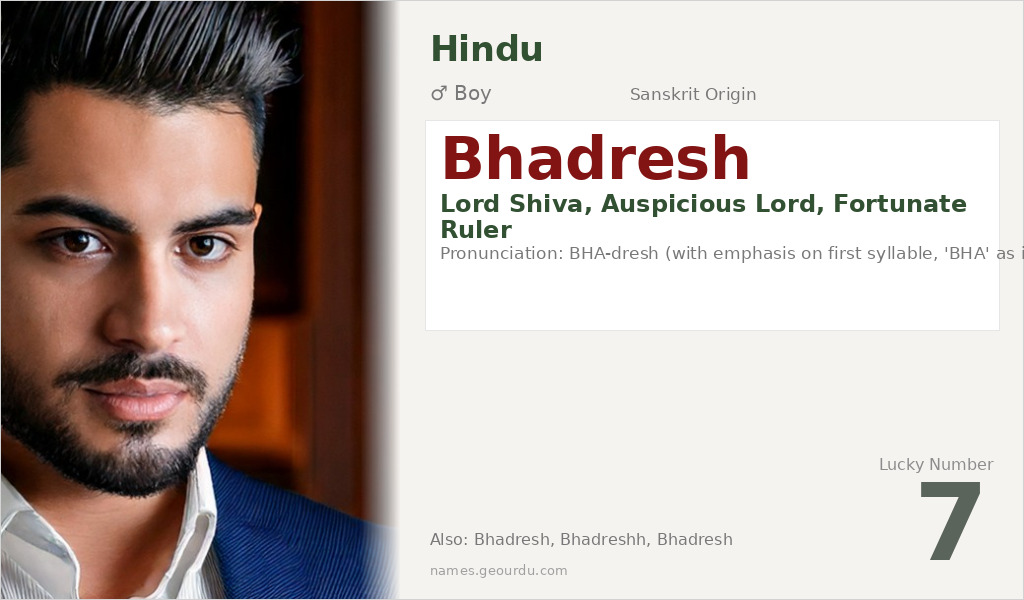
Bhadresh is a profound Sanskrit name with deep roots in Hindu tradition and spirituality. As a compound name meaning ‘Auspicious Lord’ or ‘Fortunate Ruler’, it carries significant religious and cultural weight. Primarily used for boys, this name is particularly associated with Lord Shiva and embodies qualities of blessing, prosperity, and divine grace. Understanding Bhadresh requires exploring its linguistic components and religious significance within Hindu culture.
Meaning of Bhadresh
Bhadresh is a classical Sanskrit name composed of two distinct elements that together create a meaningful whole. The first component ‘Bhadra’ (भद्र) is a versatile Sanskrit term meaning auspicious, fortunate, blessed, good, or excellent. The second component ‘Isha’ (ईश) means lord, ruler, master, or controller. When combined, Bhadresh literally translates to ‘Auspicious Lord’ or ‘Fortunate Ruler’. In Hindu religious context, this name specifically refers to Lord Shiva, one of the principal deities in Hinduism known as the destroyer and transformer within the Trimurti. The name appears in various Hindu scriptures and texts as one of Shiva’s many epithets, emphasizing his benevolent and auspicious aspects. This linguistic construction follows common Sanskrit naming patterns where divine qualities are combined with terms of reverence.
| 📛 Name | Bhadresh |
| 💎 Meaning | Lord Shiva, Auspicious Lord, Fortunate Ruler |
| 👤 Gender | Boy |
| 🕌 Religion | Hindu |
| 🌍 Origin | Sanskrit |
| 🗣 Pronunciation | BHA-dresh (with emphasis on first syllable, 'BHA' as in 'but' with aspirated 'bh', 'dresh' rhymes with 'fresh') |
| ✍️ Urdu | بھدریش |
| ✍️ Arabic | بهادريش |
| 🔢 Numerology | 7 |
| ✨ Spellings | Bhadresh, Bhadreshh, Bhadresh |
Origin & Cultural Significance
Bhadresh originates from classical Sanskrit, the ancient liturgical language of Hinduism, Buddhism, and Jainism. As a Sanskrit compound name, it follows traditional naming conventions that were particularly popular during the Vedic and post-Vedic periods in Indian history. The name’s usage is primarily concentrated within Hindu communities across India, Nepal, and the global Hindu diaspora. While it appears in religious texts as an epithet for Shiva, its adoption as a personal name reflects the common Hindu practice of naming children after divine attributes or deities. The name maintains its religious significance while serving as a meaningful personal identifier, connecting the bearer to Hindu spiritual traditions and values. Its preservation across generations demonstrates the enduring influence of Sanskrit and Hindu naming traditions.
Personality Traits
Those named Bhadresh often embody the qualities suggested by their name’s meaning. They tend to exhibit a calm, composed demeanor with natural leadership abilities. Their connection to the name’s spiritual origins often makes them thoughtful, introspective individuals with a strong moral compass. Many display analytical thinking patterns and a deep sense of responsibility toward others, reflecting the ‘lord’ or ‘ruler’ aspect of their name’s meaning.
Similar Names
If you like Bhadresh, consider: Bhadra, Bhadrak, Bhadran, Ishwar, Shiva, Bhavesh, Mahesh, Ramesh, Suresh, Haresh
Famous People Named Bhadresh
- Bhadresh Gohil — Indian-born British businessman convicted in the 1996 murder of his wife
- Bhadreshkumar Chetanbhai Patel — Indian-American wanted for the 2015 murder of a motel clerk in New Jersey
Frequently Asked Questions About Bhadresh
What does Bhadresh mean?
Bhadresh is a Sanskrit compound name meaning 'Auspicious Lord' or 'Fortunate Ruler'. It specifically refers to Lord Shiva in Hindu tradition, combining 'Bhadra' (auspicious) and 'Isha' (lord).
Is Bhadresh a boy or girl name?
Bhadresh is exclusively a boy's name in Hindu naming tradition. It follows masculine Sanskrit grammatical patterns and is used only for male children within Hindu communities.
What is the origin of Bhadresh?
Bhadresh originates from classical Sanskrit, the ancient liturgical language of India. It is a compound name with specific roots in Hindu religious texts where it appears as an epithet for Lord Shiva.





