Table of Contents
Bhagavati is a profound Sanskrit name that carries the weight of divine femininity across Hindu, Jain, and Buddhist traditions. Meaning ‘Goddess’ or ‘Divine Mother’, this name has been used for centuries to honor female deities and enlightened beings. From ancient scriptures to modern usage, Bhagavati represents spiritual power, compassion, and protective energy. Discover the rich linguistic and cultural heritage behind this beautiful name.
Meaning of Bhagavati
Bhagavati originates from the Sanskrit language, combining ‘bhaga’ (meaning fortune, prosperity, or dignity) with the feminine suffix ‘-vati’. The complete term ‘bhagavati’ literally translates to ‘she who possesses bhaga’ or ‘the fortunate/blessed one’, but in practice specifically means ‘goddess’ or ‘female deity’. This construction follows classical Sanskrit grammatical patterns where ‘-vati’ creates feminine forms from masculine bases. The name appears in numerous sacred texts including the Rigveda, Mahabharata, and various Puranas as an honorific for goddesses like Durga, Lakshmi, and Saraswati. In Jainism, Bhagavati is also used to refer to female Tirthankaras and enlightened beings.
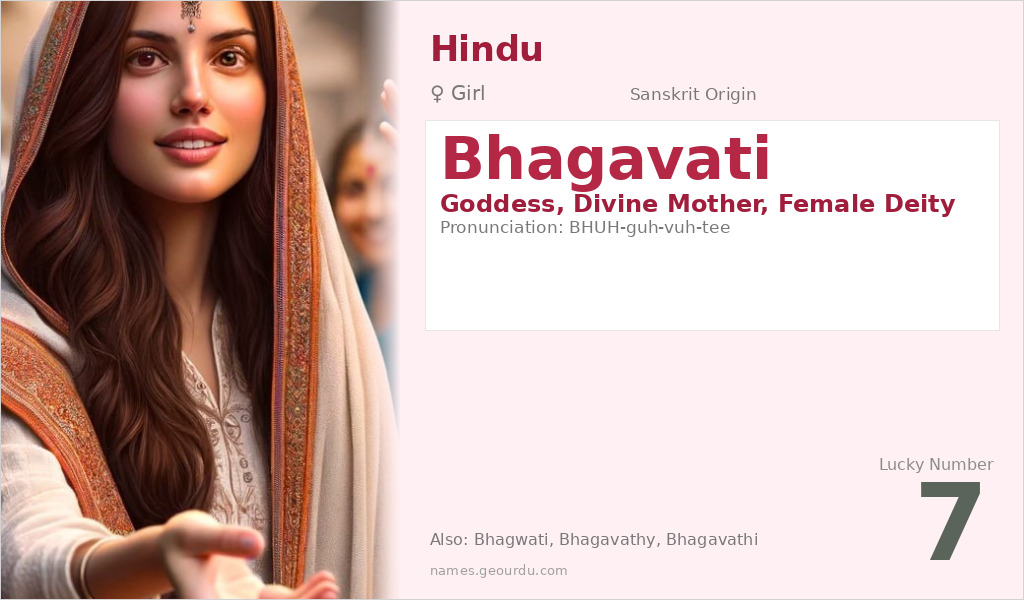
| 📛 Name | Bhagavati |
| 💎 Meaning | Goddess, Divine Mother, Female Deity |
| 👤 Gender | Girl |
| 🕌 Religion | Hindu |
| 🌍 Origin | Sanskrit |
| 🗣 Pronunciation | BHUH-guh-vuh-tee |
| ✍️ Urdu | بھگوندی |
| ✍️ Arabic | بهافاتي |
| 🔢 Numerology | 7 |
| ✨ Spellings | Bhagwati, Bhagavathy, Bhagavathi |
Origin & Cultural Significance
The name Bhagavati has its roots in ancient Indian civilization, dating back to Vedic times (1500-500 BCE). It emerged from the Sanskrit literary and religious tradition that spread across South and Southeast Asia. As Hinduism developed, the term became specifically associated with the Shakti tradition (worship of the divine feminine). The name appears in regional variations across India, particularly in South India as Bhagavathy and in Nepal as Bhagwati. Beyond Hinduism, the name was adopted into Jain and Buddhist traditions, where it refers to female enlightened beings and protective deities. Today, it remains popular in Hindu communities in India, Nepal, and the diaspora.
Personality Traits
Those named Bhagavati are often associated with qualities of spiritual strength, compassion, and protective energy. The name’s divine connotations suggest someone who is nurturing yet powerful, with a strong moral compass and sense of justice. In many cultures, the name carries expectations of leadership, wisdom, and the ability to inspire others through both gentleness and strength. These personality associations reflect the multifaceted nature of the goddesses the name honors.
Similar Names
If you like Bhagavati, consider: Bhagya, Bhagirathi, Bhagyalakshmi, Bhagwan, Bhagavat
Famous People Named Bhagavati
- Bhagavati Devi — Indian freedom fighter and social reformer
- Bhagavati Charan Panigrahi — Indian politician and writer
Frequently Asked Questions About Bhagavati
What does Bhagavati mean?
Bhagavati means 'Goddess', 'Divine Mother', or 'Female Deity' in Sanskrit. It's derived from 'bhaga' (fortune/prosperity) with the feminine suffix '-vati', literally meaning 'the fortunate/blessed one' but specifically referring to goddesses.
Is Bhagavati a boy or girl name?
Bhagavati is exclusively a feminine name. The '-vati' suffix in Sanskrit specifically creates feminine forms, and the name has always been used for girls and female deities across Hindu, Jain, and Buddhist traditions.
What is the origin of Bhagavati?
Bhagavati originates from Sanskrit, the ancient classical language of India. It has been used for thousands of years in Hindu scriptures and spread through religious and cultural exchange to Jain and Buddhist traditions across South and Southeast Asia.