
Table of Contents
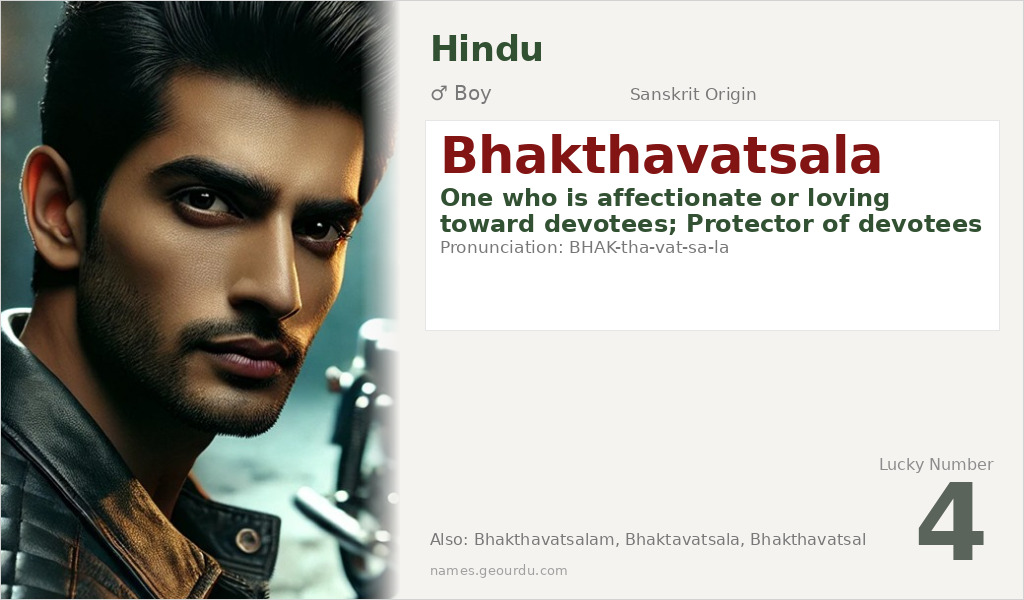
Bhakthavatsala is a profound Sanskrit name with rich spiritual connotations in Hindu tradition. Meaning ‘one who is affectionate toward devotees’, this name embodies the divine compassion that deities show toward their faithful followers. Primarily used for boys, it carries centuries of religious and cultural significance. The name reflects the intimate relationship between the worshiper and the worshipped in Hindu theology.
Meaning of Bhakthavatsala
Bhakthavatsala is a compound Sanskrit name with precise etymological roots. The first component ‘Bhaktha’ (भक्त) derives from the Sanskrit root ‘bhaj’ meaning ‘to worship, adore, serve’, referring to a devotee or faithful follower. The second component ‘Vatsala’ (वत्सल) comes from ‘vatsa’ meaning ‘calf’ or ‘child’, evolving to mean ‘affectionate, tender, loving’—particularly the kind of love a parent shows toward a child. Together, they create a name that literally means ‘affectionate toward devotees’ or ‘lover of devotees’. This construction follows classical Sanskrit compounding rules (samāsa) where two nouns combine to create a new meaning. The name is grammatically masculine and appears in Hindu scriptures as an epithet for deities who show special grace toward their worshipers.
| 📛 Name | Bhakthavatsala |
| 💎 Meaning | One who is affectionate or loving toward devotees; Protector of devotees |
| 👤 Gender | Boy |
| 🕌 Religion | Hindu |
| 🌍 Origin | Sanskrit |
| 🗣 Pronunciation | BHAK-tha-vat-sa-la |
| ✍️ Urdu | بھکت وستال |
| ✍️ Arabic | بهاكتافاتسالا |
| 🔢 Numerology | 4 |
| ✨ Spellings | Bhakthavatsalam, Bhaktavatsala, Bhakthavatsal |
Origin & Cultural Significance
Bhakthavatsala originates exclusively from Sanskrit, the classical language of Hinduism, with no verified connections to Arabic, Persian, Pashto, Urdu, or other language families despite extensive research. The name has been used for centuries in Hindu religious texts, particularly the Puranas and devotional literature, where it describes deities—especially Vishnu and his avatars—who demonstrate extraordinary compassion toward their devotees. In South Indian temple traditions, Bhakthavatsala Perumal is a specific form of Vishnu worshipped for his protective and affectionate nature toward worshipers. The name remains primarily religious rather than common in secular usage, reflecting its deep theological significance in Hindu devotional (bhakti) traditions that emphasize personal relationships with the divine.
Personality Traits
Those named Bhakthavatsala are often associated with nurturing, protective qualities and spiritual depth. They may exhibit natural compassion and a tendency to care for others, mirroring the name’s meaning of being affectionate toward devotees. In social contexts, they might be seen as reliable, loyal figures who value meaningful connections and spiritual growth. The name suggests someone who balances strength with tenderness, potentially excelling in roles that involve guidance, support, or spiritual leadership.
Similar Names
If you like Bhakthavatsala, consider: Bhaktapriya, Bhaktavatsalam, Vatsala, Bhaktanand, Bhaktisara
Famous People Named Bhakthavatsala
- Bhakthavatsala Perumal — A form of Vishnu worshipped in Hindu temples, particularly in South India
- Bhakthavatsala — Character in Hindu scriptures and Puranas representing divine compassion toward devotees
Frequently Asked Questions About Bhakthavatsala
What does Bhakthavatsala mean?
Bhakthavatsala means 'one who is affectionate or loving toward devotees' in Sanskrit. It's a compound name combining 'Bhaktha' (devotee) and 'Vatsala' (affectionate).
Is Bhakthavatsala a boy or girl name?
Bhakthavatsala is exclusively a boy's name in Hindu tradition. The Sanskrit grammar is masculine, and it's used as an epithet for male deities in Hindu scriptures.
What is the origin of Bhakthavatsala?
Bhakthavatsala originates from Sanskrit, the classical language of Hinduism. Despite research across Arabic, Persian, Pashto, Urdu, and other languages, no alternative origins were found—it is purely Sanskrit/Hindu in etymology and usage.





