
Table of Contents
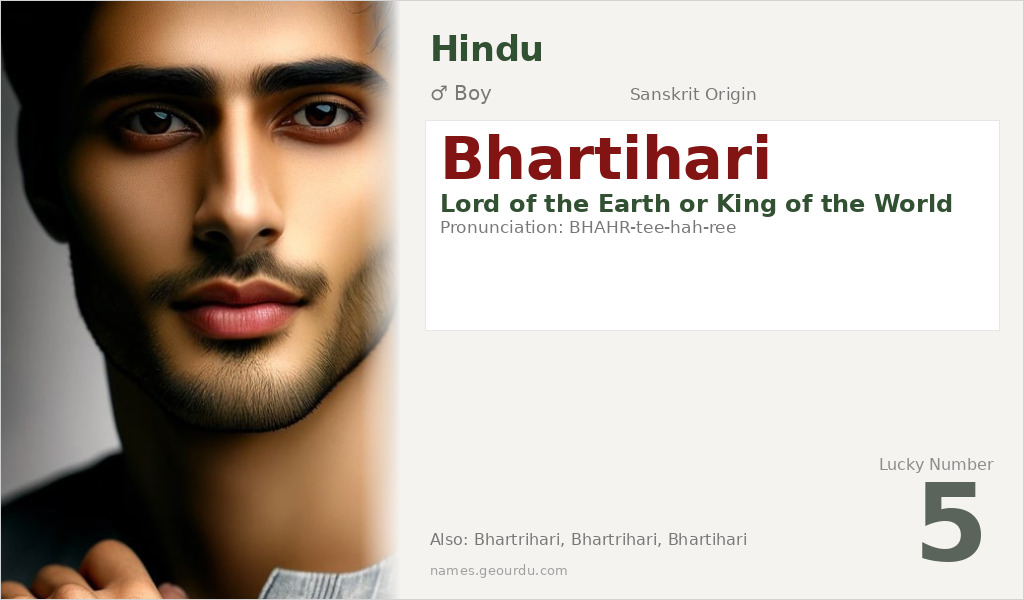
Bhartihari is a profound Sanskrit name with royal and spiritual connotations, meaning ‘Lord of the Earth’ or ‘King of the World’. Most famously associated with the 5th-7th century poet-king Bhartrihari, this name carries centuries of philosophical and literary heritage. It represents wisdom, leadership, and deep understanding of human existence, making it a meaningful choice for parents seeking a name with historical depth and cultural significance.
Meaning of Bhartihari
Bhartihari is a classical Sanskrit compound name with two distinct elements that combine to create its powerful meaning. The first part ‘Bharti’ derives from the Sanskrit root ‘bhṛ’ (भृ) meaning ‘to bear, to carry, to support, or to maintain’, closely related to ‘Bharata’ which refers to India or the earth. The second element ‘Hari’ is one of the most important names of Lord Vishnu in Hinduism, meaning ‘the remover of sins’ or ‘the one who takes away’. When combined, Bhartihari literally translates to ‘Lord of the Earth’ or ‘King of the World’, suggesting someone who supports and maintains the world. This name gained particular fame through the historical figure Bhartrihari, the poet-king who authored profound verses on worldly wisdom, love, and renunciation.
| 📛 Name | Bhartihari |
| 💎 Meaning | Lord of the Earth or King of the World |
| 👤 Gender | Boy |
| 🕌 Religion | Hindu |
| 🌍 Origin | Sanskrit |
| 🗣 Pronunciation | BHAHR-tee-hah-ree |
| ✍️ Urdu | بھرتی ہری |
| ✍️ Arabic | بهارتي هاري |
| 🔢 Numerology | 5 |
| ✨ Spellings | Bhartrihari, Bhartrihari, Bhartihari |
Origin & Cultural Significance
Bhartihari originates from classical Sanskrit, the ancient liturgical language of Hinduism, Buddhism, and Jainism. The name has its roots in India’s rich literary and philosophical traditions, most notably associated with the legendary figure Bhartrihari who lived between the 5th and 7th centuries CE. According to tradition, Bhartrihari was a king who renounced his throne to become a sage, composing the famous ‘Śatakatraya’ (Three Hundred Verses) divided into sections on worldly wisdom, love, and renunciation. The name reflects the synthesis of worldly leadership (Bharti) and spiritual devotion (Hari) that characterized this historical figure’s life and works. It remains primarily used within Hindu communities, particularly among those with appreciation for Sanskrit literature and philosophy.
Personality Traits
Those named Bhartihari are often perceived as possessing the wisdom and balance of their namesake. They tend to be thoughtful, analytical individuals with a deep understanding of human nature and practical affairs. Like the poet-king Bhartrihari, they may exhibit both worldly wisdom and spiritual depth, able to navigate life’s complexities with philosophical insight. Their personality often combines leadership qualities with reflective tendencies, making them respected for both their practical abilities and their understanding of life’s deeper meanings.
Similar Names
If you like Bhartihari, consider: Bharat, Harish, Bhartendu, Hariprasad, Bharatendra
Famous People Named Bhartihari
- Bhartrihari — 5th-7th century Sanskrit poet-king and philosopher, author of the Śatakatraya (Three Hundred Verses) and important works on grammar and philosophy
- Bhartrihari — Legendary figure in Indian tradition, often identified as the brother of King Vikramaditya and a renunciate king who wrote profound verses on worldly wisdom
Frequently Asked Questions About Bhartihari
What does Bhartihari mean?
Bhartihari means 'Lord of the Earth' or 'King of the World' in Sanskrit. It is a compound name combining 'Bharti' (to bear/support/maintain) and 'Hari' (Lord Vishnu, remover of sins).
Is Bhartihari a boy or girl name?
Bhartihari is exclusively a boy's name in Hindu naming tradition. It has masculine grammatical endings in Sanskrit and is historically associated with male figures, most notably the poet-king Bhartrihari.
What is the origin of Bhartihari?
Bhartihari originates from classical Sanskrit, the ancient language of India. It is most famously associated with the 5th-7th century poet-king and philosopher Bhartrihari, who authored important works on worldly wisdom and renunciation.





