Table of Contents
Bharvi is a beautiful Sanskrit name for girls that carries deep spiritual significance in Hindu culture. Derived directly from the word for the sacred Tulsi plant, this name connects the bearer to one of Hinduism’s most revered botanical symbols. With its roots in ancient Indian tradition, Bharvi represents purity, devotion, and divine protection. The name has maintained its relevance through centuries while preserving its original botanical and religious meaning.
Meaning of Bharvi
Bharvi originates from the Sanskrit word ‘Bharvi’ (भार्वी), which specifically denotes the holy basil plant (Ocimum tenuiflorum), known as Tulsi in Hindu tradition. In Sanskrit literature, this term appears in both botanical contexts and religious texts, where the plant is described as having divine properties. The name’s etymology is directly linked to the plant’s significance in Ayurveda and Hindu worship practices, where Tulsi is considered an incarnation of the goddess Lakshmi. Unlike many names that have evolved metaphorical meanings, Bharvi maintains its literal botanical reference while carrying profound spiritual connotations. The linguistic construction follows standard Sanskrit feminine noun formations, making it a classic example of a name derived from India’s rich botanical vocabulary.
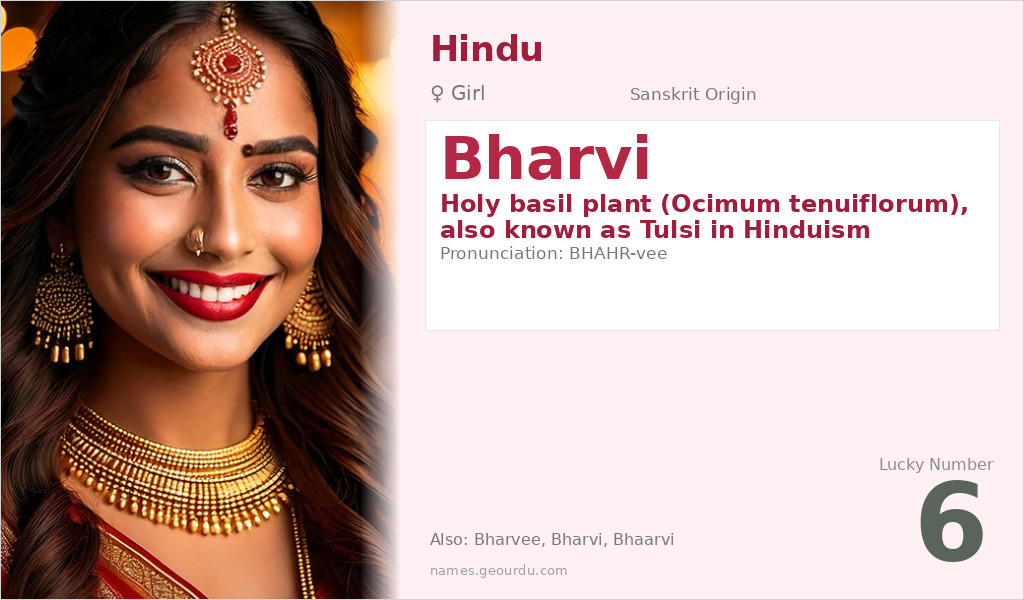
| 📛 Name | Bharvi |
| 💎 Meaning | Holy basil plant (Ocimum tenuiflorum), also known as Tulsi in Hinduism |
| 👤 Gender | Girl |
| 🕌 Religion | Hindu |
| 🌍 Origin | Sanskrit |
| 🗣 Pronunciation | BHAHR-vee |
| ✍️ Urdu | بھاروی |
| ✍️ Arabic | بهارفي |
| 🔢 Numerology | 6 |
| ✨ Spellings | Bharvee, Bharvi, Bhaarvi |
Origin & Cultural Significance
Bharvi has its origins in classical Sanskrit, the ancient liturgical language of Hinduism that has influenced numerous Indian languages. The name emerges from India’s long tradition of naming children after sacred plants, particularly those with religious significance in Hindu rituals. Tulsi (holy basil) has been worshipped in Hindu households for millennia, and names derived from this plant reflect the cultural importance of nature in spiritual practice. While primarily used in Hindu communities, the name has spread to various regions of India and among the Indian diaspora. Its usage remains most common among families who value traditional Sanskrit names with clear botanical and religious connections.
Personality Traits
Those named Bharvi are often perceived as having qualities reminiscent of the sacred plant they’re named after—grounded, healing, and spiritually attuned. They typically exhibit a nurturing disposition and a calm, stabilizing presence in relationships. The name suggests someone who values tradition while maintaining a natural grace and purity in their approach to life. These personality associations stem from the cultural understanding of the Tulsi plant’s characteristics in Hindu philosophy.
Similar Names
If you like Bharvi, consider: Tulsi, Basanti, Pushpa, Vrinda, Lavanya
Famous People Named Bharvi
- Bharvi — Indian classical dancer and choreographer specializing in Bharatanatyam
- Bharvi Desai — Contemporary Indian poet and writer
Frequently Asked Questions About Bharvi
What does Bharvi mean?
Bharvi means 'holy basil plant' (Ocimum tenuiflorum) in Sanskrit. It specifically refers to the sacred Tulsi plant worshipped in Hinduism.
Is Bharvi a boy or girl name?
Bharvi is exclusively a girl's name in Hindu naming tradition. The Sanskrit ending '-i' typically indicates feminine gender, and historical usage consistently shows it as a female name.
What is the origin of Bharvi?
Bharvi originates from Sanskrit, the classical language of ancient India. It comes directly from the Sanskrit word for the holy basil plant, which holds significant religious importance in Hinduism.