
Table of Contents
Bhima is a powerful and historic name deeply rooted in Sanskrit tradition and Hindu mythology. Most famously borne by one of the Pandava brothers in the epic Mahabharata, this name evokes strength, courage, and a formidable presence. With its origins in ancient India, Bhima continues to be a meaningful choice for boys, symbolizing might and resilience. Explore the rich etymology, cultural context, and enduring legacy of this iconic name.
Meaning of Bhima
The name Bhima originates from the Sanskrit word ‘bhīma’ (भीम), which translates to ‘terrifying’, ‘formidable’, ‘mighty’, or ‘powerful’. It is derived from the root ‘bhī’ (भी), meaning ‘to fear’ or ‘to be afraid’, indicating someone or something that inspires awe or fear through immense strength. In classical Sanskrit texts, this term is used to describe fearsome qualities, and it is most prominently embodied by Bhima, the warrior hero of the Mahabharata known for his physical prowess and heroic deeds. The name’s meaning emphasizes not just brute force but a commanding presence that demands respect, making it a symbol of power and protection in Hindu naming traditions.
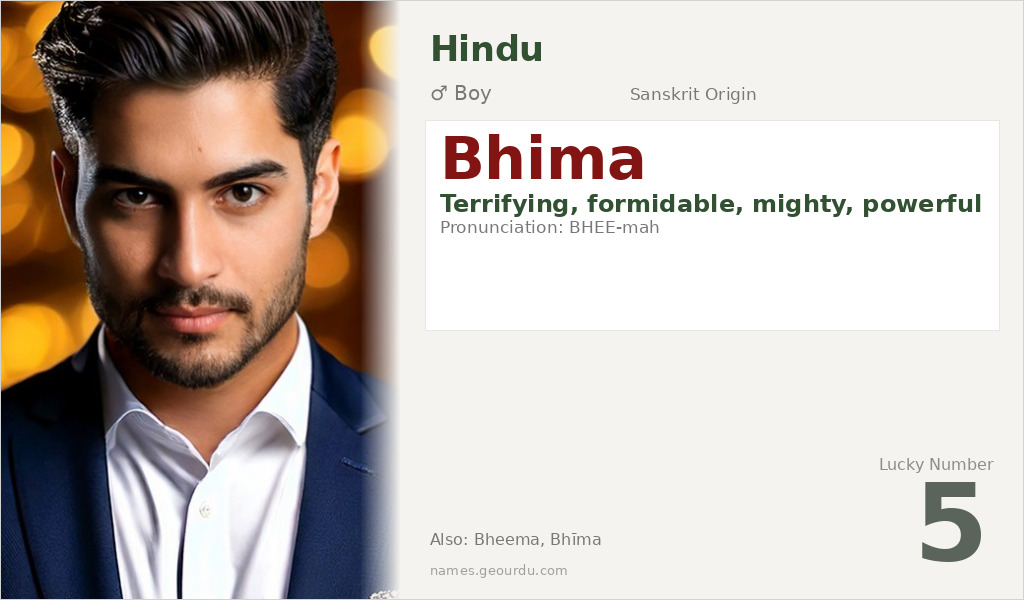
| 📛 Name | Bhima |
| 💎 Meaning | Terrifying, formidable, mighty, powerful |
| 👤 Gender | Boy |
| 🕌 Religion | Hindu |
| 🌍 Origin | Sanskrit |
| 🗣 Pronunciation | BHEE-mah |
| ✍️ Urdu | بھیم |
| ✍️ Arabic | بھيما |
| 🔢 Numerology | 5 |
| ✨ Spellings | Bheema, Bhīma |
Origin & Cultural Significance
Bhima has its origins in ancient Sanskrit, the classical language of India, and is deeply embedded in Hindu culture through the epic Mahabharata, composed around 400 BCE–400 CE. In this text, Bhima is the second Pandava brother, celebrated for his strength, loyalty, and role in the Kurukshetra War. The name reflects the valor and mythological significance of this character, influencing its usage in Hindu communities across South Asia. Over centuries, Bhima has been adopted in various Indian languages and regions, maintaining its association with might and heroism, and it is sometimes used in compound names or variations like Bhimsen to honor the epic legacy.
Personality Traits
Inspired by the legendary Bhima from the Mahabharata, individuals with this name are often associated with traits of strength, bravery, and determination. They may be seen as natural protectors, exhibiting a formidable and resilient character in the face of challenges. This name suggests a personality that combines physical or moral power with a deep sense of loyalty and duty, making it a fitting choice for those who value courage and leadership.
Similar Names
If you like Bhima, consider: Bhimsen, Bhim, Bheem, Balaram, Arjun, Yudhishthir, Nakul, Sahadev
Famous People Named Bhima
- Bhima — One of the five Pandava brothers in the Hindu epic Mahabharata, known for his strength and role in the Kurukshetra War
- Bhimrao Ramji Ambedkar — Although not named Bhima directly, his first name Bhimrao shares the same root, honoring the epic hero; he was an Indian jurist, economist, and social reformer who drafted the Constitution of India
Frequently Asked Questions About Bhima
What does Bhima mean?
Bhima means 'terrifying', 'formidable', 'mighty', or 'powerful' in Sanskrit, derived from the root 'bhī' meaning 'to fear', indicating a fearsome or awe-inspiring strength.
Is Bhima a boy or girl name?
Bhima is traditionally a boy's name, rooted in Hindu mythology where it is borne by the male hero Bhima in the Mahabharata, and it is used almost exclusively for boys in cultural practice.
What is the origin of Bhima?
Bhima originates from Sanskrit, an ancient Indian language, and is deeply tied to Hindu culture through the epic Mahabharata, where it is the name of a key warrior character.





