
Table of Contents
Bhujang is a distinctive Sanskrit name with deep roots in Hindu mythology and classical Indian literature. Meaning ‘serpent’ or ‘snake’, this name carries powerful symbolism in Indian culture, representing transformation, wisdom, and divine protection. Often associated with Lord Shiva, who adorns serpents, Bhujang evokes both reverence and mystique. This name continues to be chosen by parents seeking a name with strong cultural heritage and spiritual resonance.
Meaning of Bhujang
Bhujang originates from the Sanskrit word ‘bhujanga’ (भुजंग), which directly translates to ‘serpent’ or ‘snake’. The term is composed of two elements: ‘bhuja’ meaning ‘arm’ or ‘shoulder’ and ‘ga’ meaning ‘going’ or ‘moving’, poetically describing the sinuous, arm-like movement of a snake. In Sanskrit literature, particularly in texts like the Mahabharata and various Puranas, ‘bhujang’ appears frequently in references to serpent deities (Nagas) and mythological serpents. The name also connects to Lord Shiva, known as ‘Bhujangabhushana’ or ‘one adorned with serpents’, though this is a descriptive epithet rather than the literal meaning of the name itself.
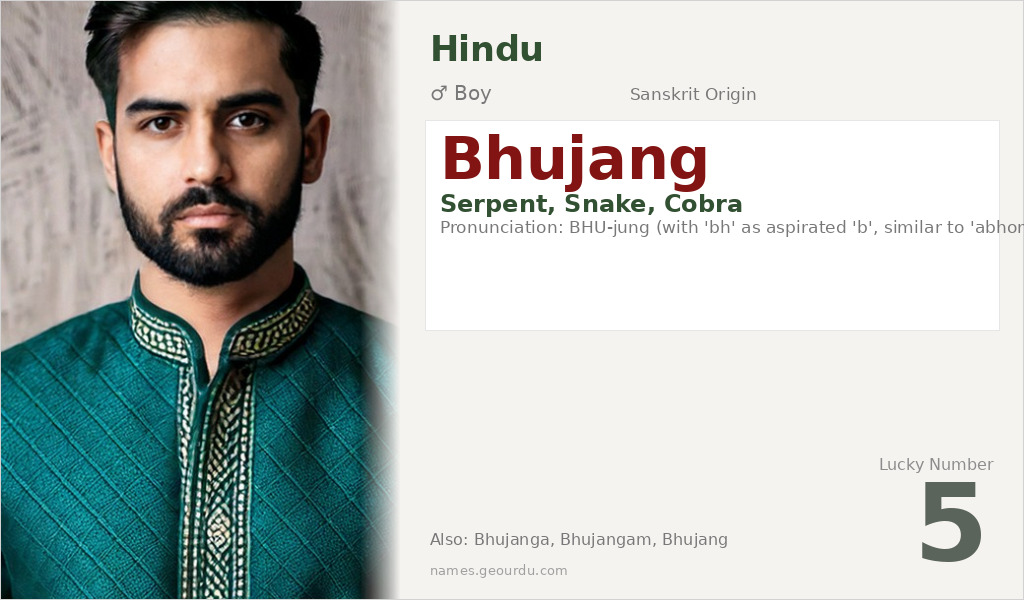
| 📛 Name | Bhujang |
| 💎 Meaning | Serpent, Snake, Cobra |
| 👤 Gender | Boy |
| 🕌 Religion | Hindu |
| 🌍 Origin | Sanskrit |
| 🗣 Pronunciation | BHU-jung (with 'bh' as aspirated 'b', similar to 'abhor') |
| ✍️ Urdu | بھوجنگ |
| ✍️ Arabic | بوجانغ |
| 🔢 Numerology | 5 |
| ✨ Spellings | Bhujanga, Bhujangam, Bhujang |
Origin & Cultural Significance
Bhujang has its origins in classical Sanskrit, the ancient liturgical language of Hinduism, Buddhism, and Jainism. The name appears in numerous Hindu scriptures and mythological narratives, particularly those involving serpent deities (Nagas) who play significant roles in Hindu cosmology. Culturally, serpents in Hinduism symbolize fertility, protection, and transformation, with many temples featuring snake iconography. While primarily a Hindu name, the Sanskrit origin means it’s respected across Indian religious traditions. The name has been used historically in various Indian regions, particularly in Maharashtra and South India where Sanskrit names remain popular.
Personality Traits
Those named Bhujang are often perceived as having serpent-like qualities: intuitive, adaptable, and possessing hidden depths. They may demonstrate the ability to shed old patterns and embrace transformation, much like a snake sheds its skin. Their personality typically combines quiet observation with sudden decisive action when needed. In social settings, they often exhibit both protective instincts toward loved ones and a mysterious aura that draws others to them.
Similar Names
If you like Bhujang, consider: Nag, Shesh, Vasuki, Ananta, Karkotaka
Famous People Named Bhujang
- Bhujang — Indian classical dancer and choreographer known for Kathak performances
- Bhujang Rao — Historical figure from the Maratha Empire
Frequently Asked Questions About Bhujang
What does Bhujang mean?
Bhujang means 'serpent' or 'snake' in Sanskrit, the classical language of ancient India.
Is Bhujang a boy or girl name?
Bhujang is exclusively a boy's name in Hindu naming tradition, derived from masculine Sanskrit grammar and mythological associations.
What is the origin of Bhujang?
Bhujang originates from Sanskrit, specifically from the word 'bhujanga' meaning serpent, with deep roots in Hindu mythology and classical Indian literature.





