Table of Contents
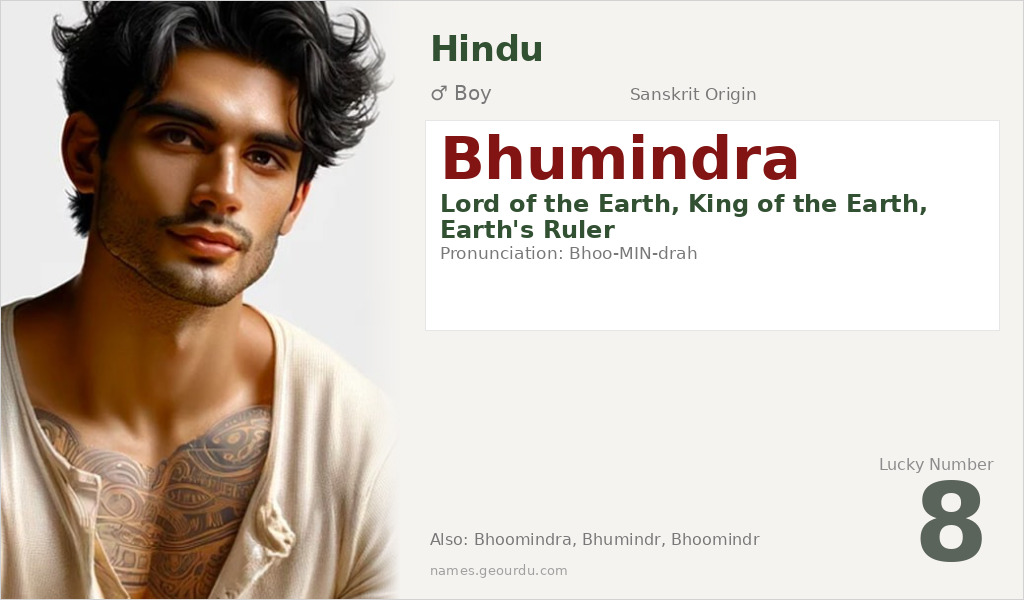
Bhumindra is a powerful Sanskrit name that carries the majestic meaning of ‘Lord of the Earth’ or ‘Earth’s Ruler’. This traditional Hindu name combines two significant elements from ancient Indian culture and mythology. With its deep roots in Sanskrit language and Hindu tradition, Bhumindra represents strength, authority, and connection to the natural world. Parents seeking a name with historical depth and meaningful symbolism often find Bhumindra an appealing choice for their sons.
Meaning of Bhumindra
Bhumindra derives from the classical Sanskrit language, where it is a compound of ‘Bhumi’ (earth, land) and ‘Indra’ (lord, ruler, king). The first component ‘Bhumi’ appears throughout ancient Indian texts, including the Vedas and Puranas, representing the physical world, territory, and foundation. The second component ‘Indra’ refers to the king of the gods in Hindu mythology, the ruler of Svarga (heaven) and controller of weather. When combined, Bhumindra creates a name that signifies earthly sovereignty and leadership. This naming pattern is common in Sanskrit, where meaningful elements are joined to create names with specific symbolic significance, similar to how Rajendra means ‘King of Kings’ or Mahendra means ‘Great Lord’.
| 📛 Name | Bhumindra |
| 💎 Meaning | Lord of the Earth, King of the Earth, Earth's Ruler |
| 👤 Gender | Boy |
| 🕌 Religion | Hindu |
| 🌍 Origin | Sanskrit |
| 🗣 Pronunciation | Bhoo-MIN-drah |
| ✍️ Urdu | بھومندر |
| ✍️ Arabic | بهوميندرا |
| 🔢 Numerology | 8 |
| ✨ Spellings | Bhoomindra, Bhumindr, Bhoomindr |
Origin & Cultural Significance
Bhumindra originates from ancient Sanskrit, the classical language of India that has influenced numerous modern South Asian languages. As a Sanskrit compound name, it follows traditional Hindu naming conventions where names are created by combining meaningful elements from mythology, nature, or virtues. The name reflects the importance of land, territory, and earthly authority in traditional Indian society and kingship. While primarily used in Hindu communities, the name’s Sanskrit roots give it cultural significance across various Indian linguistic regions. Historical records show similar compound names with ‘Indra’ as a suffix were popular among ruling classes and nobility in ancient and medieval India.
Personality Traits
Those named Bhumindra are often perceived as natural leaders with a grounded, practical approach to life. Their connection to the ‘earth’ element in their name suggests stability, reliability, and a strong sense of responsibility. They tend to be protective of their loved ones and communities, much like a ruler cares for their kingdom. This name often attracts individuals who value tradition, nature, and maintaining harmonious relationships with their environment.
Similar Names
If you like Bhumindra, consider: Bhupendra, Mahendra, Rajendra, Indrajit, Bhumika, Bhumika, Bhoomi, Indra, Bhuvan, Prithviraj
Famous People Named Bhumindra
- Bhumindra Singh — Former Indian cricketer who played for Rajasthan in domestic cricket
- Bhumindra Thapa — Nepalese politician and former Minister of Home Affairs
Frequently Asked Questions About Bhumindra
What does Bhumindra mean?
Bhumindra means 'Lord of the Earth' or 'Earth's Ruler'. It is a Sanskrit compound name combining 'Bhumi' (earth) and 'Indra' (lord/ruler).
Is Bhumindra a boy or girl name?
Bhumindra is exclusively a boy's name in Hindu naming tradition. The '-indra' suffix is typically masculine in Sanskrit grammar and naming conventions.
What is the origin of Bhumindra?
Bhumindra originates from Sanskrit, the classical language of ancient India. It follows traditional Hindu naming patterns where meaningful elements are combined to create compound names with specific symbolism.