Table of Contents
Bimala is a beautiful Sanskrit name that carries profound spiritual meaning. Primarily used for girls in Hindu communities, this name embodies the concept of purity in its most elevated form. With roots in ancient Indian languages and scriptures, Bimala represents more than just cleanliness—it signifies spiritual clarity and moral integrity. This name continues to be cherished across South Asia and among diaspora communities worldwide.
Meaning of Bimala
Bimala originates from the Sanskrit word ‘bimala’ (बिमल), which literally means ‘without impurity’. The name is composed of two elements: ‘vi-‘ meaning ‘without’ or ‘away from’, and ‘mala’ meaning ‘dirt, impurity, stain, or blemish’. In Hindu philosophy, this concept extends beyond physical cleanliness to encompass purity of mind, speech, and action. The name appears in various Hindu texts and is particularly significant in contexts discussing spiritual purification. In Buddhist traditions influenced by Sanskrit, the term similarly denotes purity of consciousness. The meaning remains consistent across regions where Sanskrit-derived languages are spoken.
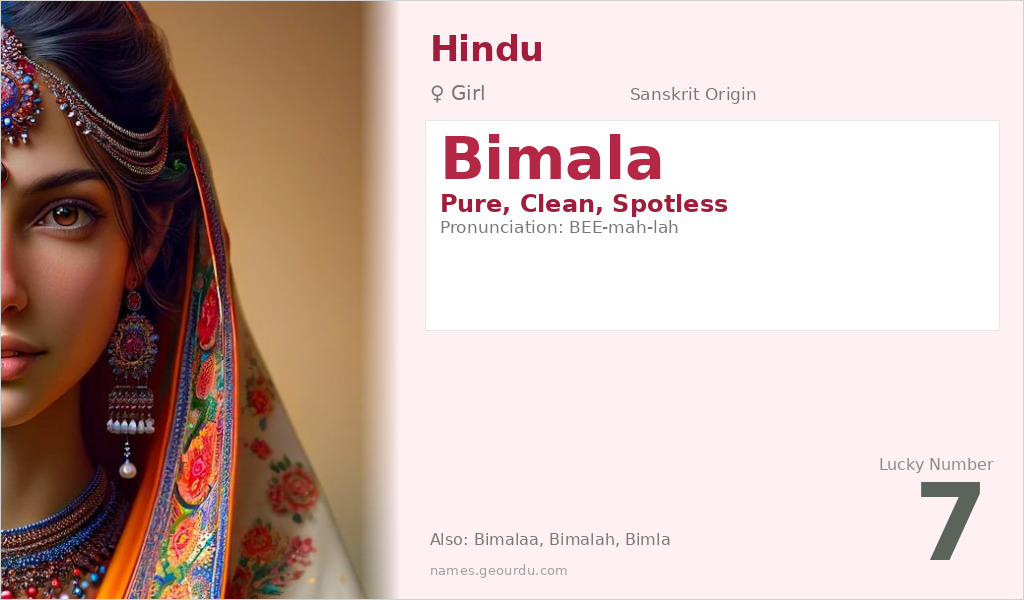
| 📛 Name | Bimala |
| 💎 Meaning | Pure, Clean, Spotless |
| 👤 Gender | Girl |
| 🕌 Religion | Hindu |
| 🌍 Origin | Sanskrit |
| 🗣 Pronunciation | BEE-mah-lah |
| ✍️ Urdu | بیملا |
| ✍️ Arabic | بيمالا |
| 🔢 Numerology | 7 |
| ✨ Spellings | Bimalaa, Bimalah, Bimla |
Origin & Cultural Significance
Bimala has its origins in classical Sanskrit, the ancient liturgical language of Hinduism, Buddhism, and Jainism. The name emerged from the rich literary and philosophical traditions of the Indian subcontinent, where concepts of purity (shuddhi) and impurity (mala) hold significant spiritual weight. While primarily associated with Hindu naming traditions, the name also appears in Buddhist communities, particularly in Nepal and Tibetan Buddhist contexts where Sanskrit influence is strong. The name spread through Sanskrit literature and religious texts, becoming established in various regions including India, Nepal, Bangladesh, and Sri Lanka. Its usage reflects the enduring value placed on spiritual and moral purity in these cultures.
Personality Traits
The name Bimala suggests qualities of clarity, integrity, and spiritual depth. Those bearing this name are often perceived as having pure intentions and a straightforward approach to life. The Sanskrit meaning implies someone who values truthfulness and moral consistency in their actions and relationships. This name carries expectations of ethical conduct and inner cleanliness that extends to one’s thoughts and interactions with others.
Similar Names
If you like Bimala, consider: Bimal, Bimla, Nirmala, Shuddha, Pavitra, Amala
Famous People Named Bimala
- Bimala Prasad Chaliha — Former Chief Minister of Assam, India
- Bimala Rai Paudyal — Nepalese politician and former Minister
Frequently Asked Questions About Bimala
What does Bimala mean?
Bimala means 'pure, clean, spotless, or without impurity' in Sanskrit. The name comes from the Sanskrit word 'bimala' (बिमल) which combines 'vi-' (without) and 'mala' (impurity).
Is Bimala a boy or girl name?
Bimala is primarily a feminine name in Hindu naming traditions. While the masculine form 'Bimal' exists, Bimala is almost exclusively used for girls across South Asian cultures where Sanskrit-derived names are common.
What is the origin of Bimala?
Bimala originates from Sanskrit, the ancient classical language of India. It has roots in Hindu philosophical and religious texts where concepts of purity and impurity hold significant spiritual meaning. The name is most commonly found in Hindu communities across India, Nepal, and diaspora populations.