
Table of Contents
Bimbisaar is a distinctive boy’s name with deep roots in ancient Indian history and Sanskrit language. While relatively rare today, it carries the weight of royal legacy and spiritual significance. This name connects modern bearers to one of India’s most important early monarchs and offers a unique blend of phonetic beauty and historical depth.
Meaning of Bimbisaar
Bimbisaar derives from Sanskrit, combining ‘Bimbi’ (from Bimba, meaning ‘image, reflection, or disc’) with ‘saar’ (meaning ‘essence, core, or son’). The complete meaning translates to ‘son of Bimbi’ or ‘essence of the image.’ In Sanskrit literature, ‘Bimba’ often refers to celestial bodies like the sun or moon, suggesting radiance or reflection. The name’s historical usage is most prominently associated with King Bimbisara of Magadha, making it a name with both linguistic elegance and royal connotations. Unlike many modern names, Bimbisaar maintains a direct connection to its etymological roots without significant phonetic evolution.
| 📛 Name | Bimbisaar |
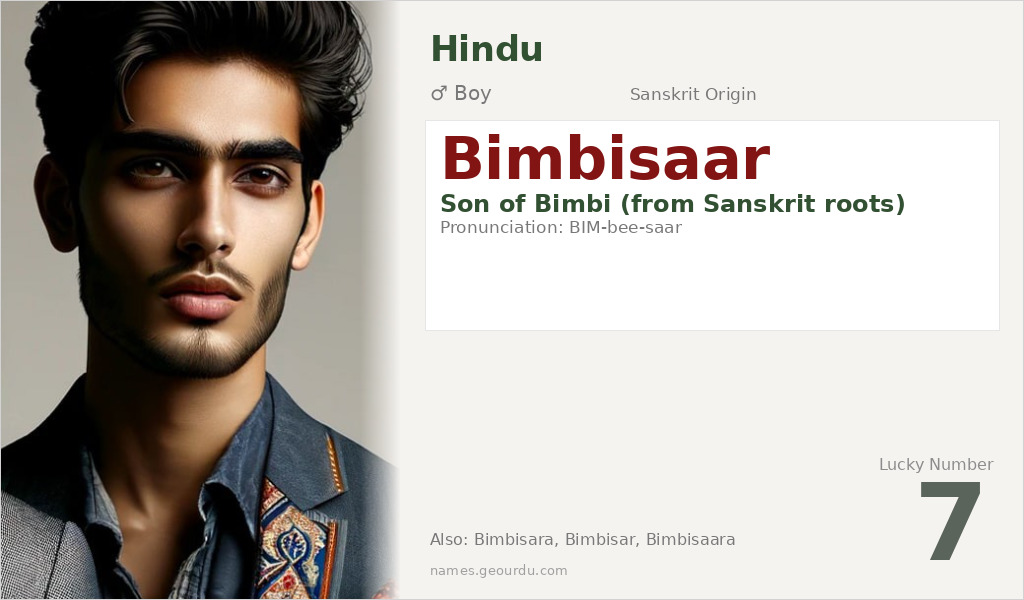
| 💎 Meaning | Son of Bimbi (from Sanskrit roots) |
| 👤 Gender | Boy |
| 🕌 Religion | Hindu |
| 🌍 Origin | Sanskrit |
| 🗣 Pronunciation | BIM-bee-saar |
| ✍️ Urdu | بمبیسار |
| ✍️ Arabic | بيمبيسار |
| 🔢 Numerology | 7 |
| ✨ Spellings | Bimbisara, Bimbisar, Bimbisaara |
Origin & Cultural Significance
Bimbisaar originates from Sanskrit, the classical language of ancient India. It gained historical prominence through King Bimbisara, who ruled the Magadha kingdom in the 5th-6th century BCE during the time of Buddha and Mahavira. Culturally, the name is primarily associated with Hindu and Buddhist traditions due to King Bimbisara’s patronage of both religions. While not commonly used in contemporary naming, it appears in historical texts like the Buddhist Jataka tales and Jain scriptures. The name represents a specific period in Indian history before the Mauryan and Gupta empires, making it a distinctive choice for those interested in early Indian heritage.
Personality Traits
Those named Bimbisaar are often associated with qualities of reflection, wisdom, and dignified leadership. The name’s connection to an ancient king suggests natural authority combined with spiritual depth. Bearers may exhibit thoughtful decision-making and respect for tradition, balancing contemplation with action. The Sanskrit roots imply someone who values essence over appearance, seeking meaningful connections in life.
Similar Names
If you like Bimbisaar, consider: Bimbadhara, Bimbavati, Bimbika, Bimbapati, Bimbodhara
Famous People Named Bimbisaar
- Bimbisara — Ancient Indian king of Magadha (c. 543-491 BCE), patron of Buddhism and Jainism, father of Ajatashatru
- Bimbisara Jataka — A story in Buddhist literature about King Bimbisara's previous life
Frequently Asked Questions About Bimbisaar
What does Bimbisaar mean?
Bimbisaar means 'son of Bimbi' or 'essence of the image' in Sanskrit, derived from 'Bimba' (image/disc) and 'saar' (essence/son).
Is Bimbisaar a boy or girl name?
Bimbisaar is exclusively a boy's name, historically used for male rulers and with masculine Sanskrit grammatical construction.
What is the origin of Bimbisaar?
Bimbisaar originates from Sanskrit and ancient Indian history, most famously associated with King Bimbisara of the Magadha kingdom (5th-6th century BCE).





