
Table of Contents
Bimbisāra is a name steeped in ancient Indian history and Sanskrit linguistics. Often associated with one of early India’s most significant rulers, this name carries connotations of leadership, substance, and reflection. While primarily used in Hindu communities, it resonates across cultures interested in historical and philosophical names. Discover the rich etymology and cultural legacy behind Bimbisāra.
Meaning of Bimbisāra
The name Bimbisāra originates from Sanskrit, combining ‘Bimba’ (image, reflection, form) and ‘Sāra’ (essence, substance, best part). This creates a meaning of ‘essence of form’ or ‘best image’, suggesting someone who embodies the ideal or true nature of something. In historical context, it was borne by King Bimbisāra of Magadha, a patron of Buddhism and Jainism in the 6th-5th centuries BCE. The name appears in Pali texts as ‘Bimbisāra’ and in Sanskrit literature, emphasizing its deep roots in Indian antiquity. Linguistically, it reflects the compound structure common in Sanskrit names, where two meaningful elements combine to create a nuanced significance.
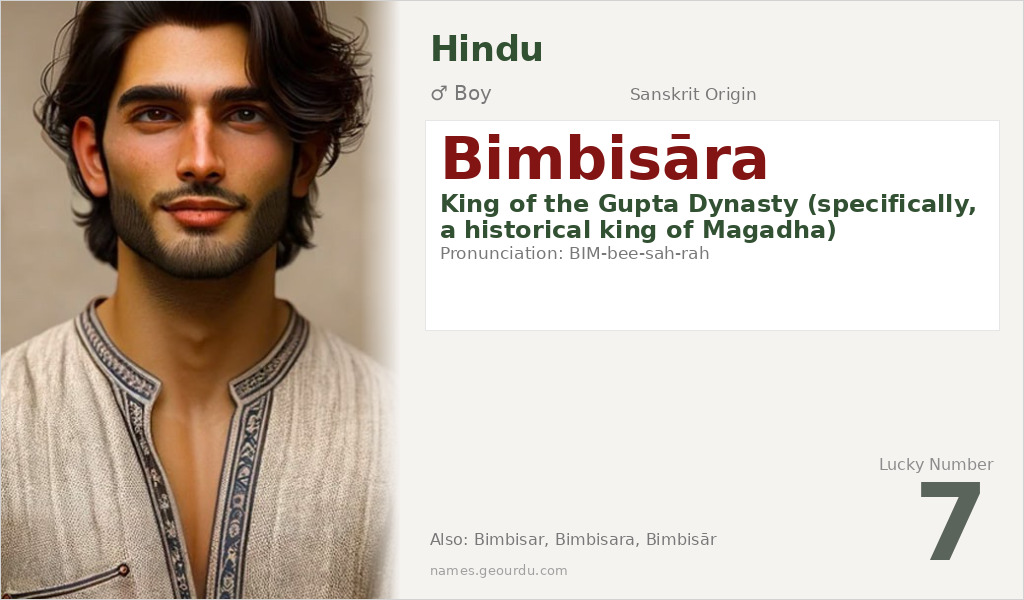
| 📛 Name | Bimbisāra |
| 💎 Meaning | King of the Gupta Dynasty (specifically, a historical king of Magadha) |
| 👤 Gender | Boy |
| 🕌 Religion | Hindu |
| 🌍 Origin | Sanskrit |
| 🗣 Pronunciation | BIM-bee-sah-rah |
| ✍️ Urdu | بمبيسار |
| ✍️ Arabic | بيمبيسارا |
| 🔢 Numerology | 7 |
| ✨ Spellings | Bimbisar, Bimbisara, Bimbisār, Bimbisāra |
Origin & Cultural Significance
Bimbisāra has its origins in ancient India, specifically from Sanskrit language and Magadha region culture. Historically, King Bimbisāra ruled Magadha from around 543 to 491 BCE and was a contemporary of Gautama Buddha, playing a key role in early Buddhist history. The name is documented in Buddhist texts like the Pali Canon and Jain scriptures, highlighting its religious and cultural significance. While primarily associated with Hinduism through Sanskrit heritage, it crosses religious boundaries due to its historical usage. Today, it remains a rare but meaningful choice, evoking a connection to India’s ancient past and philosophical traditions.
Personality Traits
Those named Bimbisāra are often perceived as having a regal and thoughtful demeanor, inspired by the historical king’s legacy. They may exhibit leadership qualities, diplomacy, and a deep respect for knowledge and spirituality. The name’s meaning—’essence of form’—suggests a person who values authenticity and substance in their actions and relationships. This can translate to a calm, strategic personality that influences others positively.
Similar Names
If you like Bimbisāra, consider: Ajatashatru, Udayin, Ashoka, Chandragupta, Bindusara
Famous People Named Bimbisāra
- Bimbisāra — King of Magadha (c. 543–491 BCE), contemporary of Buddha, patron of Buddhism and Jainism
- Bimbisara (film character) — portrayed in Indian historical films about ancient Magadha
Frequently Asked Questions About Bimbisāra
What does Bimbisāra mean?
Bimbisāra means 'essence of form' or 'best image' in Sanskrit, derived from 'Bimba' (image) and 'Sāra' (essence).
Is Bimbisāra a boy or girl name?
Bimbisāra is exclusively a boy's name, historically borne by male rulers and used in masculine contexts in Sanskrit.
What is the origin of Bimbisāra?
Bimbisāra originates from Sanskrit language and ancient Indian history, specifically associated with King Bimbisāra of Magadha (6th-5th centuries BCE).





