Table of Contents
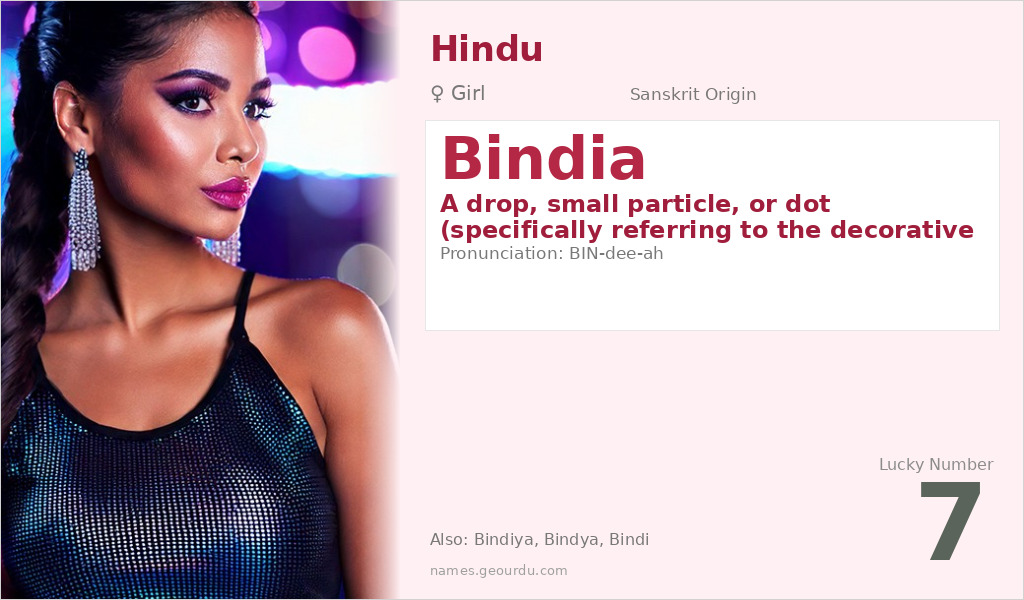
Bindia is a beautiful and culturally rich name for girls that carries deep significance in South Asian traditions. Derived from the Sanskrit word for ‘dot’ or ‘drop’, this name directly references the decorative forehead mark known as the bindi. More than just a name, Bindia represents spiritual awareness, cultural identity, and feminine grace. Its connection to ancient Sanskrit makes it both timeless and meaningful for modern parents seeking names with heritage.
Meaning of Bindia
The name Bindia originates from the Sanskrit root ‘bindu’ (बिन्दु), which literally translates to ‘dot’, ‘point’, ‘drop’, or ‘small particle’. In linguistic context, this term appears in ancient Vedic texts and has evolved through Prakrit and modern Indian languages. The feminine form ‘Bindia’ specifically refers to the decorative forehead dot worn in Hindu culture, which symbolizes the third eye and spiritual sight. This connection makes the name deeply meaningful beyond its literal translation, encompassing concepts of focus, consciousness, and cultural identity. The name maintains this core meaning across various Indian languages and dialects where it appears.
| 📛 Name | Bindia |
| 💎 Meaning | A drop, small particle, or dot (specifically referring to the decorative forehead dot worn in South Asian cultures) |
| 👤 Gender | Girl |
| 🕌 Religion | Hindu |
| 🌍 Origin | Sanskrit |
| 🗣 Pronunciation | BIN-dee-ah |
| ✍️ Urdu | بندیا |
| ✍️ Arabic | بينديا |
| 🔢 Numerology | 7 |
| ✨ Spellings | Bindiya, Bindya, Bindi |
Origin & Cultural Significance
Bindia has its roots in ancient Sanskrit, one of the oldest documented languages in the world. The name emerged from Hindu cultural and religious traditions where the bindi holds significant spiritual meaning—representing the third eye, wisdom, and the seat of concealed wisdom. Historically, the bindi has been worn by Hindu women for centuries as both a religious symbol and cultural marker. While primarily associated with Hindu tradition, the name has gained recognition in various South Asian communities. The cultural practice of wearing bindis dates back to Vedic times, making names derived from this tradition particularly meaningful for families valuing heritage.
Personality Traits
Those named Bindia often embody qualities associated with their name’s symbolism—they tend to be focused, spiritually inclined, and attentive to details. Like the precise dot their name represents, they may approach life with concentration and purpose. Many display a balance between traditional values and creative expression, reflecting the bindi’s dual nature as both religious symbol and artistic adornment. Their personality often includes intuitive understanding and cultural awareness that connects them to their heritage.
Similar Names
If you like Bindia, consider: Bindu, Bindi, Bina, Bela, Binaa
Famous People Named Bindia
- Bindia Thapar — Indian contemporary artist known for her paintings and sculptures
- Bindia Solanki — Indian classical dancer and choreographer specializing in Kathak
Frequently Asked Questions About Bindia
What does Bindia mean?
Bindia means 'dot', 'drop', or 'small particle' in Sanskrit, specifically referring to the decorative forehead mark (bindi) worn in South Asian cultures.
Is Bindia a boy or girl name?
Bindia is exclusively a girl's name in Hindu and South Asian naming traditions, derived from the feminine cultural practice of wearing bindis.
What is the origin of Bindia?
Bindia originates from Sanskrit, specifically from the word 'bindu' meaning 'dot'. It is deeply rooted in Hindu cultural and spiritual traditions dating back to ancient Vedic times.