
Table of Contents
Bindusar is a distinguished Sanskrit name with deep roots in Indian history and Hindu tradition. Most famously borne by the second Mauryan emperor, this name carries both royal and spiritual significance. Unlike common interpretations, Bindusar doesn’t mean ‘pearl’ but has a more profound meaning connected to sacred practices. This guide explores the true etymology, historical context, and cultural importance of this classical name.
Meaning of Bindusar
The name Bindusar originates from Sanskrit, combining two elements: ‘bindu’ (बिन्दु) meaning ‘drop, dot, spot, or particle’ and ‘sara’ (सार) meaning ‘essence, substance, or having’. Thus, Bindusar literally translates to ‘one who has drops’ or ‘one with spots’. In Hindu religious practice, this specifically refers to the sacred markings (tilaka) applied on the forehead using materials like sandalwood paste, sacred ash (vibhuti), or kumkum. These markings symbolize devotion, spiritual awareness, and connection to the divine. The name’s meaning is therefore deeply embedded in Hindu ritual practice rather than referring to pearls or gemstones.
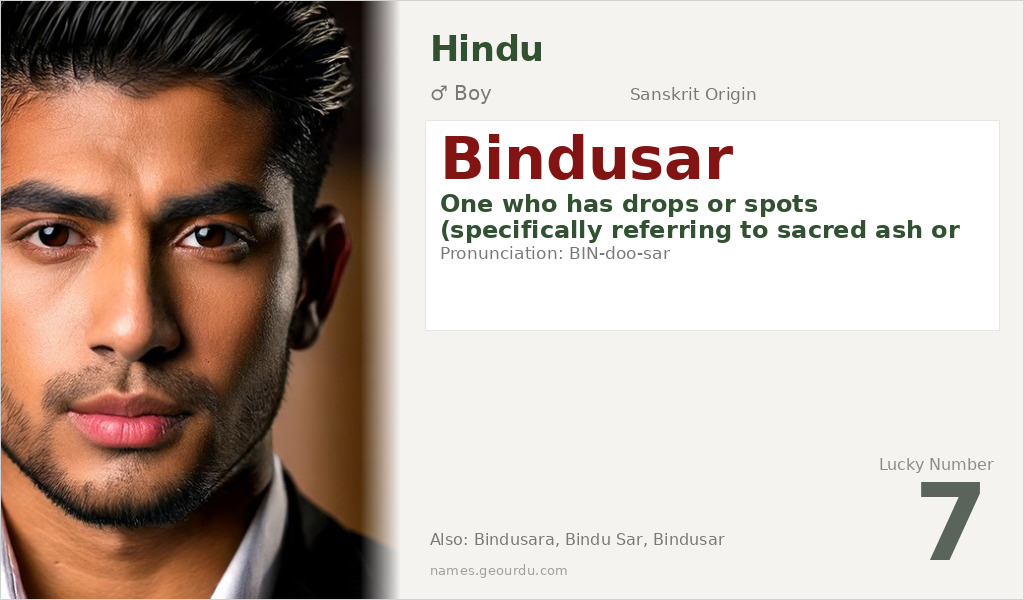
| 📛 Name | Bindusar |
| 💎 Meaning | One who has drops or spots (specifically referring to sacred ash or sandalwood paste markings in Hindu tradition) |
| 👤 Gender | Boy |
| 🕌 Religion | Hindu |
| 🌍 Origin | Sanskrit |
| 🗣 Pronunciation | BIN-doo-sar |
| ✍️ Urdu | بندوسر |
| ✍️ Arabic | بيندوسار |
| 🔢 Numerology | 7 |
| ✨ Spellings | Bindusara, Bindu Sar, Bindusar |
Origin & Cultural Significance
Bindusar has its origins in classical Sanskrit, the ancient liturgical language of Hinduism. The name gained historical prominence through Bindusara Maurya (c. 320–273 BCE), the second emperor of the Mauryan dynasty and father of Ashoka the Great. In historical records, he is noted for expanding his father Chandragupta’s empire and maintaining diplomatic relations with Hellenistic kingdoms. The name appears in various historical texts including Buddhist, Jain, and Puranic sources, though details of his reign vary. Today, the name continues in Hindu communities, particularly among those with interest in historical or traditional names.
Personality Traits
Those named Bindusar are often associated with qualities of precision and spiritual depth, reflecting the name’s meaning of ‘drops’ or specific markings. They may exhibit careful, detail-oriented thinking combined with traditional values. The historical association with Emperor Bindusara adds connotations of leadership, strategic thinking, and diplomatic skill. Many believe the name inspires a balance between worldly responsibility and spiritual awareness.
Similar Names
If you like Bindusar, consider: Bindu, Bindumadhav, Bindu Prakash, Chandragupta, Ashoka
Famous People Named Bindusar
- Bindusara Maurya — Second Mauryan Emperor (c. 320–273 BCE), son of Chandragupta Maurya and father of Ashoka the Great, known for expanding the Mauryan Empire
- Bindusar — Character in Indian historical fiction and television series about the Mauryan Empire
Frequently Asked Questions About Bindusar
What does Bindusar mean?
Bindusar means 'one who has drops or spots' in Sanskrit, specifically referring to sacred markings (tilaka) in Hindu tradition, not 'pearl' as sometimes mistakenly reported.
Is Bindusar a boy or girl name?
Bindusar is exclusively a masculine name in Hindu tradition, historically borne by males including the Mauryan emperor Bindusara.
What is the origin of Bindusar?
Bindusar originates from Sanskrit, the classical language of Hinduism, and is most famously associated with Bindusara Maurya, the second Mauryan emperor in ancient India.





