
Table of Contents
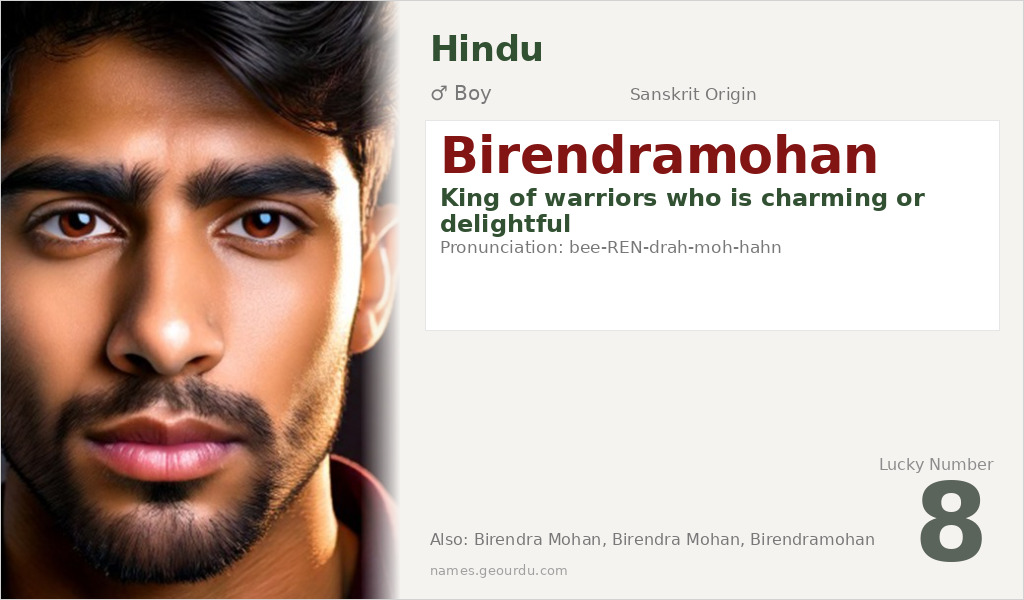
Birendramohan is a distinguished Sanskrit name that carries the powerful meaning of ‘king of warriors who is charming.’ This compound name beautifully combines martial strength with attractive qualities, creating a name that has been cherished in Hindu culture for generations. With roots in classical Sanskrit literature and connections to Hindu mythology, Birendramohan represents both valor and grace. The name continues to be chosen by parents seeking a meaningful, traditional name with deep cultural resonance.
Meaning of Birendramohan
Birendramohan derives from two Sanskrit components that together create a meaningful compound name. The first part, ‘Birendra,’ combines ‘Bīra’ (बीर) meaning warrior or hero with ‘Indra’ (इन्द्र) meaning king or lord, resulting in ‘king of warriors.’ The second component, ‘Mohan’ (मोहन), means charming, delightful, enchanting, or one who attracts. When combined, Birendramohan literally translates to ‘king of warriors who is charming.’ This name follows the classical Sanskrit tradition of creating descriptive names through compounding, where each element contributes to the overall meaning. In Hindu tradition, this name appears as one of the epithets of Lord Krishna, reflecting his dual nature as both a divine warrior and an enchanting personality.
| 📛 Name | Birendramohan |
| 💎 Meaning | King of warriors who is charming or delightful |
| 👤 Gender | Boy |
| 🕌 Religion | Hindu |
| 🌍 Origin | Sanskrit |
| 🗣 Pronunciation | bee-REN-drah-moh-hahn |
| ✍️ Urdu | بیرندر موہن |
| ✍️ Arabic | بيريندرا موهان |
| 🔢 Numerology | 8 |
| ✨ Spellings | Birendra Mohan, Birendra Mohan, Birendramohan |
Origin & Cultural Significance
Birendramohan originates from classical Sanskrit, the ancient liturgical language of Hinduism that has influenced numerous Indian languages. As a compound name, it represents the sophisticated naming traditions of Sanskrit where meaningful elements are combined to create descriptive names. The name has particular significance in Hindu culture due to its association with Lord Krishna, who is celebrated in scriptures like the Bhagavata Purana and Mahabharata. While primarily used in Hindu communities across India and Nepal, the name’s Sanskrit roots give it pan-Indian recognition. The construction follows established patterns seen in other Sanskrit names where ‘Mohan’ serves as a suffix indicating attractive qualities.
Personality Traits
Those named Birendramohan are often associated with leadership qualities combined with personal charm. The name suggests someone who can command respect through strength and bravery while also possessing the ability to attract and influence others through their personality. This balance between martial capability and social grace makes the name particularly appealing for parents seeking both traditional values and positive character associations. The dual nature of the name reflects the ideal of a complete personality who is both effective and appealing.
Similar Names
If you like Birendramohan, consider: Birendra, Mohan, Birendra Kumar, Mohanlal, Birendra Singh
Famous People Named Birendramohan
- Birendra Mohan — Indian politician and former Member of Parliament from Bihar
- Birendra Mohan — Notable individuals in Indian academia and public service bearing this name
Frequently Asked Questions About Birendramohan
What does Birendramohan mean?
Birendramohan means 'king of warriors who is charming' or 'charming king of warriors.' It is a compound Sanskrit name combining 'Birendra' (king of warriors) and 'Mohan' (charming, delightful).
Is Birendramohan a boy or girl name?
Birendramohan is exclusively a boy's name in Hindu naming tradition. The masculine elements 'Birendra' and 'Mohan' both have masculine grammatical forms in Sanskrit, and the name has historically been given only to male children.
What is the origin of Birendramohan?
Birendramohan originates from classical Sanskrit, the ancient language of Hindu scriptures. It follows traditional Sanskrit compounding patterns and has mythological associations with Lord Krishna in Hindu tradition.





