
Table of Contents
Bruce is a classic masculine name with deep historical roots and enduring popularity across English-speaking countries. Most famously associated with Robert the Bruce, the medieval King of Scots, this name carries connotations of strength, leadership, and resilience. From Hollywood actors to legendary martial artists, numerous notable figures have borne this distinguished name. Its straightforward sound and rich heritage continue to make Bruce a timeless choice for parents.
Meaning of Bruce
The name Bruce derives from Norman French, specifically from the place name ‘Brix’ or ‘Bruis’ in what is now Normandy, France. This toponymic origin refers to ‘brushwood’ or ‘thicket’ in Old French (‘brus’), indicating someone who lived near or came from a wooded area. The name entered Scottish nobility through the de Brus family following the Norman Conquest of England. Over centuries, it evolved into the modern form ‘Bruce’ and became permanently associated with Scottish royalty and independence through figures like Robert the Bruce.
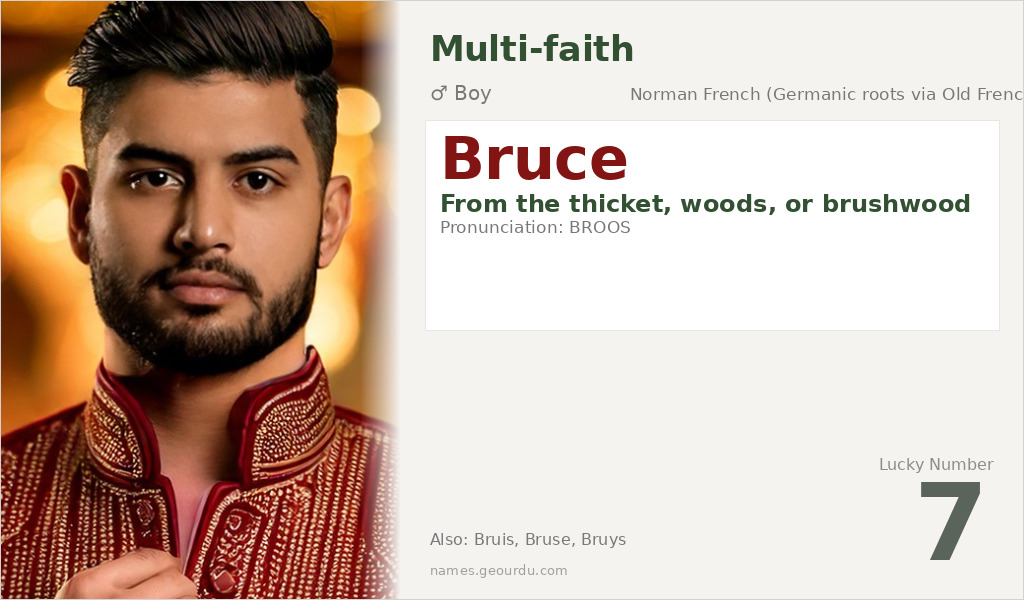
| 📛 Name | Bruce |
| 💎 Meaning | From the thicket, woods, or brushwood |
| 👤 Gender | Boy |
| 🕌 Religion | Multi-faith |
| 🌍 Origin | Norman French (Germanic roots via Old French) |
| 🗣 Pronunciation | BROOS |
| ✍️ Urdu | بروس |
| ✍️ Arabic | بروس |
| 🔢 Numerology | 7 |
| ✨ Spellings | Bruis, Bruse, Bruys |
Origin & Cultural Significance
Bruce originated as a Norman French surname that became a given name, particularly in Scotland. The de Brus family arrived in England with William the Conqueror in 1066 and later established themselves in Scotland, where they rose to royal prominence. The name’s popularity spread throughout the English-speaking world in the 19th and 20th centuries, especially in the United States, United Kingdom, Canada, and Australia. While historically Christian-majority regions adopted the name, Bruce itself has no religious connotations and is used by people of various faiths globally.
Personality Traits
People named Bruce often project an image of reliability, strength, and quiet confidence. They are frequently seen as practical problem-solvers who approach life with determination and perseverance. The name’s association with historical leaders and modern icons contributes to perceptions of leadership capability and resilience. Many Bruces balance traditional values with individualistic traits, making them both grounded and independent.
Similar Names
If you like Bruce, consider: Bryce, Brice, Bronson, Forest, Sylvan
Famous People Named Bruce
- Robert the Bruce — King of Scots (1306-1329) who led Scotland during the First War of Scottish Independence
- Bruce Lee — Hong Kong-American martial artist, actor, and filmmaker who founded Jeet Kune Do
- Bruce Springsteen — American singer-songwriter known as 'The Boss' with iconic rock albums
- Bruce Willis — American actor famous for action roles in films like Die Hard
- Bruce Dickinson — English musician, lead vocalist of Iron Maiden and commercial airline pilot
Frequently Asked Questions About Bruce
What does Bruce mean?
Bruce means 'from the thicket' or 'brushwood,' originating from Norman French place names that referred to wooded areas.
Is Bruce a boy or girl name?
Bruce is traditionally and almost exclusively a masculine name, though extremely rare feminine usage exists in modern times.
What is the origin of Bruce?
Bruce has Norman French origins, specifically from the place name 'Bruis' in Normandy, and became prominent through Scottish nobility and royalty.





