Table of Contents
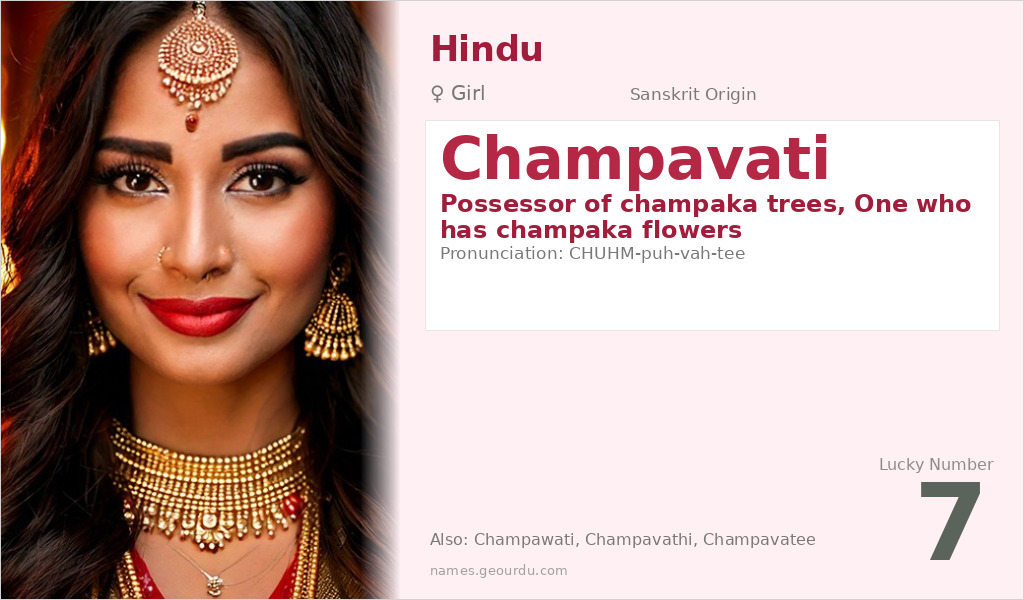
Champavati is a beautiful Sanskrit name for girls that evokes images of fragrant golden flowers and natural elegance. Rooted in ancient Indian tradition, this name carries the poetic meaning of ‘one who possesses champaka trees’ or ‘adorned with champaka flowers’. With its melodic sound and botanical connection, Champavati represents both beauty and spiritual significance in Hindu culture.
Meaning of Champavati
Champavati is a classical Sanskrit compound name with clear etymological roots. The first component ‘champaka’ refers to the Michelia champaca tree, known for its highly fragrant golden-yellow flowers that are sacred in Hinduism and often used in temple offerings. The suffix ‘vati’ is a feminine possessive ending meaning ‘having’ or ‘possessor of’. Thus, the complete meaning translates to ‘she who has champaka flowers’ or ‘possessor of champaka trees’. In Sanskrit literature, champaka flowers symbolize divine beauty, purity, and auspiciousness. The name appears in various Hindu texts and regional folklore, often given to characters associated with natural beauty and grace.
| 📛 Name | Champavati |
| 💎 Meaning | Possessor of champaka trees, One who has champaka flowers |
| 👤 Gender | Girl |
| 🕌 Religion | Hindu |
| 🌍 Origin | Sanskrit |
| 🗣 Pronunciation | CHUHM-puh-vah-tee |
| ✍️ Urdu | چمپاوتی |
| ✍️ Arabic | تشامبافاتي |
| 🔢 Numerology | 7 |
| ✨ Spellings | Champawati, Champavathi, Champavatee |
Origin & Cultural Significance
Champavati originates from classical Sanskrit, the ancient liturgical language of Hinduism. The name reflects the deep botanical and spiritual connections in Indian culture, where specific trees and flowers hold symbolic meanings. Champaka trees (Michelia champaca) are native to South and Southeast Asia and are mentioned in numerous Hindu scriptures, including the Bhagavata Purana and various regional folk traditions. The name has been used historically in Indian literature and continues to be chosen by Hindu families, particularly those with appreciation for Sanskrit names and natural imagery. While primarily used in Hindu communities, the name’s botanical theme gives it universal appeal.
Personality Traits
The name Champavati suggests qualities of natural elegance, fragrance, and beauty. Like the champaka flower it references, individuals with this name are often perceived as bringing brightness and pleasantness to their environments. There’s an artistic sensibility implied by the name, connecting the bearer to aesthetic appreciation and natural harmony. The name carries connotations of grace, purity, and spiritual connection through its association with temple flowers and divine offerings.
Similar Names
If you like Champavati, consider: Champa, Champakali, Champika, Vasanti, Malati
Famous People Named Champavati
- Champavati (mythological) — In Hindu mythology, Champavati is mentioned as a princess or divine figure associated with beauty and nature
- Champavati Shastri — 20th century Sanskrit scholar and writer from India
Frequently Asked Questions About Champavati
What does Champavati mean?
Champavati means 'possessor of champaka trees' or 'one who has champaka flowers' in Sanskrit. It combines 'champaka' (the fragrant Michelia champaca tree) with 'vati' (possessive feminine suffix).
Is Champavati a boy or girl name?
Champavati is exclusively a feminine name in Hindu tradition. The '-vati' suffix is specifically feminine in Sanskrit grammar, and historical usage consistently applies it to female characters and individuals.
What is the origin of Champavati?
Champavati originates from classical Sanskrit, the ancient language of Hindu scriptures. It's a compound name reflecting the cultural significance of the champaka tree in Hindu tradition, where its fragrant flowers are used in religious ceremonies and symbolize divine beauty.