
Table of Contents
Chitrangi is a beautiful Sanskrit name for girls that carries rich cultural and mythological significance. Derived from ancient Indian roots, this name evokes imagery of color, beauty, and extraordinary charm. Most famously associated with Princess Chitrāngadā from the Mahabharata, the name has maintained its appeal through centuries of Indian naming tradition. Today, it represents both classical heritage and contemporary elegance.
Meaning of Chitrangi
Chitrangi originates from the Sanskrit language, combining ‘Chitra’ (चित्र) meaning ‘variegated, colorful, wonderful, or extraordinary’ and ‘Angi’ (अङ्गी) meaning ‘one who possesses’ or ‘having a body’. The complete meaning translates to ‘one who has a variegated or colorful body’ or ‘adorned with beautiful colors’. In Sanskrit literature, ‘Chitra’ carries connotations of something remarkable, bright, and multi-hued, often used to describe exceptional beauty. The name appears in classical texts and Hindu mythology, particularly in the Mahabharata where Princess Chitrāngadā was known for her exceptional beauty and martial skills. This etymological construction follows common Sanskrit naming patterns where qualities are attributed to the person through compound words.
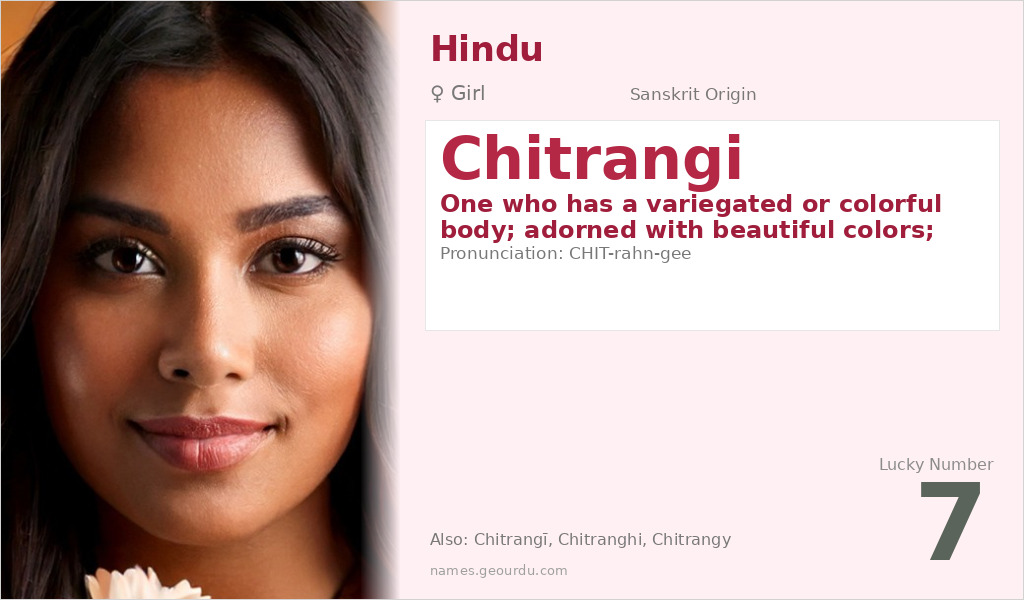
| 📛 Name | Chitrangi |
| 💎 Meaning | One who has a variegated or colorful body; adorned with beautiful colors; possessing a charming form |
| 👤 Gender | Girl |
| 🕌 Religion | Hindu |
| 🌍 Origin | Sanskrit |
| 🗣 Pronunciation | CHIT-rahn-gee |
| ✍️ Urdu | چترنگی |
| ✍️ Arabic | تشترانغي |
| 🔢 Numerology | 7 |
| ✨ Spellings | Chitrangī, Chitranghi, Chitrangy, Chitrangee |
Origin & Cultural Significance
Chitrangi has its origins in ancient Sanskrit literature and Hindu mythology, most prominently appearing in the Mahabharata epic. The name is associated with Princess Chitrāngadā, the daughter of King Chitravahana of Manipur, who married Arjuna and became mother to Babruvahana. In this context, the name reflects both physical beauty and royal heritage. The name has been used in Indian culture for centuries, particularly among Hindu communities, and was revitalized in modern times through Rabindranath Tagore’s 1892 dance drama ‘Chitrāngadā’. While primarily a Hindu name, its Sanskrit roots give it cultural significance across South Asia, appearing occasionally in literary and artistic contexts beyond strictly religious usage.
Personality Traits
Those named Chitrangi are often perceived as creative, vibrant individuals with a strong aesthetic sensibility. Their name’s meaning suggests someone who appreciates and embodies beauty in various forms, whether in art, relationships, or personal expression. They tend to be adaptable and multi-faceted, able to navigate different social situations with grace. The mythological association with Princess Chitrāngadā adds layers of strength, independence, and capability to the name’s personality connotations.
Similar Names
If you like Chitrangi, consider: Chitralekha, Chitramala, Rangini, Varnini, Sundari
Famous People Named Chitrangi
- Chitrāngadā — A princess in the Mahabharata who married Arjuna and was mother of Babruvahana
- Chitrāngadā — Character in Rabindranath Tagore's dance drama based on the Mahabharata story
Frequently Asked Questions About Chitrangi
What does Chitrangi mean?
Chitrangi means 'one who has a variegated or colorful body' or 'adorned with beautiful colors' in Sanskrit, combining 'Chitra' (colorful/extraordinary) and 'Angi' (possessing).
Is Chitrangi a boy or girl name?
Chitrangi is exclusively a girl's name in Hindu naming tradition, with all historical and mythological references being female, most notably Princess Chitrāngadā from the Mahabharata.
What is the origin of Chitrangi?
Chitrangi originates from Sanskrit language and Hindu mythology, specifically from the Mahabharata epic where it was the name of a princess from Manipur who married Arjuna.





