
Table of Contents
Cinderella is one of the most recognizable names in world literature, immortalized by the beloved fairy tale of a kind-hearted girl who rises from ashes to royalty. While many know the story, fewer understand the name’s actual linguistic origins and meaning. This name carries a rich history that extends beyond the Disney adaptation, rooted in French language and European folklore traditions.
Meaning of Cinderella
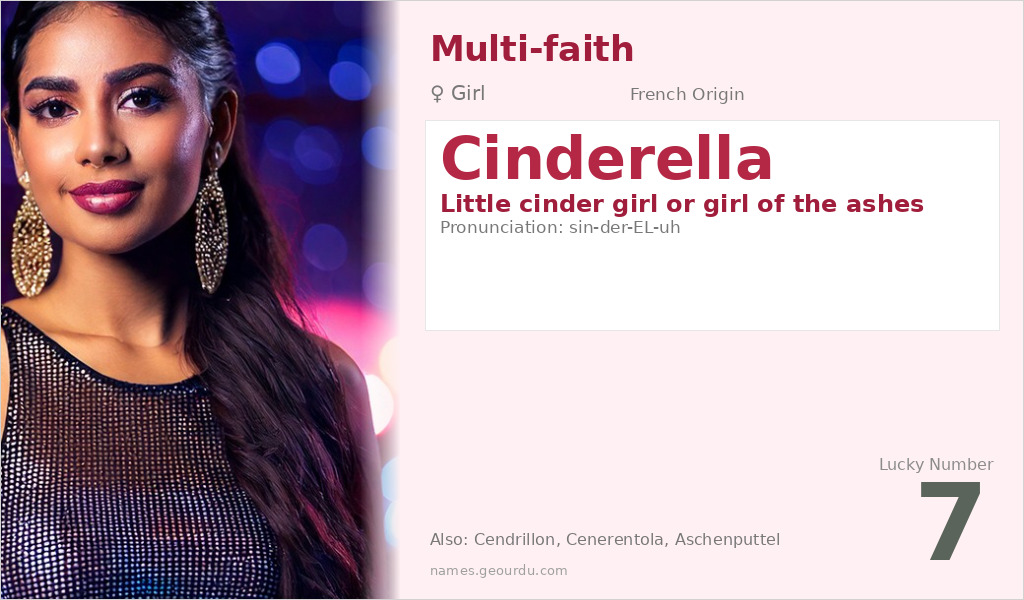
The name Cinderella has a clear and well-documented etymology from French language roots. It derives from ‘Cendrillon’, the French name for the fairy tale character, which combines ‘cendre’ (meaning ‘ashes’) with the diminutive suffix ‘-illon’. The English adaptation ‘Cinderella’ follows the same pattern with ‘-ella’ as a diminutive ending. This creates the literal meaning ‘little cinder girl’ or ‘girl of the ashes’. The name reflects the character’s circumstances in the original story, where she sleeps among the ashes of the fireplace. This ash-related naming convention appears in various European folk traditions, with similar names found in Italian (‘Cenerentola’), German (‘Aschenputtel’), and Spanish (‘Cenicienta’) versions of the tale.
| 📛 Name | Cinderella |
| 💎 Meaning | Little cinder girl or girl of the ashes |
| 👤 Gender | Girl |
| 🕌 Religion | Multi-faith |
| 🌍 Origin | French |
| 🗣 Pronunciation | sin-der-EL-uh |
| ✍️ Urdu | سنڈریلا |
| ✍️ Arabic | سندريلا |
| 🔢 Numerology | 7 |
| ✨ Spellings | Cendrillon, Cenerentola, Aschenputtel, Cenicienta |
Origin & Cultural Significance
Cinderella originated as a literary name in French culture through Charles Perrault’s 1697 publication ‘Histoires ou contes du temps passé’ (Stories or Tales of Past Times). While Perrault popularized the name, similar ash-related characters appear in earlier European folklore, including the Italian story ‘La Gatta Cenerentola’ published by Giambattista Basile in 1634. The name represents a specific type of folk narrative found across cultures—the persecuted heroine who triumphs through virtue. It’s important to note that Cinderella is primarily a literary and fictional name rather than a traditional given name with religious or cultural associations in naming practices. The name gained global recognition through various adaptations, most notably Disney’s 1950 animated film.
Personality Traits
While personality traits aren’t inherent to names, Cinderella carries strong symbolic associations from the character’s journey. The name evokes qualities of resilience, patience, and inner strength that shine through adversity. Those familiar with the story might associate the name with transformation, kindness rewarded, and maintaining grace under difficult circumstances. The name suggests someone who can emerge triumphant from challenging situations while retaining their essential goodness and dignity.
Similar Names
If you like Cinderella, consider: Cendrine, Cinder, Ella, Celia, Aurora
Famous People Named Cinderella
- Cinderella — Fictional character from the European fairy tale, first published by Charles Perrault in 1697
- Cinderella (musician) — American rock band formed in 1982
Frequently Asked Questions About Cinderella
What does Cinderella mean?
Cinderella means 'little cinder girl' or 'girl of the ashes', derived from the French word 'cendre' (ashes) with the diminutive suffix '-ella'.
Is Cinderella a boy or girl name?
Cinderella is exclusively a girl's name, originating from the female protagonist of the European fairy tale. There are no recorded instances of it being used for boys.
What is the origin of Cinderella?
Cinderella originates from French language and folklore, specifically from Charles Perrault's 1697 fairy tale adaptation. The name comes from 'Cendrillon', combining 'cendre' (ashes) with a diminutive suffix.





