
Table of Contents
Cuthberta is a distinctive and historically rich name that carries the weight of Anglo-Saxon heritage and Christian tradition. As the feminine form of Cuthbert, it evokes images of early medieval England, where names were crafted from meaningful elements like ‘famous’ and ‘bright’. Though uncommon today, Cuthberta offers a unique connection to a time when spirituality and renown were intertwined in naming practices. This name is a beautiful choice for parents seeking a name with deep historical roots and a luminous meaning.
Meaning of Cuthberta
Cuthberta derives from Old English, a Germanic language spoken in England from the 5th to the 12th centuries. It is composed of two elements: ‘cūþ’, meaning ‘famous, known, or renowned’, and ‘beorht’, meaning ‘bright, brilliant, or shining’. Together, they form a name that signifies ‘famous and brilliant’, reflecting the Anglo-Saxon practice of creating compound names with positive attributes. This naming convention was common among early Christians in England, who often chose names that conveyed moral or aspirational qualities. The masculine form, Cuthbert, was famously borne by a 7th-century saint, while Cuthberta represents its rare feminine counterpart. Linguistically, it showcases the Germanic roots that influenced many English names before the Norman Conquest introduced French elements.
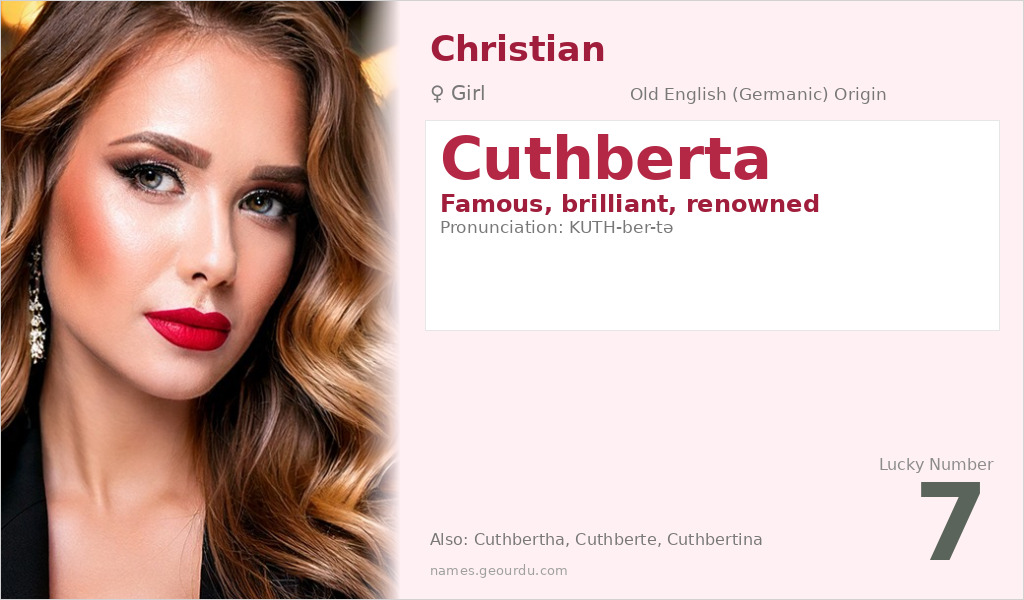
| 📛 Name | Cuthberta |
| 💎 Meaning | Famous, brilliant, renowned |
| 👤 Gender | Girl |
| 🕌 Religion | Christian |
| 🌍 Origin | Old English (Germanic) |
| 🗣 Pronunciation | KUTH-ber-tə |
| ✍️ Urdu | کیوتھبرٹا |
| ✍️ Arabic | كوثبرتا |
| 🔢 Numerology | 7 |
| ✨ Spellings | Cuthbertha, Cuthberte, Cuthbertina |
Origin & Cultural Significance
Cuthberta originates from Anglo-Saxon England, a period spanning roughly from the 5th century to the Norman Conquest in 1066. During this time, Old English was the dominant language, and names were typically Germanic in structure, often combining two meaningful words. The name is closely associated with early English Christianity, particularly through Saint Cuthbert of Lindisfarne, a revered monk and bishop whose legacy popularized the masculine form. While Cuthberta itself is not widely documented in historical records, it follows the pattern of feminine names derived from masculine ones, such as Alberta from Albert. Its usage would have been among Anglo-Saxon Christians, likely in religious or noble contexts, though it remains a rarity compared to other period names. Today, it serves as a linguistic artifact of England’s pre-Norman past and Christian heritage.
Personality Traits
Those named Cuthberta are often thought to embody the name’s meanings of fame and brilliance, displaying intelligence, confidence, and a radiant personality. They may be drawn to spiritual or intellectual pursuits, reflecting the name’s historical ties to saintly figures and early Christian culture. With a natural charisma, they can inspire others and leave a lasting impression, much like the renowned individuals from whom the name derives. Their connection to tradition might also make them appreciative of history and heritage.
Similar Names
If you like Cuthberta, consider: Cuthbert, Bertha, Alberta, Roberta, Egberta
Famous People Named Cuthberta
- Saint Cuthbert of Lindisfarne — 7th-century Anglo-Saxon monk, bishop, and hermit, though masculine, his name is the source of Cuthberta
- Cuthberta (historical figure) — rare medieval usage, occasionally recorded in Anglo-Saxon charters and religious contexts
Frequently Asked Questions About Cuthberta
What does Cuthberta mean?
Cuthberta means 'famous and brilliant' in Old English, derived from the elements 'cūþ' (famous) and 'beorht' (bright).
Is Cuthberta a boy or girl name?
Cuthberta is a girl's name, specifically the feminine form of the masculine name Cuthbert, rooted in Anglo-Saxon naming traditions.
What is the origin of Cuthberta?
Cuthberta originates from Old English (a Germanic language) in Anglo-Saxon England, associated with early Christian culture and historical figures like Saint Cuthbert.





