Table of Contents
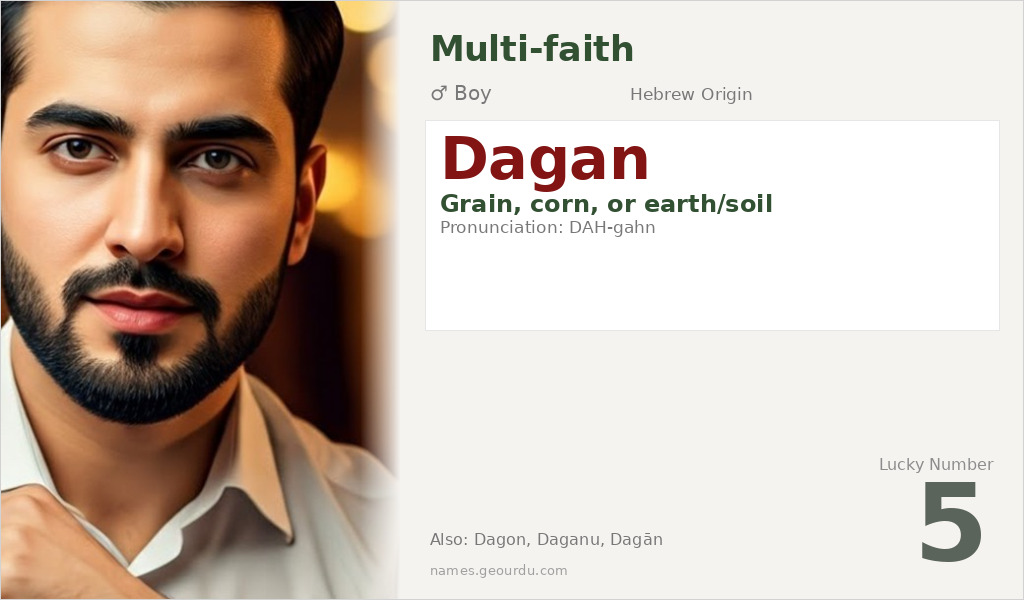
Dagan is a name rich with ancient history and agricultural symbolism. Originating from Semitic languages, this name carries meanings of grain, fertility, and the earth itself. While relatively uncommon today, Dagan connects modern bearers to millennia of cultural heritage from the ancient Near East. This exploration reveals the true origins and significance behind this distinctive name.
Meaning of Dagan
The name Dagan has a clear and well-documented meaning rooted in Semitic languages. In Hebrew, דָּגָן (dagan) literally translates to ‘grain’ or ‘corn,’ specifically referring to cereal crops like wheat and barley. This agricultural meaning extends to related Northwest Semitic languages including Ugaritic and Phoenician. Beyond its literal meaning, Dagan was also the name of an important ancient deity worshipped across Mesopotamia and Canaan as a god of agriculture, fertility, and the earth. The name’s etymology connects it to concepts of nourishment, growth, and the fundamental elements that sustain life, making it one of the most ancient names still in occasional use today.
| 📛 Name | Dagan |
| 💎 Meaning | Grain, corn, or earth/soil |
| 👤 Gender | Boy |
| 🕌 Religion | Multi-faith |
| 🌍 Origin | Hebrew |
| 🗣 Pronunciation | DAH-gahn |
| ✍️ Urdu | ڈیگن |
| ✍️ Arabic | داجان |
| 🔢 Numerology | 5 |
| ✨ Spellings | Dagon, Daganu, Dagān |
Origin & Cultural Significance
Dagan originates from ancient Semitic cultures of the Near East, with its earliest documented usage appearing in third millennium BCE Mesopotamian texts. The name gained prominence as the name of Dagan, a major deity worshipped by the Amorites, Assyrians, Babylonians, and Canaanites. In the Hebrew Bible, the name appears both as a common noun for grain and in place names like Beth-dagon. While the name has Hebrew origins, it transcends specific religious boundaries and has been used by people of various faiths, particularly in regions influenced by Semitic languages and cultures. Today, it remains a rare but meaningful choice with deep historical roots.
Personality Traits
Those named Dagan often embody qualities associated with their name’s agricultural and earthly meanings. They may demonstrate practicality, reliability, and a nurturing disposition—characteristics that mirror the sustaining nature of grain. With connections to ancient deities of fertility, the name suggests someone who fosters growth and stability in their relationships and endeavors. This grounding influence can make Dagans appear as steady, dependable individuals who value substance over superficiality.
Similar Names
If you like Dagan, consider: Dagon, Daganu, Daganiel, Dag, Daganel
Famous People Named Dagan
- Dagan (Biblical figure) — A place mentioned in the Book of Joshua in the Hebrew Bible
- Dagan (deity) — Ancient Mesopotamian and Canaanite god of agriculture and fertility worshipped throughout the Near East
Frequently Asked Questions About Dagan
What does Dagan mean?
Dagan means 'grain' or 'corn' in Hebrew, with additional connections to earth and fertility from its use as the name of an ancient Semitic agricultural deity.
Is Dagan a boy or girl name?
Dagan is traditionally a masculine name, though its usage is rare enough that it could theoretically be adapted. Historically, it has been exclusively male, particularly as it was the name of a male deity.
What is the origin of Dagan?
Dagan originates from ancient Semitic languages, specifically Hebrew and related Northwest Semitic languages like Ugaritic and Phoenician, with documented usage dating back to third millennium BCE Mesopotamia.