
Table of Contents
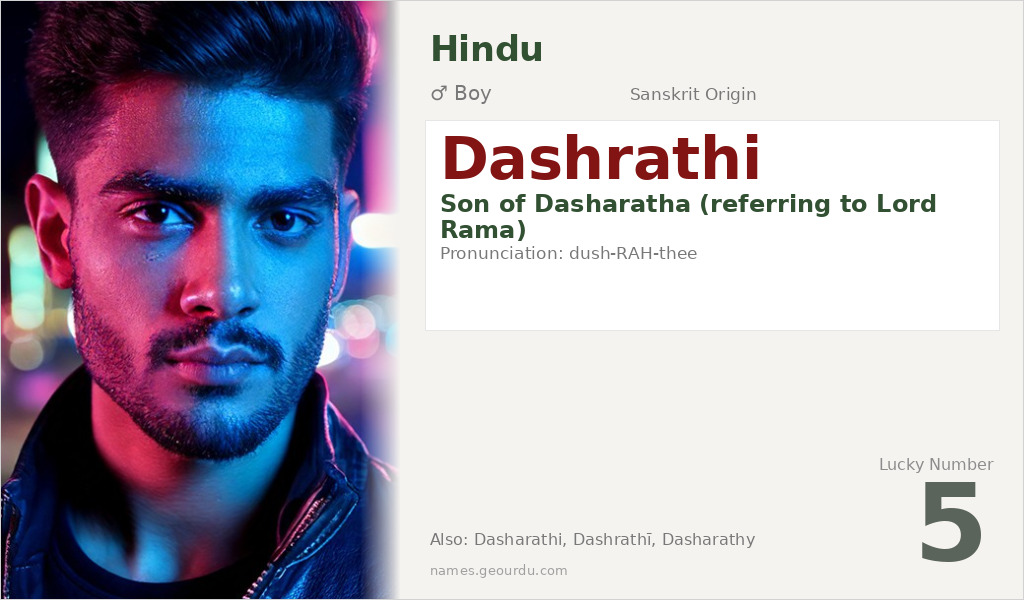
Dashrathi is a distinguished Hindu boy name steeped in ancient Indian mythology and Sanskrit tradition. As an epithet for Lord Rama, it carries profound religious significance and royal heritage. This name evokes the virtues of duty, honor, and divine lineage celebrated in the epic Ramayana. Parents choosing Dashrathi bestow upon their son a name that connects him to one of Hinduism’s most revered figures.
Meaning of Dashrathi
Dashrathi derives from the Sanskrit compound ‘Dasharatha’ (दशरथ), which breaks down to ‘dasha’ meaning ‘ten’ and ‘ratha’ meaning ‘chariot,’ thus ‘possessing ten chariots’ or metaphorically ‘mighty warrior.’ The suffix ‘-i’ indicates descent, making Dashrathi literally translate to ‘son of Dasharatha’ or ‘belonging to Dasharatha.’ In Hindu scriptures, particularly the Valmiki Ramayana, Dasharatha was the righteous king of Ayodhya and father of Lord Rama, Lakshmana, Bharata, and Shatrughna. Therefore, Dashrathi specifically refers to Rama as the royal heir, emphasizing his paternal lineage and dynastic importance. This name is primarily used as an honorific title for Rama rather than a common given name, though it has been adopted as a personal name in Hindu communities.
| 📛 Name | Dashrathi |
| 💎 Meaning | Son of Dasharatha (referring to Lord Rama) |
| 👤 Gender | Boy |
| 🕌 Religion | Hindu |
| 🌍 Origin | Sanskrit |
| 🗣 Pronunciation | dush-RAH-thee |
| ✍️ Urdu | دشرتھی |
| ✍️ Arabic | داشاراتي |
| 🔢 Numerology | 5 |
| ✨ Spellings | Dasharathi, Dashrathī, Dasharathy, Dasharati |
Origin & Cultural Significance
The origin of Dashrathi is exclusively Sanskrit and Hindu, rooted in the ancient Indian epic Ramayana, composed between the 7th and 4th centuries BCE. It emerged as a patronymic epithet for Lord Rama, highlighting his identity as the son of King Dasharatha of the Solar Dynasty (Suryavansha). Culturally, the name symbolizes royal lineage, dharma (righteous duty), and divine incarnation (Rama as an avatar of Vishnu). While predominantly used in India and among Hindu diaspora communities, its usage as a personal name is less common than its scriptural reference, often chosen by devout families seeking to honor Rama’s legacy. The name appears in various regional languages influenced by Sanskrit, including Hindi, Bengali, Marathi, and Telugu, with slight phonetic variations.
Personality Traits
Named after Lord Rama, a Dashrathi is expected to embody ideal qualities such as integrity, courage, and compassion. These individuals often display strong leadership skills, a sense of justice, and unwavering commitment to their principles. They may be seen as protectors and pillars of their families, reflecting Rama’s role as the perfect son, husband, and king. The name inspires a personality that balances strength with humility and tradition with responsibility.
Similar Names
If you like Dashrathi, consider: Rama, Ramachandra, Raghava, Raghunandan, Dasaratha
Famous People Named Dashrathi
- Dasharathi (poet) — 20th century Indian poet and lyricist from Tamil Nadu
- Dasharathi Rangacharya — Sanskrit scholar and author
Frequently Asked Questions About Dashrathi
What does Dashrathi mean?
Dashrathi means 'son of Dasharatha,' specifically referring to Lord Rama in Hindu mythology. It comes from Sanskrit where 'Dasharatha' means 'ten chariots' and the suffix '-i' indicates descent.
Is Dashrathi a boy or girl name?
Dashrathi is exclusively a boy name in Hindu tradition, as it refers to Lord Rama, a male deity and epic hero. There are no documented feminine variants.
What is the origin of Dashrathi?
Dashrathi originates from Sanskrit and Hindu culture, derived from the Ramayana epic. It is a patronymic title for Rama, emphasizing his lineage as son of King Dasharatha of Ayodhya.





