
Table of Contents
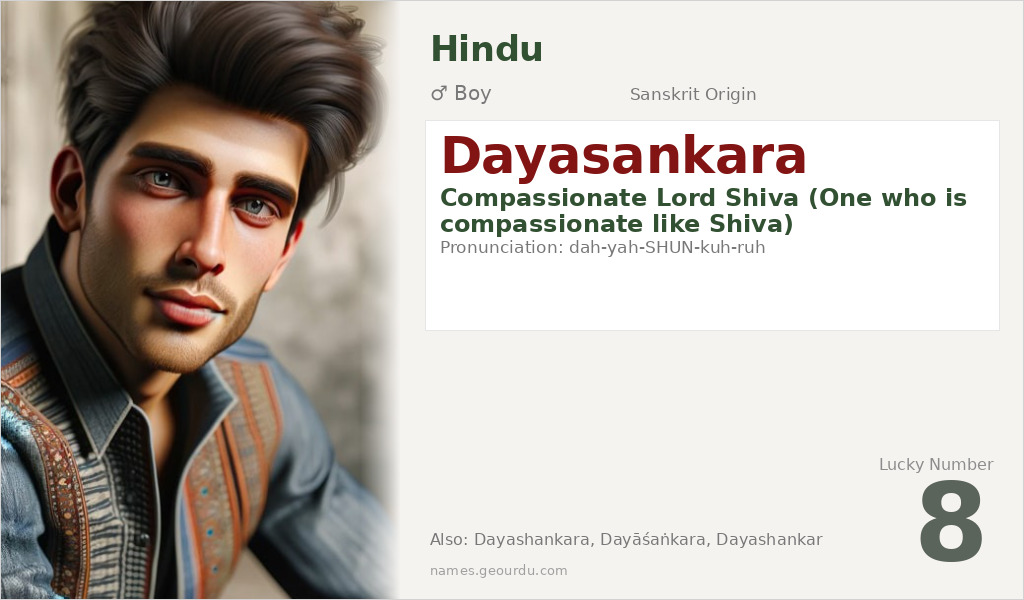
Dayasankara is a profound Sanskrit name that beautifully combines divine compassion with spiritual power. Primarily used in Hindu communities, this name carries the essence of Lord Shiva’s merciful nature. Parents choosing this name often seek to imbue their child with both strength and kindness. With its rich linguistic heritage, Dayasankara represents a timeless connection to Hindu devotional traditions.
Meaning of Dayasankara
Dayasankara derives from classical Sanskrit, combining ‘Dayā’ (compassion) and ‘Śaṅkara’ (Lord Shiva). The component ‘Dayā’ comes from the Sanskrit root ‘dī’ meaning ‘to give’ or ‘to bestow’, evolving to represent mercy and kindness in Vedic literature. ‘Śaṅkara’ originates from ‘śam’ (auspicious) and ‘kara’ (maker), making Shiva ‘the maker of auspiciousness’. Together, they create a name meaning ‘Shiva who is compassionate’ or ‘the compassionate form of Shiva’. This compound structure follows traditional Sanskrit naming patterns where divine attributes are combined with deity names. The name appears in various Hindu texts and regional traditions across India, maintaining consistent linguistic meaning.
| 📛 Name | Dayasankara |
| 💎 Meaning | Compassionate Lord Shiva (One who is compassionate like Shiva) |
| 👤 Gender | Boy |
| 🕌 Religion | Hindu |
| 🌍 Origin | Sanskrit |
| 🗣 Pronunciation | dah-yah-SHUN-kuh-ruh |
| ✍️ Urdu | دیاشنکر |
| ✍️ Arabic | داياشانكارا |
| 🔢 Numerology | 8 |
| ✨ Spellings | Dayashankara, Dayāśaṅkara, Dayashankar, Dayasankar |
Origin & Cultural Significance
Dayasankara originates from Sanskrit, the classical language of Hindu scriptures including the Vedas, Puranas, and epics. As a compound theophoric name, it reflects the Hindu tradition of naming children after divine attributes and deities, particularly popular among Shaivite (Shiva-worshipping) communities. The name has been used historically in various regions of India, especially in Sanskrit-educated communities and priestly families. While not among the most common Shiva-related names, it maintains cultural significance in specific Hindu traditions. The name’s usage spans several centuries, appearing in regional records and family lineages dedicated to Shiva worship.
Personality Traits
Those named Dayasankara are often associated with qualities of mercy, spiritual depth, and protective instincts. Drawing from the name’s meaning, they may exhibit a balanced nature—combining Shiva’s transformative power with compassionate understanding. In social contexts, they frequently emerge as mediators who resolve conflicts with wisdom rather than force. Their connection to Shiva symbolism suggests resilience during challenges and a philosophical approach to life’s difficulties.
Similar Names
If you like Dayasankara, consider: Dayanand, Dayaram, Shankara, Shankar, Dayalu, Karunamaya, Kripalu, Anandshankar, Shivdayal, Shivshankar
Famous People Named Dayasankara
- Dayasankara Sri — A Hindu spiritual teacher and author known for works on Shiva devotion
- Dayasankar — Historical figure mentioned in regional Hindu texts as a devotee of Shiva
Frequently Asked Questions About Dayasankara
What does Dayasankara mean?
Dayasankara means 'Compassionate Lord Shiva' in Sanskrit, combining 'Dayā' (compassion) and 'Śaṅkara' (Lord Shiva).
Is Dayasankara a boy or girl name?
Dayasankara is exclusively a boy's name in Hindu naming traditions, following the masculine grammatical structure of Sanskrit compound names.
What is the origin of Dayasankara?
Dayasankara originates from Sanskrit, the classical language of Hindu scriptures, and is used primarily in Hindu communities with Shaivite traditions.





