
Table of Contents
Dayavant is a distinctive Hindu boy name with roots in ancient Sanskrit language and culture. While not among the most common traditional names, it carries meaningful connotations of compassion and mercy. This name reflects the enduring value placed on virtuous qualities in Hindu naming traditions. Understanding its linguistic origins provides insight into its cultural significance.
Meaning of Dayavant
The name Dayavant derives from the Sanskrit word ‘dayā’ (दया), which means compassion, mercy, or pity. Combined with the suffix ‘-vant’ (वन्त्), which indicates possession or ‘having the quality of,’ the name essentially means ‘one who possesses compassion’ or ‘merciful one.’ This construction follows a common pattern in Sanskrit where abstract qualities become personal attributes through suffixation. While the individual components are well-documented in classical Sanskrit literature, the specific compound ‘Dayavant’ appears less frequently in historical texts than similar formations like ‘Dayanand’ (joy of compassion) or ‘Dayaram’ (mercy of Rama). The name embodies the Hindu ideal of karuṇā (compassion) as a spiritual virtue.
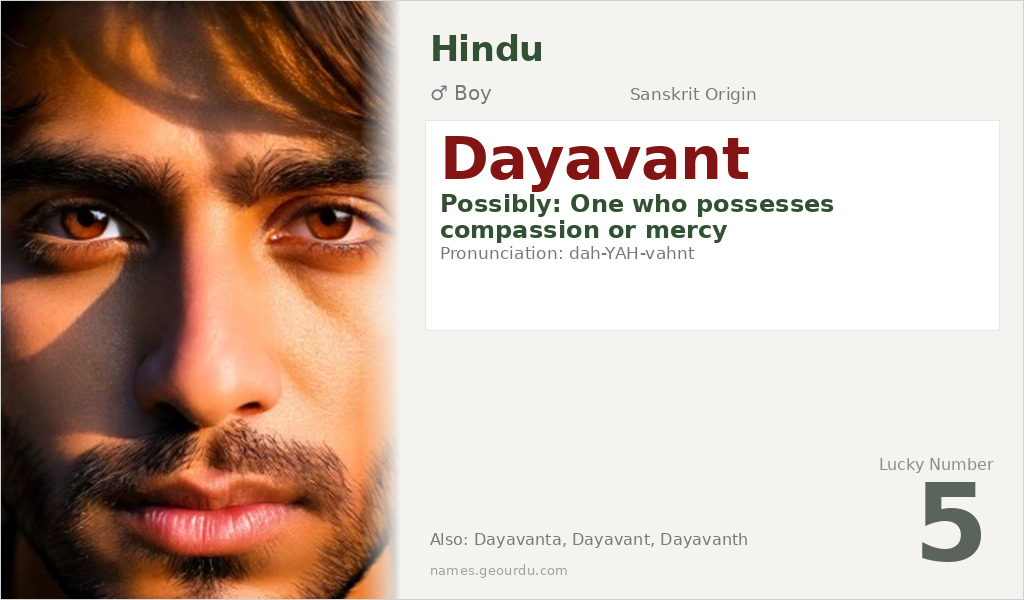
| 📛 Name | Dayavant |
| 💎 Meaning | Possibly: One who possesses compassion or mercy |
| 👤 Gender | Boy |
| 🕌 Religion | Hindu |
| 🌍 Origin | Sanskrit |
| 🗣 Pronunciation | dah-YAH-vahnt |
| ✍️ Urdu | دیونت |
| ✍️ Arabic | دايافانت |
| 🔢 Numerology | 5 |
| ✨ Spellings | Dayavanta, Dayavant, Dayavanth |
Origin & Cultural Significance
Dayavant originates from Sanskrit, the classical language of ancient India that has influenced Hindu religious texts, philosophy, and naming conventions for millennia. As a modern Hindu name, it continues the tradition of bestowing children with names that reflect desirable qualities and virtues. While not found in the Vedas or major Puranas, it follows established linguistic patterns common in Indian naming practices. The name is primarily used within Hindu communities, particularly in regions where Sanskrit-derived names remain popular. Its creation likely follows the pattern of other ‘-vant’ suffix names that have been used historically to denote possession of specific attributes.
Personality Traits
Those named Dayavant are often associated with compassionate and caring personalities, reflecting the meaning of their name. They may demonstrate empathy and understanding in their interactions with others, valuing emotional connections and harmony. This merciful disposition can make them effective mediators and supportive friends or family members. While personality traits vary by individual, the name’s meaning suggests someone who approaches life with kindness and consideration for others.
Similar Names
If you like Dayavant, consider: Dayanand, Dayaram, Dayashankar, Karunavant, Daya Sagar
Famous People Named Dayavant
- No widely known public figures with this exact name found in historical or contemporary records
Frequently Asked Questions About Dayavant
What does Dayavant mean?
Dayavant likely means 'one who possesses compassion' or 'merciful one,' derived from Sanskrit 'dayā' (compassion) and the suffix '-vant' (possessing).
Is Dayavant a boy or girl name?
Dayavant is traditionally a boy's name in Hindu naming conventions, following the pattern of Sanskrit masculine names ending in '-vant.'
What is the origin of Dayavant?
Dayavant originates from Sanskrit, the classical language of ancient India, and is used primarily within Hindu cultural and religious contexts.





