
Table of Contents
Daylam is a distinctive masculine name with deep historical roots in Persian geography and culture. Unlike many names with descriptive meanings, Daylam derives from a specific region in northern Iran that played a significant role in Middle Eastern history. This name carries the legacy of the resilient Daylamite people who maintained their independence for centuries. Today, it serves as a meaningful connection to Persian heritage and geographical identity.
Meaning of Daylam
The name Daylam has a clear geographical meaning, referring to the historical region of Daylam in what is now northern Iran’s Gilan province. Etymologically, it comes from Middle Persian ‘Daylamān’, which described both the mountainous territory and its inhabitants. The Daylamites were known for their martial prowess and maintained autonomy from successive empires including the Sassanids and early Islamic caliphates. In the 10th-11th centuries, Daylamite warriors established the Buyid dynasty that ruled parts of the Islamic world. Thus, the name carries connotations of regional identity, independence, and historical significance rather than a descriptive personal quality.
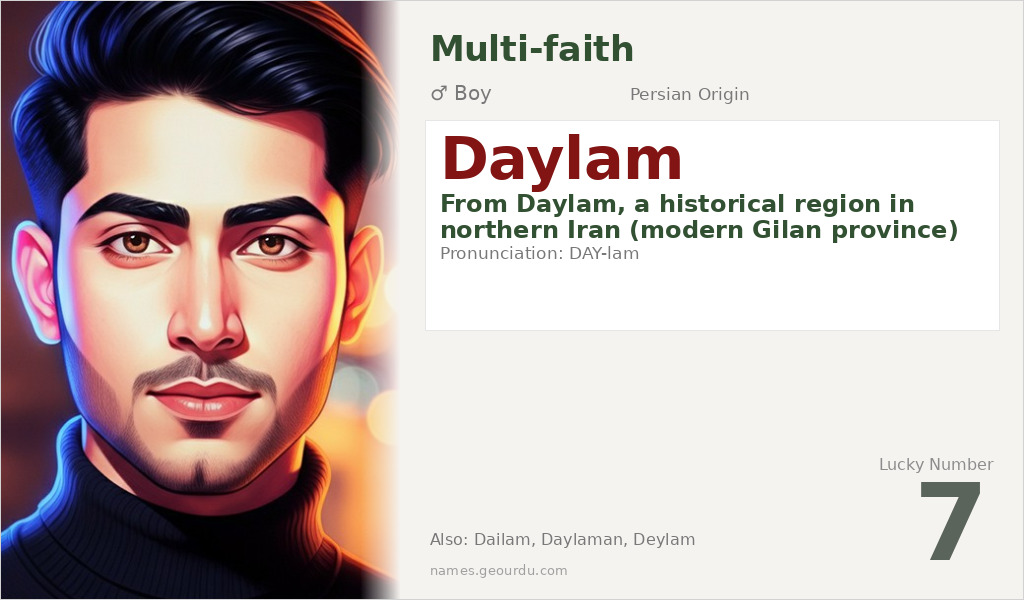
| 📛 Name | Daylam |
| 💎 Meaning | From Daylam, a historical region in northern Iran (modern Gilan province) |
| 👤 Gender | Boy |
| 🕌 Religion | Multi-faith |
| 🌍 Origin | Persian |
| 🗣 Pronunciation | DAY-lam |
| ✍️ Urdu | دیلَم |
| ✍️ Arabic | ديلم |
| 🔢 Numerology | 7 |
| ✨ Spellings | Dailam, Daylaman, Deylam, Dailaman |
Origin & Cultural Significance
Daylam originates from Persian language and culture, specifically referencing the Daylam region along the southern Caspian Sea coast. This area has been inhabited since ancient times by people who developed distinct cultural and linguistic characteristics. During the Islamic period, Daylamites gained prominence as soldiers and eventually as rulers through the Buyid dynasty. While the name has been used by Muslim communities due to historical connections, it predates Islam and represents a geographical identity that transcends religious boundaries. The name continues to be used in Persian-speaking regions and among diaspora communities as a connection to this historic territory.
Personality Traits
Those named Daylam often embody characteristics associated with their namesake region’s history—resilience, independence, and strength. The Daylamite people were historically known for their fierce independence and martial traditions, qualities that may symbolically transfer to namesakes. Individuals with this name might display determination, loyalty to their roots, and a protective nature. While personality traits vary individually, the name’s historical context suggests connections to leadership, cultural pride, and enduring spirit.
Similar Names
If you like Daylam, consider: Dara, Darius, Kian, Ramin, Farhad
Famous People Named Daylam
- Daylam ibn al-Hasan al-Daylami — 10th century Islamic scholar and traditionist from Daylam region
- Buyid dynasty rulers — Many were of Daylamite origin and ruled parts of the Islamic world in 10th-11th centuries
Frequently Asked Questions About Daylam
What does Daylam mean?
Daylam means 'from Daylam,' referring to the historical region in northern Iran (modern Gilan province). It's a geographical name with Persian origins.
Is Daylam a boy or girl name?
Daylam is traditionally a masculine name, though as a geographical reference it could theoretically be used for any gender. Historically and culturally, it has been used primarily for boys.
What is the origin of Daylam?
Daylam originates from Persian language and culture, specifically from the historical Daylam region in northern Iran. The name references both the territory and its inhabitants who played significant roles in Middle Eastern history.





