
Table of Contents
Debendra is a powerful Sanskrit name with deep roots in Hindu tradition and mythology. Meaning ‘Lord of the gods’ or ‘King of the gods’, this name carries regal and divine connotations that have made it a meaningful choice for centuries. Primarily used in Hindu communities across India, Bangladesh, and Nepal, Debendra represents both spiritual authority and leadership qualities. The name’s classical origins and significant meaning continue to resonate with parents seeking a name with cultural depth.
Meaning of Debendra
Debendra is a compound Sanskrit name with precise etymological components. The first element ‘Deva’ (देव) refers to gods, deities, or divine beings in Hindu cosmology. The second element ‘Indra’ (इन्द्र) specifically means ‘king’, ‘lord’, or ‘ruler’, and is also the name of the principal Vedic deity who rules over the heavens. When combined, Debendra literally translates to ‘Lord of the gods’ or ‘King of the gods’. This is not merely a poetic description but a specific title used in Hindu scriptures for Indra and other supreme divine figures. The name appears in classical Sanskrit literature and religious texts, maintaining its precise meaning across centuries of usage.
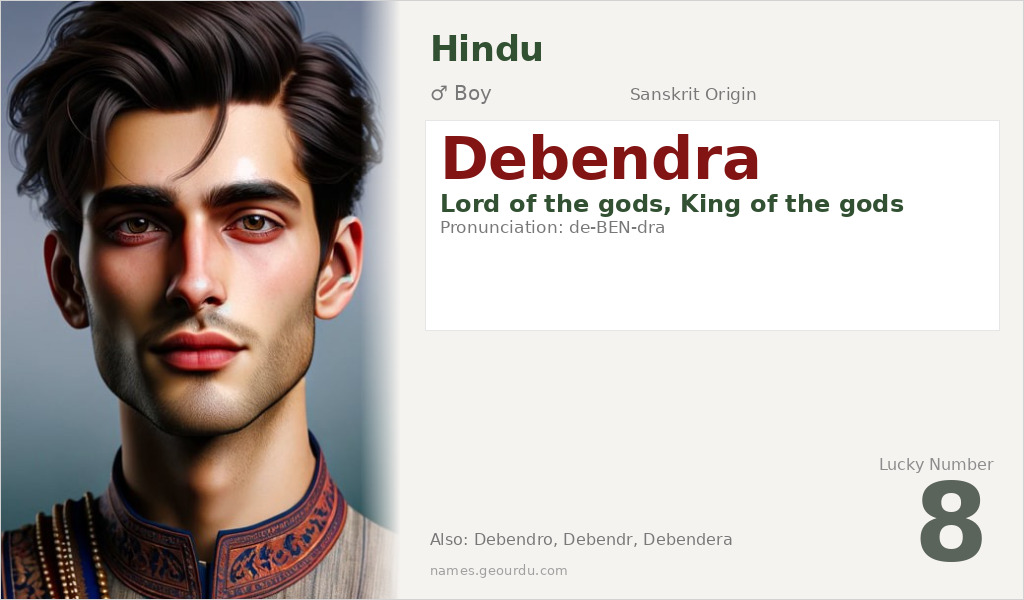
| 📛 Name | Debendra |
| 💎 Meaning | Lord of the gods, King of the gods |
| 👤 Gender | Boy |
| 🕌 Religion | Hindu |
| 🌍 Origin | Sanskrit |
| 🗣 Pronunciation | de-BEN-dra |
| ✍️ Urdu | دیبیندرا |
| ✍️ Arabic | ديبيندرا |
| 🔢 Numerology | 8 |
| ✨ Spellings | Debendro, Debendr, Debendera |
Origin & Cultural Significance
Debendra originates from classical Sanskrit, the ancient liturgical language of Hinduism. As a compound name, it follows traditional Sanskrit naming conventions where meaningful elements are combined to create names with specific connotations. The name is particularly prevalent in Hindu communities across South Asia, especially in India, Bangladesh, and Nepal. Historically, names containing ‘Indra’ elements were often given to signify strength, leadership, and divine connection. While primarily a Hindu name, its Sanskrit origins mean it’s understood and respected across various Indian religious communities familiar with classical language traditions.
Personality Traits
Those named Debendra are often perceived as having natural leadership qualities and a commanding presence. The name’s meaning suggests someone who is authoritative, organized, and capable of taking charge in various situations. There’s typically an expectation of responsibility and integrity associated with the name, given its royal and divine connotations. Many Debendras develop strong philosophical or spiritual interests, reflecting the name’s deep cultural and religious roots.
Similar Names
If you like Debendra, consider: Devendra, Indradev, Devraj, Surendra, Mahendra
Famous People Named Debendra
- Debendra Nath Tagore — 19th century Hindu philosopher and religious reformer, father of Rabindranath Tagore
- Debendra Nath Sharma — Indian politician and former Member of Parliament
Frequently Asked Questions About Debendra
What does Debendra mean?
Debendra means 'Lord of the gods' or 'King of the gods'. It's a Sanskrit compound name combining 'Deva' (god) and 'Indra' (king/lord).
Is Debendra a boy or girl name?
Debendra is exclusively a boy's name in Hindu naming tradition. The masculine ending '-a' and the name's meaning relating to a male deity (Indra) confirm this gender assignment.
What is the origin of Debendra?
Debendra originates from classical Sanskrit, the ancient language of Hindu scriptures. It's a traditional Hindu name primarily used in India, Bangladesh, and Nepal, with specific roots in Hindu mythology and literature.





