
Table of Contents
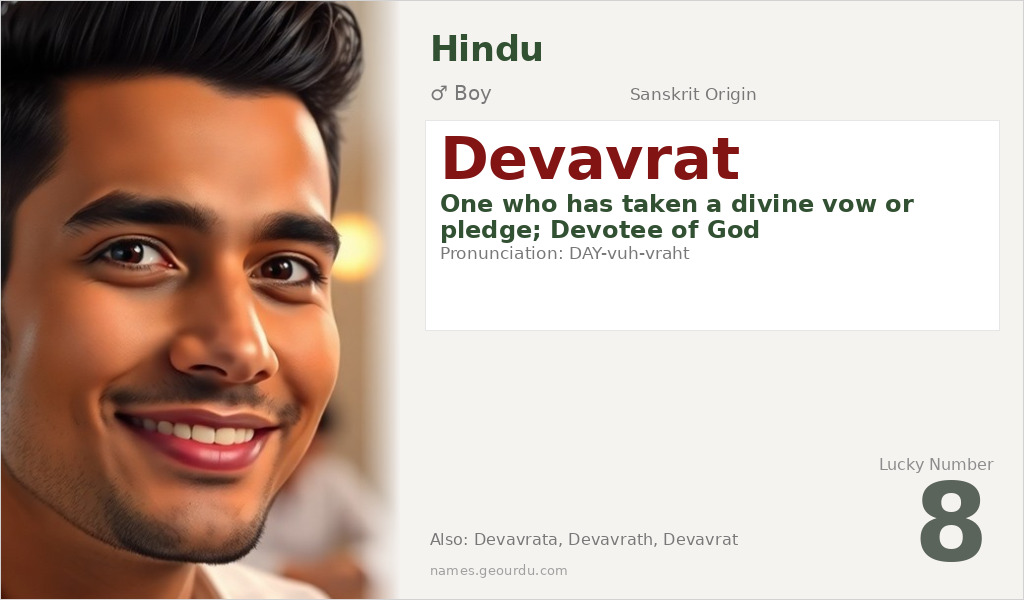
Devavrat is a profound Sanskrit name with deep roots in Hindu tradition and mythology. Most famously borne by the legendary Bhishma from the Mahabharata, this name carries the weight of spiritual commitment and divine devotion. Meaning ‘one who has taken a divine vow’, Devavrat represents the highest ideals of dedication and principle. Today, it remains a meaningful choice for parents seeking a name with strong cultural heritage and spiritual significance.
Meaning of Devavrat
Devavrat is a compound Sanskrit name derived from two essential elements: ‘Deva’ (देव) and ‘Vrat’ (व्रत). ‘Deva’ refers to gods, divinity, or celestial beings in Hindu cosmology, representing the sacred and supernatural. ‘Vrat’ signifies a vow, pledge, or religious observance—a solemn promise that carries spiritual weight. When combined, Devavrat literally translates to ‘divine vow’ or ‘one devoted to god through pledge’. This etymology perfectly captures the essence of Bhishma’s character in the Mahabharata, who was originally named Devavrata before taking his famous lifelong vows of celibacy and service. The name’s linguistic construction follows classical Sanskrit compounding rules, creating a meaningful whole greater than its parts.
| 📛 Name | Devavrat |
| 💎 Meaning | One who has taken a divine vow or pledge; Devotee of God |
| 👤 Gender | Boy |
| 🕌 Religion | Hindu |
| 🌍 Origin | Sanskrit |
| 🗣 Pronunciation | DAY-vuh-vraht |
| ✍️ Urdu | دیوورت |
| ✍️ Arabic | ديفافراط |
| 🔢 Numerology | 8 |
| ✨ Spellings | Devavrata, Devavrath, Devavrat |
Origin & Cultural Significance
Devavrat originates from classical Sanskrit, the ancient liturgical language of Hinduism, Buddhism, and Jainism. Its most famous historical bearer is Bhishma, the revered warrior and statesman from the Hindu epic Mahabharata, who was born as Devavrata. According to the epic, he earned the name Bhishma (‘terrible’ or ‘awesome’) after taking his severe vows, but his birth name Devavrat reflected his destined spiritual path. The name has been used in Indian culture for centuries, particularly among Hindu communities who value its association with duty, sacrifice, and divine commitment. While less common than some other Sanskrit names, Devavrat maintains cultural significance through its epic connections and meaningful etymology.
Personality Traits
Those named Devavrat are often perceived as individuals of strong character and unwavering principles. Inspired by the name’s meaning and its most famous bearer, they tend to exhibit remarkable discipline and commitment to their chosen path. Their sense of duty and moral integrity frequently earns them respect and trust from others. While they can be serious and determined, they also possess a deep spiritual dimension that guides their decisions and relationships.
Similar Names
If you like Devavrat, consider: Devansh, Devendra, Devdutt, Vratin, Devakinandan
Famous People Named Devavrat
- Bhishma (Devavrata) — Legendary warrior and statesman from the Hindu epic Mahabharata, known for his unwavering vow of celibacy and loyalty
- Devavrat A. Dabholkar — Indian physicist and academic known for his work in quantum field theory and string theory
Frequently Asked Questions About Devavrat
What does Devavrat mean?
Devavrat means 'one who has taken a divine vow' or 'devotee of god' in Sanskrit. It combines 'Deva' (god/divine) and 'Vrat' (vow/pledge).
Is Devavrat a boy or girl name?
Devavrat is exclusively a boy's name in Hindu naming tradition. It has masculine grammatical construction in Sanskrit and is historically associated with male figures.
What is the origin of Devavrat?
Devavrat originates from Sanskrit, the ancient classical language of India. It is deeply rooted in Hindu tradition and mythology, most famously associated with Bhishma from the Mahabharata epic.





