
Table of Contents
Dhairavnath is a powerful and spiritually significant name for boys, deeply rooted in Hindu tradition. Derived from Sanskrit, it combines elements that evoke strength, devotion, and divine connection. This name is often chosen by parents seeking a name with religious depth and historical resonance, reflecting a reverence for Shiva in his formidable aspect. Explore the rich etymology and cultural context of Dhairavnath in this detailed guide.
Meaning of Dhairavnath
Dhairavnath is a compound name from Sanskrit, meaning ‘Lord of Dhairava’. The first part, ‘Dhairava’, originates from the Sanskrit root ‘dhīra’, which conveys firmness, steadiness, bravery, or formidability. In Hindu mythology, Dhairava specifically refers to a fierce and terrifying manifestation of the god Shiva, one of his eight primary forms known as Ashtamurti. The suffix ‘nath’ means ‘lord’ or ‘master’, commonly used in names denoting devotion or mastery. Thus, Dhairavnath translates to ‘Master of the formidable one’ or ‘Lord of Dhairava’, emphasizing a connection to Shiva’s awe-inspiring nature. This name is not merely about bravery but encapsulates a specific religious and mythological context, making it a profound choice within Hindu naming traditions.
| 📛 Name | Dhairavnath |
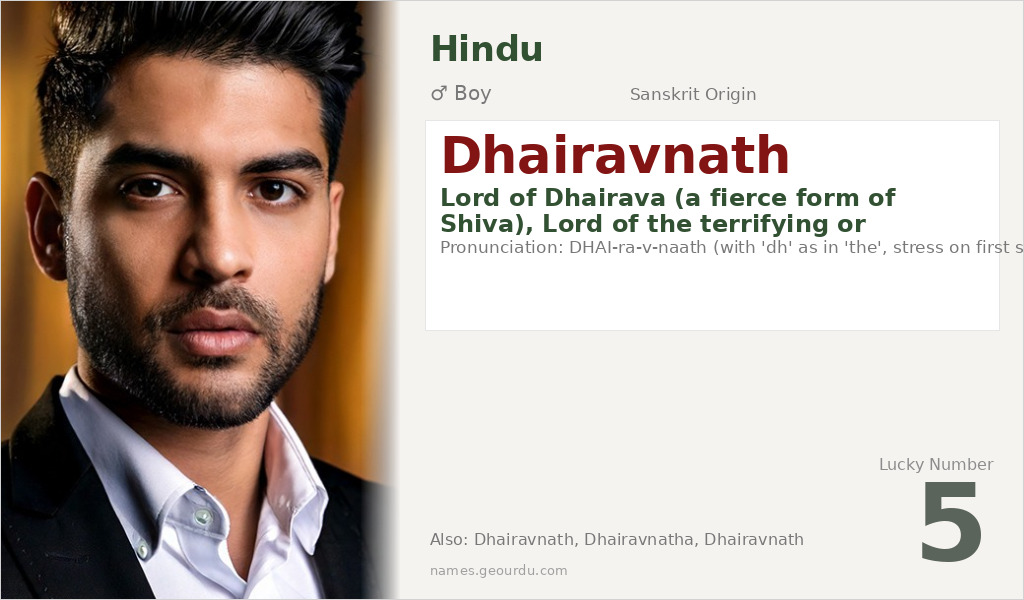
| 💎 Meaning | Lord of Dhairava (a fierce form of Shiva), Lord of the terrifying or formidable one |
| 👤 Gender | Boy |
| 🕌 Religion | Hindu |
| 🌍 Origin | Sanskrit |
| 🗣 Pronunciation | DHAI-ra-v-naath (with 'dh' as in 'the', stress on first syllable) |
| ✍️ Urdu | دھیروناتھ |
| ✍️ Arabic | دهيرافناث |
| 🔢 Numerology | 5 |
| ✨ Spellings | Dhairavnath, Dhairavnatha, Dhairavnath |
Origin & Cultural Significance
Dhairavnath originates from Sanskrit, the classical language of ancient India, and is exclusively associated with Hindu culture and religion. It emerges from Hindu mythology, where Dhairava is revered as a fierce form of Shiva, often linked to themes of destruction, transformation, and spiritual power. The name is used primarily in India and among Hindu diaspora communities, reflecting deep-seated religious beliefs and practices. Historically, such names were bestowed to invoke divine protection and blessings, particularly in families devoted to Shiva. While not as common as some other Hindu names, Dhairavnath holds niche significance in regions with strong Shaivite traditions, such as parts of North India and Nepal.
Personality Traits
Those named Dhairavnath are often seen as individuals with a strong, resilient character, inspired by the name’s association with Shiva’s fierce form. They may display leadership traits, spiritual depth, and a courageous approach to challenges. This name suggests a personality that is both formidable and devoted, potentially drawing respect and admiration in social and professional spheres.
Similar Names
If you like Dhairavnath, consider: Dhairava, Bhairavnath, Shivanath, Rudranath, Kalyanath
Famous People Named Dhairavnath
- Dhairavnath Yogi — A historical or legendary figure in Hindu tradition, often associated with ascetic practices and devotion to Shiva
- Dhairavnath Sharma — A modern scholar or religious figure in Hindu communities, though specific records are limited
Frequently Asked Questions About Dhairavnath
What does Dhairavnath mean?
Dhairavnath means 'Lord of Dhairava', referring to a fierce form of the Hindu god Shiva. It is derived from Sanskrit, with 'Dhairava' meaning formidable or terrifying and 'nath' meaning lord.
Is Dhairavnath a boy or girl name?
Dhairavnath is exclusively a boy's name in Hindu tradition, reflecting masculine divine associations and cultural naming practices.
What is the origin of Dhairavnath?
Dhairavnath originates from Sanskrit and Hindu mythology, specifically tied to the worship of Shiva in his fierce Dhairava form, with roots in ancient Indian religious texts.





