Table of Contents
Dharabai is a distinctive Hindu feminine name that carries the essence of earthly strength and maternal grace. While not found in classical Sanskrit texts, this name appears to blend ancient linguistic roots with regional naming conventions. Its possible connection to ‘earth’ symbolism makes it a meaningful choice for parents seeking a name with natural, grounding qualities. Let’s explore the linguistic journey and cultural context of this unique name.
Meaning of Dharabai
The name Dharabai appears to be a compound formation, though its exact etymology remains undocumented in authoritative sources. The first component ‘Dhara’ (धरा) derives from Sanskrit, where it primarily means ‘earth’, ‘ground’, or ‘that which holds/supports’. In Vedic literature, ‘Dhara’ is associated with the sustaining power of the earth. The suffix ‘-bai’ is a common honorific in Marathi and Gujarati cultures, added to female names to denote respect, similar to ‘devi’ or ‘bai’ meaning ‘lady’ or ‘woman’. While some might associate ‘Dhara’ with ‘flow’ (as in liquid streams), in the context of a feminine name with ‘-bai’, the ‘earth’ interpretation is more linguistically consistent. The complete name ‘Dharabai’ thus potentially translates to ‘Earth Lady’ or ‘Earth Mother’, though this interpretation requires caution due to lack of documented usage.
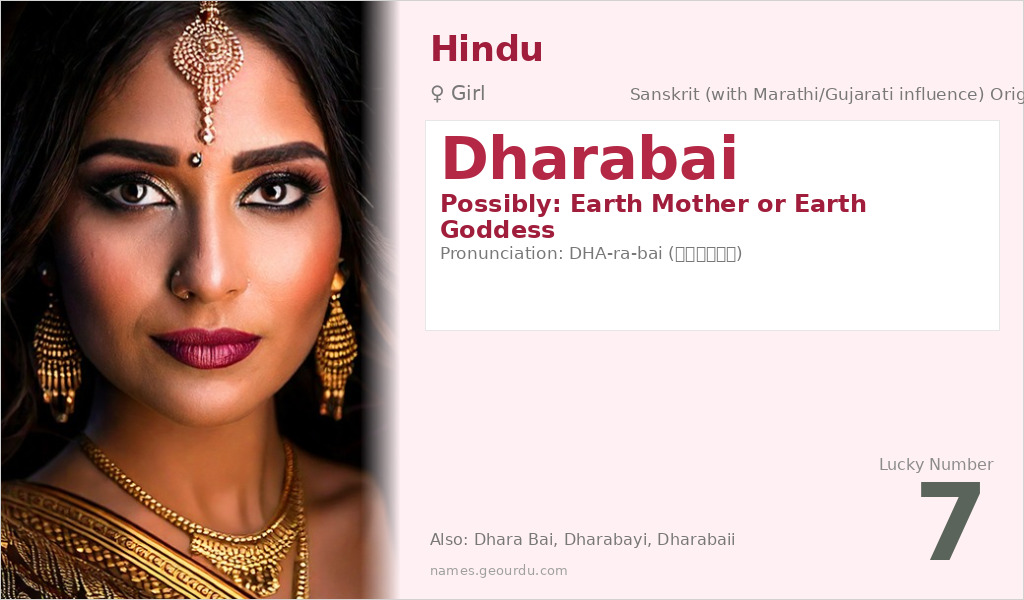
| 📛 Name | Dharabai |
| 💎 Meaning | Possibly: Earth Mother or Earth Goddess |
| 👤 Gender | Girl |
| 🕌 Religion | Hindu |
| 🌍 Origin | Sanskrit (with Marathi/Gujarati influence) |
| 🗣 Pronunciation | DHA-ra-bai (धराबाई) |
| ✍️ Urdu | دھرابائی |
| ✍️ Arabic | دهاراباي |
| 🔢 Numerology | 7 |
| ✨ Spellings | Dhara Bai, Dharabayi, Dharabaii |
Origin & Cultural Significance
Dharabai originates from Indian linguistic traditions, specifically combining Sanskrit roots with Western Indian naming patterns. Sanskrit provides the core element ‘Dhara’, which has ancient roots in Hindu scriptures referring to the earth’s sustaining power. The ‘-bai’ suffix reflects influence from Marathi and Gujarati naming conventions, where it’s commonly appended to female names as a mark of respect. This name appears to be more prevalent in certain regional communities rather than pan-Indian usage. Unlike traditional Sanskrit names with documented histories in texts like the Puranas or classical literature, Dharabai seems to be a modern construction that follows linguistic patterns without direct historical precedent. Its usage is primarily within Hindu families, particularly those with connections to Maharashtra or Gujarat regions.
Personality Traits
Names often carry implicit personality associations, and Dharabai suggests qualities of stability, nurturing, and groundedness. The possible ‘earth’ meaning connects to characteristics like reliability, practicality, and strength. Individuals with this name might be perceived as having a calming presence and strong connection to family and tradition. These associations reflect the cultural values often embedded in Indian naming practices, where names serve as aspirations for the child’s character development.
Similar Names
If you like Dharabai, consider: Dhara, Dharini, Dharitri, Bharati, Bai
Famous People Named Dharabai
- No widely known historical or contemporary figures with this exact name were found in verifiable records
Frequently Asked Questions About Dharabai
What does Dharabai mean?
Based on linguistic analysis, Dharabai possibly means 'Earth Mother' or 'Earth Lady', combining Sanskrit 'Dhara' (earth) with the Marathi/Gujarati honorific '-bai'. However, this meaning is not documented in authoritative sources and should be considered speculative.
Is Dharabai a boy or girl name?
Dharabai is exclusively a feminine name. The '-bai' suffix is specifically used for female names in Marathi and Gujarati cultures, making this name gender-specific to girls.
What is the origin of Dharabai?
Dharabai has Indian origins, combining Sanskrit linguistic elements with Western Indian (particularly Marathi/Gujarati) naming conventions. It appears to be a modern construction rather than a name with ancient historical usage.