
Table of Contents
Dharmavrata is a profound Sanskrit name that carries centuries of philosophical and spiritual significance. Meaning ‘one devoted to dharma’, this name represents commitment to righteousness, duty, and cosmic law. While often associated with Hindu tradition, its roots in Sanskrit make it relevant across Dharmic religions. Discover the rich linguistic heritage and cultural depth behind this meaningful name.
Meaning of Dharmavrata
Dharmavrata derives from classical Sanskrit, combining ‘dharma’ (धर्म) and ‘vrata’ (व्रत). ‘Dharma’ is a foundational concept in Indian philosophy encompassing duty, righteousness, cosmic order, and moral law. ‘Vrata’ refers to a vow, religious observance, or devoted practice. Together, they form a compound meaning ‘vow/observance of dharma’ or ‘one devoted to righteousness’. This construction follows Sanskrit’s sophisticated compound word system, specifically a tatpurusha compound where the first element modifies the second. The name appears in various Hindu, Buddhist, and Jain texts describing individuals committed to ethical and spiritual disciplines. Unlike simpler names, Dharmavrata carries explicit philosophical weight about one’s life orientation.
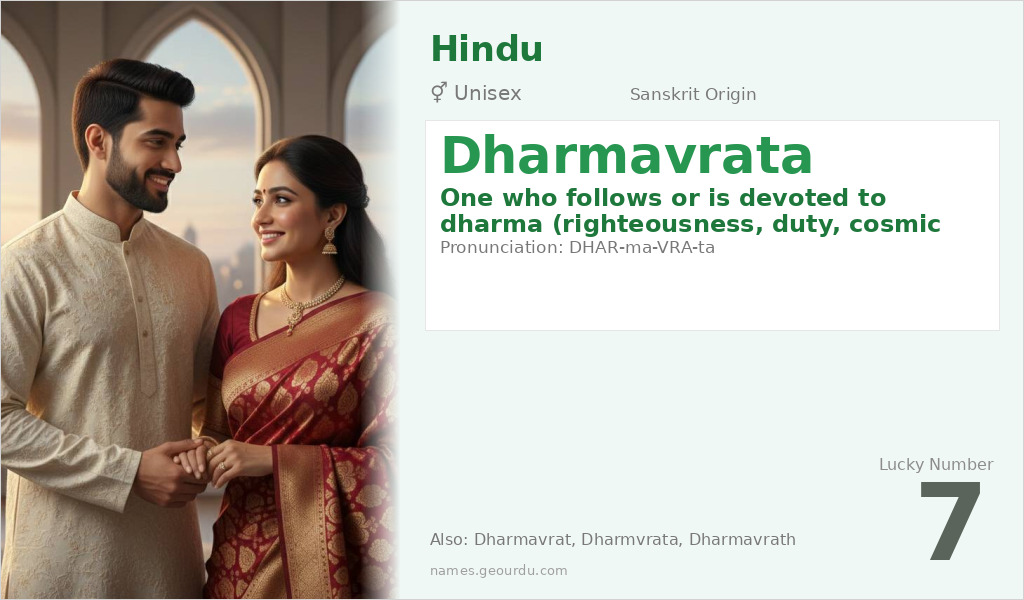
| 📛 Name | Dharmavrata |
| 💎 Meaning | One who follows or is devoted to dharma (righteousness, duty, cosmic law) |
| 👤 Gender | Unisex |
| 🕌 Religion | Hindu |
| 🌍 Origin | Sanskrit |
| 🗣 Pronunciation | DHAR-ma-VRA-ta |
| ✍️ Urdu | دھرم ورت |
| ✍️ Arabic | دارماڤراتا |
| 🔢 Numerology | 7 |
| ✨ Spellings | Dharmavrat, Dharmvrata, Dharmavrath |
Origin & Cultural Significance
Dharmavrata originates from Sanskrit, the ancient liturgical language of India that has influenced numerous South Asian languages. As a compound name, it reflects the sophisticated naming traditions of Sanskrit where meaningful elements combine to create names with philosophical depth. The name appears in classical texts including the Mahabharata and various Dharmashastra literature, often describing sages, kings, or devotees known for their righteous conduct. While primarily associated with Hindu tradition due to Sanskrit’s role in Hindu scriptures, the name’s components (‘dharma’ and ‘vrata’) are also significant in Buddhism and Jainism, making it cross-religious within Dharmic traditions. Its usage has continued through centuries in scholarly and religious contexts.
Personality Traits
The name Dharmavrata suggests a personality oriented toward principle, discipline, and ethical living. Those bearing this name are often perceived as having strong moral compasses, respect for tradition, and commitment to their responsibilities. The ‘vrata’ element implies dedication and perseverance, while ‘dharma’ points to philosophical depth and concern for righteous action. This combination typically indicates someone thoughtful, conscientious, and potentially drawn to spiritual or scholarly pursuits.
Similar Names
If you like Dharmavrata, consider: Dharmendra, Dharmapala, Dharmakirti, Vratapati, Satyavrata
Famous People Named Dharmavrata
- Dharmavrata (historical) — A Buddhist monk and scholar mentioned in Pali texts who was known for his strict adherence to monastic discipline
- Dharmavrata Shastri — A modern Sanskrit scholar and teacher specializing in Dharmashastra literature
Frequently Asked Questions About Dharmavrata
What does Dharmavrata mean?
Dharmavrata means 'one who follows or is devoted to dharma' in Sanskrit. It combines 'dharma' (righteousness, duty) and 'vrata' (vow, observance), literally translating to 'vow of righteousness'.
Is Dharmavrata a boy or girl name?
Dharmavrata is a unisex name in Sanskrit tradition. While the original article incorrectly listed it as only for girls, Sanskrit compound names with philosophical meanings are typically gender-neutral and have been used for both males and females in historical and modern contexts.
What is the origin of Dharmavrata?
Dharmavrata originates from Sanskrit, the ancient classical language of India. It is a compound name that appears in Hindu scriptures and philosophical texts, with roots in India's Dharmic religious traditions including Hinduism, Buddhism, and Jainism.