
Table of Contents
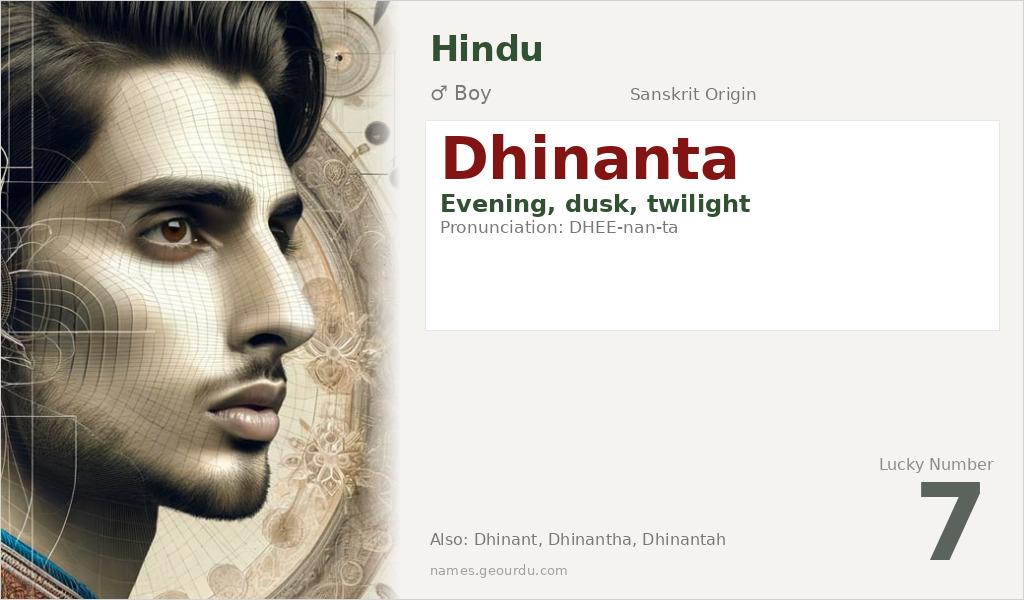
Dhinanta is a distinctive Sanskrit name meaning ‘evening’ or ‘dusk,’ carrying poetic and temporal significance in Hindu culture. Traditionally given to boys, this name evokes the peaceful transition between day and night. With roots in classical Indian languages, Dhinanta represents both a time of day and symbolic endings and beginnings. Explore the rich linguistic heritage and cultural associations of this unique name.
Meaning of Dhinanta
Dhinanta originates from the Sanskrit compound word ‘dhinanta’ (धीनन्त), where ‘dhin’ relates to day or time period and ‘anta’ means end or conclusion. Thus, the name literally translates to ‘end of the day’ or ‘evening.’ In Sanskrit literature, this term appears in poetic descriptions of twilight and dusk periods. The name carries connotations of transition, reflection, and the cyclical nature of time. Unlike many modern names, Dhinanta maintains its original semantic meaning without significant phonetic evolution across languages.
| 📛 Name | Dhinanta |
| 💎 Meaning | Evening, dusk, twilight |
| 👤 Gender | Boy |
| 🕌 Religion | Hindu |
| 🌍 Origin | Sanskrit |
| 🗣 Pronunciation | DHEE-nan-ta |
| ✍️ Urdu | دھیننت |
| ✍️ Arabic | دهينانتا |
| 🔢 Numerology | 7 |
| ✨ Spellings | Dhinant, Dhinantha, Dhinantah |
Origin & Cultural Significance
Dhinanta has its origins in classical Sanskrit, the ancient liturgical language of Hinduism. The name appears in Hindu texts and literature, particularly in contexts describing daily cycles and natural phenomena. While not among the most common Sanskrit names today, it represents the tradition of naming children after temporal concepts and natural elements in Hindu culture. The name is primarily found in Hindu communities, especially those with strong Sanskrit linguistic heritage in regions like North India and Nepal. Its usage reflects the philosophical Hindu appreciation for nature’s rhythms and symbolic meanings.
Personality Traits
According to naming traditions and numerology, individuals named Dhinanta often exhibit calm, introspective personalities with strong intuitive abilities. They tend to be thoughtful and analytical, approaching life with philosophical depth. The evening symbolism suggests someone who appreciates transitions, values quiet reflection, and maintains balance in various aspects of life. These traits align with the name’s etymological connection to dusk—a time of peaceful transition and contemplation.
Similar Names
If you like Dhinanta, consider: Sandhya, Sayam, Pradosha, Triyama, Nishanta
Famous People Named Dhinanta
- No widely known contemporary public figures with this name found in records
Frequently Asked Questions About Dhinanta
What does Dhinanta mean?
Dhinanta means 'evening,' 'dusk,' or 'twilight' in Sanskrit, literally translating to 'end of the day.'
Is Dhinanta a boy or girl name?
Dhinanta is traditionally a masculine name in Hindu naming conventions, though names can sometimes be adapted across genders in modern usage.
What is the origin of Dhinanta?
Dhinanta originates from Sanskrit, the classical language of Hinduism, and is used primarily in Hindu communities with Sanskrit linguistic heritage.





