Table of Contents
Dhrtarastra is a profound Sanskrit name with deep roots in Hindu mythology and philosophy. Most famously known as the blind king in the epic Mahabharata, this name carries centuries of cultural and spiritual significance. For parents seeking a name with historical weight and meaningful etymology, Dhrtarastra offers a connection to ancient Indian wisdom and royal heritage. Its compound structure reveals insights about leadership, duty, and the complexities of rulership.
Meaning of Dhrtarastra
Dhrtarastra is a classical Sanskrit compound name with precise etymological components. The first element ‘dhṛta’ (धृत) comes from the root √dhṛ meaning ‘to hold, bear, support, maintain’ and conveys steadfastness, firmness, and possession. The second element ‘rāṣṭra’ (राष्ट्र) means ‘kingdom, nation, realm, or dominion’. Together, they create the meaning ‘one who holds the kingdom’ or ‘firm ruler’. This is distinct from simply meaning ‘powerful king’ – the emphasis is on maintaining and bearing the responsibility of rulership. In Vedic and classical Sanskrit literature, such compound names were common among royalty and reflected specific qualities or roles. The name appears in multiple ancient texts beyond just the Mahabharata, including Buddhist and Jain traditions with variations in interpretation.
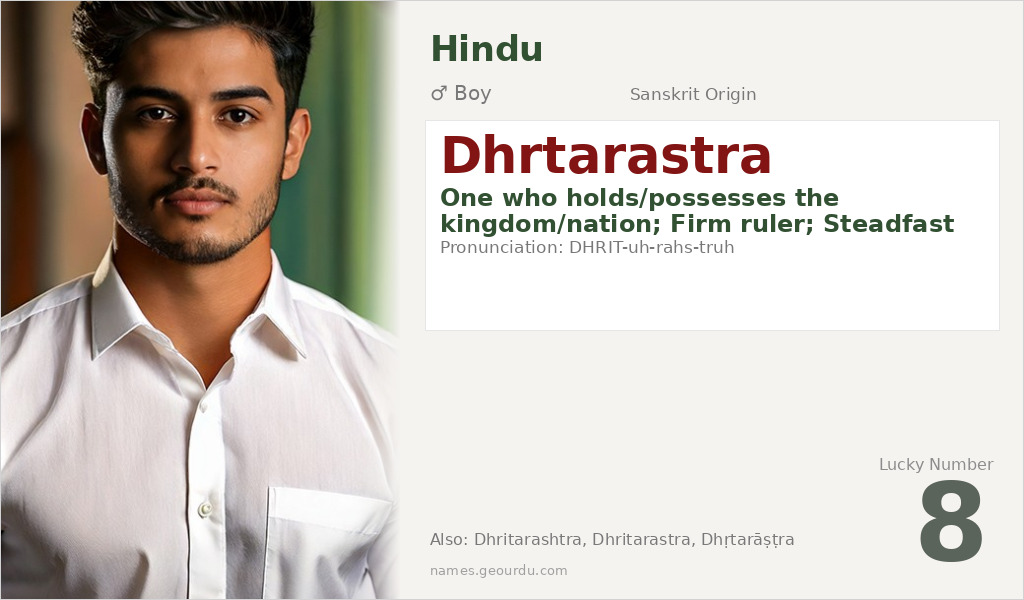
| 📛 Name | Dhrtarastra |
| 💎 Meaning | One who holds/possesses the kingdom/nation; Firm ruler; Steadfast king |
| 👤 Gender | Boy |
| 🕌 Religion | Hindu |
| 🌍 Origin | Sanskrit |
| 🗣 Pronunciation | DHRIT-uh-rahs-truh |
| ✍️ Urdu | دھرتاراشٹر |
| ✍️ Arabic | دهريتاراشترا |
| 🔢 Numerology | 8 |
| ✨ Spellings | Dhritarashtra, Dhritarastra, Dhṛtarāṣṭra, Dhritharashtra |
Origin & Cultural Significance
Dhrtarastra originates from ancient Sanskrit, the liturgical language of Hinduism, Buddhism, and Jainism. The name first appears in the Mahabharata (circa 400 BCE-400 CE), one of the two major Sanskrit epics of ancient India. King Dhritarashtra of Hastinapura is a pivotal character whose blindness and flawed rulership drive the epic’s central conflict. Beyond Hindu tradition, the name appears in Buddhist texts like the Mahāvastu and Lalitavistara Sūtra, where Dhritarashtra is one of the Four Heavenly Kings guarding the cardinal directions. The name reflects the ancient Indian tradition of meaningful, compound names for royalty that described their role or destiny. While primarily associated with Hindu culture, the name has cross-cultural significance in South Asian religious traditions.
Personality Traits
The name Dhrtarastra suggests a personality marked by responsibility, steadfastness, and the weight of duty. Like the mythological king, individuals with this name may be natural leaders who carry significant burdens. They might possess inner strength and resilience but could also face challenges related to perception or decision-making. The name implies someone who maintains stability and order, even when facing difficult circumstances or moral complexities.
Similar Names
If you like Dhrtarastra, consider: Yudhishthira, Duryodhana, Bharata, Pandu, Arjuna
Famous People Named Dhrtarastra
- Dhritarashtra — The blind king in the Hindu epic Mahabharata, father of the Kauravas and ruler of Hastinapura
- Dhritarashtra — A figure in Buddhist texts, sometimes identified as a king or deity associated with protection
Frequently Asked Questions About Dhrtarastra
What does Dhrtarastra mean?
Dhrtarastra means 'one who holds the kingdom' or 'firm ruler' in Sanskrit. It's a compound of 'dhṛta' (held, steadfast) and 'rāṣṭra' (kingdom, nation).
Is Dhrtarastra a boy or girl name?
Dhrtarastra is exclusively a boy's name in Hindu tradition, named after the male king in the Mahabharata. There are no feminine variants in historical usage.
What is the origin of Dhrtarastra?
Dhrtarastra originates from Sanskrit and Hindu mythology, specifically from the epic Mahabharata where it belongs to the blind king of Hastinapura. It has secondary appearances in Buddhist texts as well.