
Table of Contents
Dhulfiqaar is one of the most historically significant names in Islamic tradition, carrying centuries of cultural and religious meaning. This powerful Arabic name directly connects to one of the most famous artifacts in early Islamic history—the double-bladed sword of Ali ibn Abi Talib. Beyond its literal meaning, Dhulfiqaar represents ideals of strength, justice, and divine protection that continue to resonate with Muslim families today. Understanding this name requires exploring both its linguistic roots and its profound place in Islamic heritage.
Meaning of Dhulfiqaar
Dhulfiqaar is an Arabic compound name with deep historical significance. The name breaks down into two components: ‘Dhu’ (ذو) meaning ‘possessor of’ or ‘owner of,’ and ‘Fiqar’ (فِقَار) meaning ‘vertebrae’ or ‘backbone.’ This combination literally translates to ‘possessor of vertebrae,’ which scholars believe refers to the sword’s distinctive double-bladed design that resembled a spinal column. The name specifically denotes the legendary sword that Prophet Muhammad (PBUH) gave to his cousin and son-in-law Ali ibn Abi Talib during the Battle of Uhud in 625 CE. In Islamic tradition, Dhulfiqaar has become synonymous with divine assistance and righteous strength, with the sword often depicted in Islamic art and calligraphy as a symbol of protection.
| 📛 Name | Dhulfiqaar |
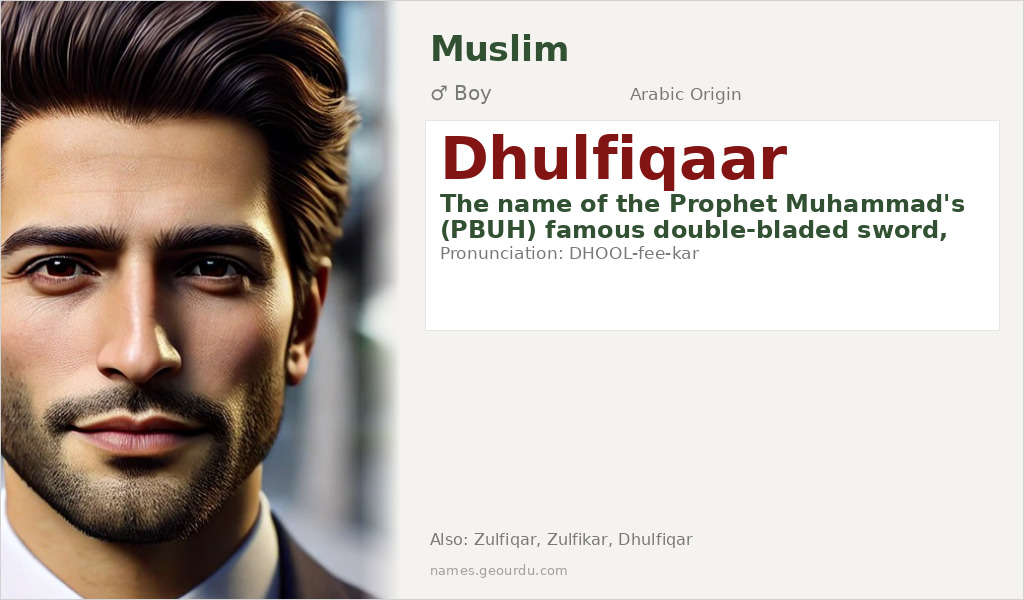
| 💎 Meaning | The name of the Prophet Muhammad's (PBUH) famous double-bladed sword, literally meaning 'possessor of vertebrae' or 'having vertebrae' |
| 👤 Gender | Boy |
| 🕌 Religion | Muslim |
| 🌍 Origin | Arabic |
| 🗣 Pronunciation | DHOOL-fee-kar |
| ✍️ Urdu | ذوالفقار |
| ✍️ Arabic | ذُو الْفِقَار |
| 🔢 Numerology | |
| ✨ Spellings | Zulfiqar, Zulfikar, Dhulfiqar, Zulficar, Zulfiqar, Dhu al-Fiqar |
Origin & Cultural Significance
The origin of Dhulfiqaar is firmly rooted in 7th century Arabian Islamic history. The name first appears in historical accounts of the Battle of Uhud, where Prophet Muhammad (PBUH) reportedly received the sword from the angel Gabriel and passed it to Ali ibn Abi Talib. This event cemented the sword’s status as a symbol of legitimate leadership and divine favor in Shia Islam, where it’s particularly venerated. The name spread throughout the Muslim world following the Islamic conquests, becoming popular in regions from Persia to South Asia. Today, Dhulfiqaar remains most common in Muslim-majority countries, particularly among Shia communities who revere Ali and his descendants.
Personality Traits
The personality traits associated with Dhulfiqaar naturally flow from its historical and religious context. Bearing the name of Islam’s most famous sword suggests qualities of strength, protection, and unwavering principle. Like Ali ibn Abi Talib, who wielded the original Dhulfiqaar, individuals with this name are often expected to demonstrate courage, justice, and spiritual depth. The name carries an expectation of leadership and the ability to defend what is right, making it a powerful choice that connects the bearer to Islamic ideals of valor and faith.
Similar Names
If you like Dhulfiqaar, consider: Ali, Hamza, Khalid, Saif, Qasim
Famous People Named Dhulfiqaar
- Zulfikar Ali Bhutto — Former Prime Minister of Pakistan
- Zulfiqar — Character in the 1965 Indian film 'Haqueeqat'
Frequently Asked Questions About Dhulfiqaar
What does Dhulfiqaar mean?
Dhulfiqaar is an Arabic name meaning 'possessor of vertebrae,' referring specifically to the double-bladed sword that Prophet Muhammad (PBUH) gave to Ali ibn Abi Talib during the Battle of Uhud.
Is Dhulfiqaar a boy or girl name?
Dhulfiqaar is exclusively a boy's name in Islamic naming tradition, as it refers to a warrior's sword and is associated with male historical figures like Ali ibn Abi Talib.
What is the origin of Dhulfiqaar?
Dhulfiqaar originates from 7th century Arabic and Islamic history, specifically from the Battle of Uhud in 625 CE when Prophet Muhammad (PBUH) gave the sword to his cousin Ali.





