
Table of Contents
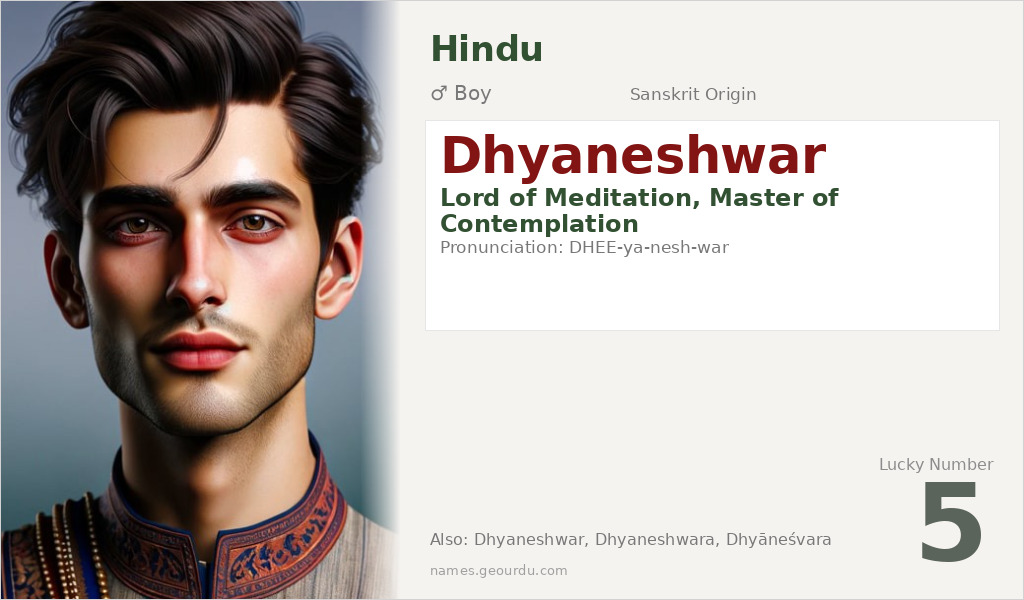
Dhyaneshwar is a profound Sanskrit name that carries deep spiritual resonance in Hindu tradition. Meaning ‘Lord of Meditation’ or ‘Master of Contemplation’, this name reflects the importance of inner reflection and spiritual discipline. With roots in ancient Indian philosophy, Dhyaneshwar connects its bearer to centuries of yogic and meditative practices. This guide explores the complete meaning, origin, and cultural significance of this contemplative name.
Meaning of Dhyaneshwar
Dhyaneshwar derives from the classical Sanskrit language, combining two significant elements: ‘Dhyāna’ and ‘Īśvara’. Dhyāna (ध्यान) specifically refers to meditation, contemplation, or profound thought—the seventh stage in Patanjali’s Eight Limbs of Yoga, representing deep meditative absorption. Īśvara (ईश्वर) means lord, master, ruler, or god, often used in Hindu philosophy to denote the supreme consciousness. Together, they create a name that literally translates to ‘Lord of Meditation’, suggesting mastery over meditative states or devotion to spiritual contemplation. This compound construction follows traditional Sanskrit naming patterns where qualities or attributes are combined with divine or masterful elements to create meaningful names with spiritual depth.
| 📛 Name | Dhyaneshwar |
| 💎 Meaning | Lord of Meditation, Master of Contemplation |
| 👤 Gender | Boy |
| 🕌 Religion | Hindu |
| 🌍 Origin | Sanskrit |
| 🗣 Pronunciation | DHEE-ya-nesh-war |
| ✍️ Urdu | دھیانیشور |
| ✍️ Arabic | دهيانيشوار |
| 🔢 Numerology | 5 |
| ✨ Spellings | Dhyaneshwar, Dhyaneshwara, Dhyāneśvara, Dhyaneshvar |
Origin & Cultural Significance
Dhyaneshwar originates from Sanskrit, the ancient liturgical language of Hinduism, Buddhism, and Jainism. The name emerges from India’s rich philosophical traditions, particularly associated with yogic and meditative practices. It gained prominence through figures like the 13th-century Marathi saint Sant Dnyaneshwar (also spelled Dhyaneshwar), whose spiritual writings, especially the Dnyaneshwari commentary on the Bhagavad Gita, established this name’s cultural significance. While primarily used in Hindu communities, the name’s philosophical roots in meditation make it appreciated across various spiritual traditions that value contemplative practices. The name remains most common in Maharashtra and other regions influenced by Marathi culture and the Nath tradition of yoga.
Personality Traits
The name Dhyaneshwar suggests a personality oriented toward introspection, wisdom, and spiritual depth. Those bearing this name are often perceived as thoughtful individuals with strong analytical abilities and capacity for concentration. The meditative connotation implies a calm, centered disposition with potential for philosophical insight. While individual personalities vary, the name carries expectations of seriousness, intellectual depth, and spiritual inclination.
Similar Names
If you like Dhyaneshwar, consider: Dhyan, Dhyanesh, Ishwar, Dhyanendra, Medhansh
Famous People Named Dhyaneshwar
- Sant Dnyaneshwar (1275–1296) — Also spelled Dhyaneshwar, a 13th-century Marathi saint, poet, philosopher and yogi of the Nath tradition whose commentary on the Bhagavad Gita, the Dnyaneshwari, is considered a masterpiece of Marathi literature.
- Dhyaneshwar Mulay — Indian diplomat who served as Secretary (CPV & OIA) in the Ministry of External Affairs and as India's Ambassador to several countries.
Frequently Asked Questions About Dhyaneshwar
What does Dhyaneshwar mean?
Dhyaneshwar means 'Lord of Meditation' or 'Master of Contemplation'. It is a Sanskrit compound name combining 'Dhyāna' (meditation) and 'Īśvara' (lord/master).
Is Dhyaneshwar a boy or girl name?
Dhyaneshwar is exclusively a boy's name in Hindu naming tradition. The '-eshwar' suffix (meaning 'lord') is masculine in Sanskrit grammar and naming conventions.
What is the origin of Dhyaneshwar?
Dhyaneshwar originates from Sanskrit, the classical language of ancient India. It comes from Hindu philosophical and yogic traditions, particularly associated with meditation practices, and gained cultural prominence through the 13th-century Marathi saint Sant Dnyaneshwar.





