
Table of Contents
Digby is a distinctive English name with roots stretching back to Viking settlements in England. Originally a surname denoting geographical location, it has evolved into a unique given name with a rich historical background. This name carries the practical charm of Old Norse language while maintaining a modern, approachable sound. Discover the fascinating journey of Digby from medieval farmstead to contemporary baby name.
Meaning of Digby
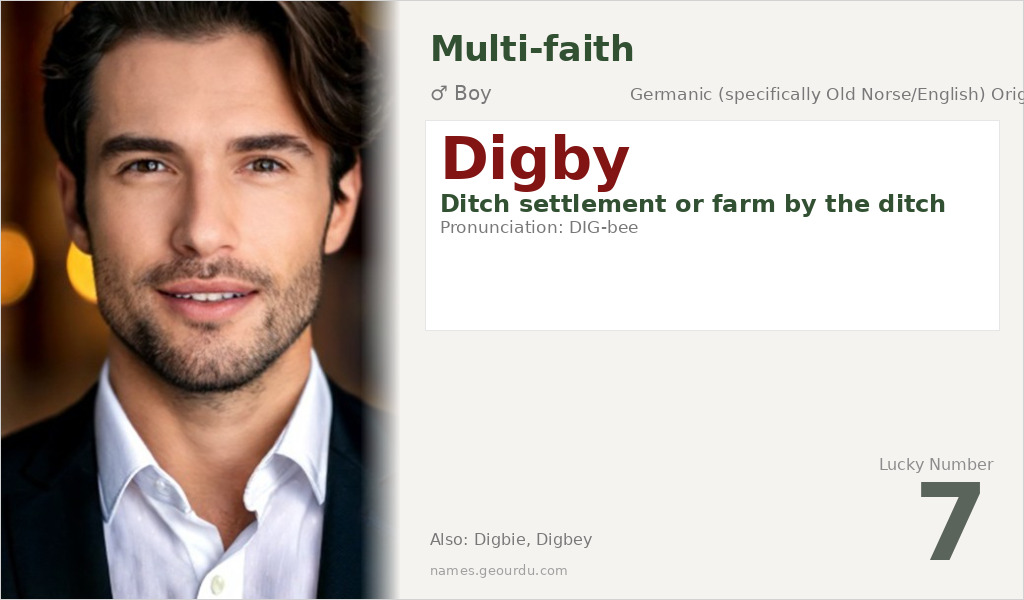
The name Digby has a clear and well-documented meaning derived from Old Norse elements. It combines ‘Díki,’ meaning ditch or dyke, with ‘býr,’ meaning farm or settlement, resulting in the meaning ‘ditch settlement’ or ‘farm by the ditch.’ This reflects the practical, geographical naming conventions of medieval England where surnames often described where people lived or worked. The name first appeared in records from Lincolnshire, an area with significant Norse settlement influence following the Viking invasions. As a locational surname, it would have identified families living near notable ditches or drainage systems, which were important features in medieval agriculture and land management.
| 📛 Name | Digby |
| 💎 Meaning | Ditch settlement or farm by the ditch |
| 👤 Gender | Boy |
| 🕌 Religion | Multi-faith |
| 🌍 Origin | Germanic (specifically Old Norse/English) |
| 🗣 Pronunciation | DIG-bee |
| ✍️ Urdu | ڈگبی |
| ✍️ Arabic | ديغبي |
| 🔢 Numerology | 7 |
| ✨ Spellings | Digbie, Digbey |
Origin & Cultural Significance
Digby originated as an English surname in Lincolnshire during the medieval period, with the earliest records dating to the 12th century. The name’s Old Norse components reflect the significant Scandinavian influence in eastern England following Viking settlements. The Digby family became prominent landowners in Lincolnshire, with their ancestral home at Digby Manor. The transition from surname to given name began in the 19th century, part of a broader trend of using surnames as first names in English-speaking countries. Today, while most common in England, the name has spread to other English-speaking regions including Australia, Canada, and the United States.
Personality Traits
While personality associations with names are largely cultural rather than scientific, Digby often evokes images of someone with traditional English sensibilities combined with practical intelligence. The name’s agricultural origins suggest a connection to the land and practical matters, while its aristocratic history adds an element of refinement. People might associate the name with reliability, thoughtfulness, and a certain understated confidence that comes from historical roots rather than flashy presentation.
Similar Names
If you like Digby, consider: Darby, Dudley, Bentley, Whitby, Rigby
Famous People Named Digby
- Digby Jones — British businessman and former Director-General of the Confederation of British Industry
- Digby Morrell — Australian rules footballer who played for Carlton and North Melbourne
Frequently Asked Questions About Digby
What does Digby mean?
Digby means 'ditch settlement' or 'farm by the ditch,' derived from the Old Norse elements 'Díki' (ditch) and 'býr' (farm/settlement).
Is Digby a boy or girl name?
Digby is traditionally and almost exclusively a masculine name, having originated as a surname and maintained male gender association throughout its history as a given name.
What is the origin of Digby?
Digby originated as an English surname in Lincolnshire with Old Norse linguistic roots, reflecting Viking settlement influences in medieval England.





