Table of Contents
Dimple is a charming and distinctive name that has gained popularity, particularly in South Asian communities. While it originates from the English language as a descriptive term for facial features, it has been embraced as a given name across various cultures. This name evokes images of cheerful smiles and pleasant appearances, making it a delightful choice for parents seeking a name with positive connotations. Its cross-cultural appeal has made it recognizable in many parts of the world.
Meaning of Dimple
The name Dimple directly derives from the English word meaning ‘a small natural indentation or hollow on the surface of the body’, specifically referring to the charming depressions that appear on cheeks or chins when smiling. Etymologically, it traces back to Middle English ‘dympull’ and Old English ‘dympel’, both meaning ‘a small hollow or depression’. These have Germanic origins, related to Middle Low German ‘dumpelen’ meaning ‘to sink’ or ‘to dip’. As a given name, Dimple carries the metaphorical meaning of cheerfulness, charm, and pleasant appearance, reflecting the positive associations people have with facial dimples. The name represents how physical characteristics can evolve into personal identifiers with emotional resonance.
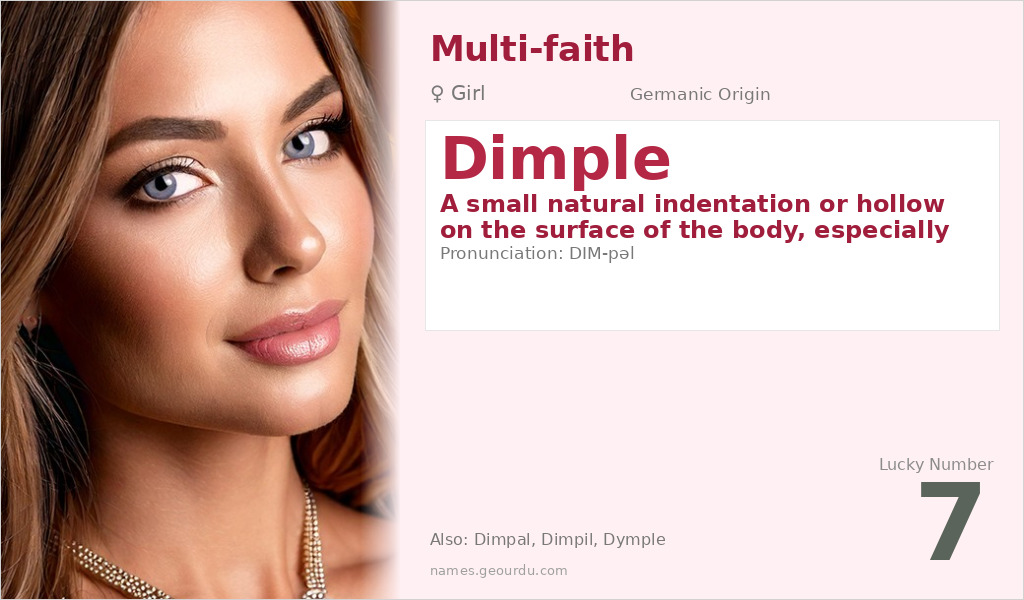
| 📛 Name | Dimple |
| 💎 Meaning | A small natural indentation or hollow on the surface of the body, especially on the cheek or chin |
| 👤 Gender | Girl |
| 🕌 Religion | Multi-faith |
| 🌍 Origin | Germanic |
| 🗣 Pronunciation | DIM-pəl |
| ✍️ Urdu | ڈمپل |
| ✍️ Arabic | ديمبل |
| 🔢 Numerology | 7 |
| ✨ Spellings | Dimpal, Dimpil, Dymple |
Origin & Cultural Significance
Dimple originated as an English vocabulary word that was adopted as a given name, particularly in South Asian countries like India, Pakistan, and Bangladesh where English words are sometimes used as names. While it has no specific religious origin, it has become popular across Hindu, Muslim, Sikh, and Christian communities in South Asia. The name gained wider recognition through Bollywood actress Dimple Kapadia, who rose to fame in the 1970s. This cultural adoption represents a fascinating example of how English descriptive terms can be integrated into naming traditions of other cultures, creating names that transcend their original linguistic boundaries while maintaining their core meaning.
Personality Traits
People named Dimple are often associated with warmth, approachability, and a cheerful disposition. The name naturally suggests someone who smiles frequently and brings joy to others, creating expectations of friendliness and positive social interactions. These individuals may develop a personality that aligns with the name’s connotations, often becoming known for their engaging presence and ability to connect with people easily. While names don’t determine personality, the cultural associations with ‘Dimple’ can influence how others perceive and interact with someone bearing this name.
Similar Names
If you like Dimple, consider: Smriti, Kavya, Priya, Anjali, Mona
Famous People Named Dimple
- Dimple Kapadia — Indian actress known for films like 'Bobby' and 'Tenet'
- Dimple Cheema — known for her relationship with Indian military hero Captain Vikram Batra
Frequently Asked Questions About Dimple
What does Dimple mean?
Dimple means 'a small natural indentation or hollow on the surface of the body', specifically referring to the charming depressions that appear on cheeks or chins when someone smiles. It originates from the English language.
Is Dimple a boy or girl name?
Dimple is primarily used as a girl's name, especially in South Asian cultures where it has become popular. While extremely rare, there might be occasional usage for boys, but it is overwhelmingly feminine in contemporary naming practices.
What is the origin of Dimple?
Dimple originates from the English language as a descriptive word that was adopted as a given name. It has Germanic linguistic roots through Middle English 'dympull' and Old English 'dympel', meaning 'small hollow or depression'. The name became particularly popular in South Asian countries.