
Table of Contents
Dinkar is a powerful Sanskrit name that literally means ‘maker of the day’ or ‘sun’, carrying centuries of cultural and literary significance. Primarily used in Hindu communities, this name evokes the radiant energy and life-giving qualities of the sun. From classical texts to modern usage, Dinkar represents illumination, warmth, and vitality. Discover the rich etymology and cultural context behind this luminous name.
Meaning of Dinkar
Dinkar originates from Sanskrit, combining ‘din’ (meaning ‘day’) and ‘kar’ (meaning ‘maker’ or ‘doer’), creating the literal translation ‘maker of the day’. This directly refers to the sun as the celestial body responsible for daylight. In Sanskrit literature and Hindu tradition, the name appears in poetic contexts describing solar radiance and divine light. The compound structure follows classic Sanskrit naming patterns where meaningful elements combine to create descriptive names. Unlike vague translations, Dinkar has a precise etymological foundation documented in Sanskrit dictionaries and texts.
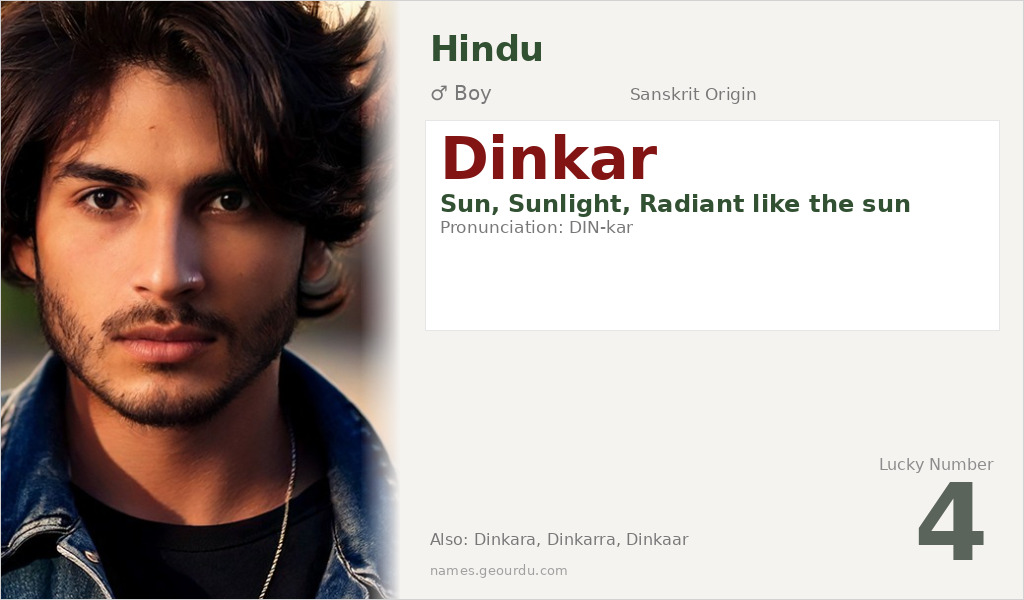
| 📛 Name | Dinkar |
| 💎 Meaning | Sun, Sunlight, Radiant like the sun |
| 👤 Gender | Boy |
| 🕌 Religion | Hindu |
| 🌍 Origin | Sanskrit |
| 🗣 Pronunciation | DIN-kar |
| ✍️ Urdu | دنکر |
| ✍️ Arabic | دينكار |
| 🔢 Numerology | 4 |
| ✨ Spellings | Dinkara, Dinkarra, Dinkaar |
Origin & Cultural Significance
Dinkar has its roots in ancient Sanskrit language and Hindu culture, where solar deities hold significant spiritual importance. The name appears in classical Indian literature and has been used for centuries in the Indian subcontinent. While primarily associated with Hindu tradition, the name’s Sanskrit origin makes it accessible across various Indian languages and communities. Notable bearers like poet Ramdhari Singh Dinkar have contributed to the name’s cultural prominence in modern times. The name reflects the enduring importance of celestial symbolism in South Asian naming traditions.
Personality Traits
Names often carry symbolic associations, and Dinkar’s solar meaning suggests personality traits of warmth, leadership, and vitality. Those named Dinkar might be perceived as natural leaders who bring light and clarity to situations. The name’s energetic connotations align with characteristics of optimism, strength, and the ability to inspire others. While personality varies individually, the name’s etymology connects to positive solar attributes across cultures.
Similar Names
If you like Dinkar, consider: Surya, Ravi, Bhanu, Arun, Aditya
Famous People Named Dinkar
- Ramdhari Singh Dinkar — Renowned Hindi poet and essayist, known as 'Rashtrakavi' (National Poet) of India
- Dinkar G. Kelkar — Indian historian and museum director who established the Raja Dinkar Kelkar Museum in Pune
Frequently Asked Questions About Dinkar
What does Dinkar mean?
Dinkar means 'sun' or 'maker of day' in Sanskrit, derived from 'din' (day) and 'kar' (maker).
Is Dinkar a boy or girl name?
Dinkar is traditionally a masculine name used for boys in Hindu and Indian cultural contexts.
What is the origin of Dinkar?
Dinkar originates from Sanskrit language and Hindu cultural tradition, with documented usage in classical Indian literature.





