
Table of Contents
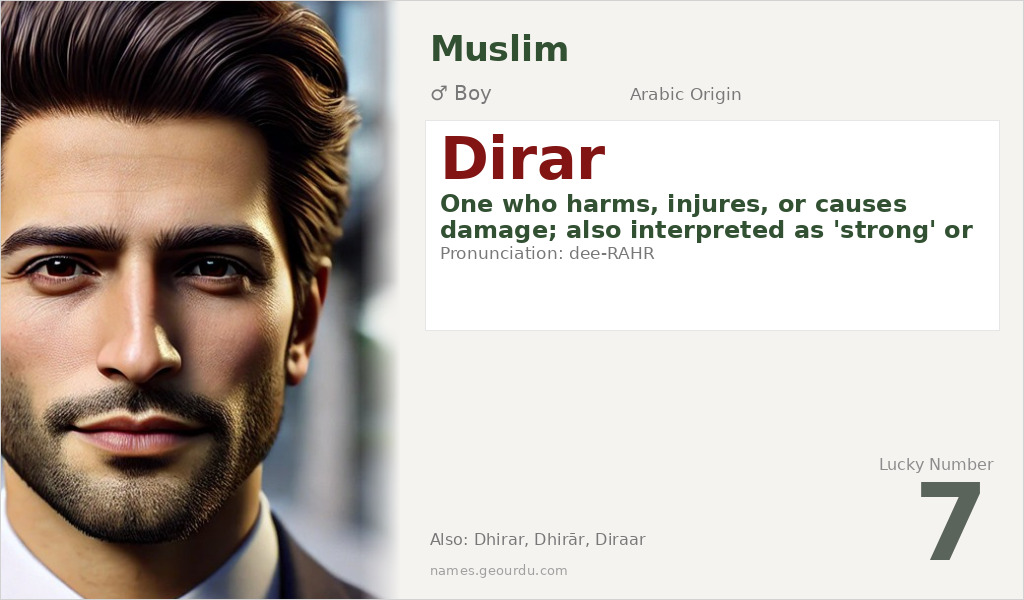
Dirar is a distinctive Arabic name with deep historical roots in early Islamic tradition. While its literal meaning relates to causing harm, it has been embraced for centuries as a name symbolizing strength and martial prowess. Most famously borne by Dirar ibn al-Azwar, a companion of Prophet Muhammad and legendary warrior, this name carries connotations of courage and resilience. Today, it remains a meaningful choice for parents seeking a name with authentic Islamic heritage and powerful symbolism.
Meaning of Dirar
Dirar originates from the Arabic root ‘ḍ-r-r’ (ض-ر-ر), which conveys meanings related to harm, injury, or damage. The verb ‘ḍarra’ means ‘to harm’ or ‘to injure,’ making Dirar literally translate as ‘one who causes harm.’ In the context of personal names, this meaning has been reinterpreted positively to signify strength, power, and the ability to overcome adversaries. Historically, the name appears in pre-Islamic Arabic poetry and was adopted into early Islamic culture, where it gained prestige through notable bearers. The semantic shift from literal ‘harm-causer’ to metaphorical ‘strong warrior’ reflects how naming traditions often emphasize desirable qualities over literal dictionary definitions.
| 📛 Name | Dirar |
| 💎 Meaning | One who harms, injures, or causes damage; also interpreted as 'strong' or 'powerful' in some contexts |
| 👤 Gender | Boy |
| 🕌 Religion | Muslim |
| 🌍 Origin | Arabic |
| 🗣 Pronunciation | dee-RAHR |
| ✍️ Urdu | ضرار |
| ✍️ Arabic | ضِرَار |
| 🔢 Numerology | 7 |
| ✨ Spellings | Dhirar, Dhirār, Diraar, Dhirrar |
Origin & Cultural Significance
Dirar has its origins in classical Arabic language and culture, predating Islam but gaining significant prominence during the early Islamic period. The name is most famously associated with Dirar ibn al-Azwar, a companion of Prophet Muhammad from the Asad tribe who distinguished himself as a formidable warrior during the Ridda wars and early Muslim conquests. His legendary exploits, particularly in battles against the Byzantine and Sassanian empires, elevated the name’s status in Arab and Islamic history. While primarily used in Arabic-speaking communities, the name has spread to various Muslim cultures through historical and religious texts. It remains relatively rare today but retains cultural significance as a name with authentic historical roots and warrior connotations.
Personality Traits
Those named Dirar are often associated with qualities of strength, determination, and protective instincts. The name’s historical warrior connections suggest a personality that faces challenges with courage and resilience. While potentially strong-willed and direct, individuals with this name may also demonstrate loyalty and commitment to their values and communities. The name encourages a balance between inner strength and responsible use of power.
Similar Names
If you like Dirar, consider: Dhiraar, Dhira, Darar, Dara, Dira, Zirar, Qatada, Amr, Khalid, Sa'd
Famous People Named Dirar
- Dirar ibn al-Azwar — Companion of Prophet Muhammad, renowned warrior and military commander during the early Islamic conquests, known for his bravery and fighting skills
- Dirar ibn Amr — Early Islamic theologian and scholar from the 8th century, associated with the Mu'tazilite school of thought
Frequently Asked Questions About Dirar
What does Dirar mean?
Dirar means 'one who harms' or 'causes damage' in Arabic, derived from the root 'ḍarra.' In naming contexts, it's often interpreted as 'strong' or 'powerful,' reflecting its historical association with warriors.
Is Dirar a boy or girl name?
Dirar is exclusively a boy's name in Arabic and Islamic naming traditions. There are no recorded feminine variants or usage as a girl's name in historical or contemporary sources.
What is the origin of Dirar?
Dirar originates from classical Arabic language and culture. It gained prominence in early Islamic history through famous bearers like Dirar ibn al-Azwar, a companion of Prophet Muhammad and renowned military commander.





