
Table of Contents
Dirghayu is a profound Sanskrit name that carries the beautiful meaning of ‘long-lived’ or ‘having long life’. Rooted in ancient Hindu tradition, this name appears in Vedic and Puranic literature, often associated with wisdom and endurance. Unlike many modern names, Dirghayu maintains its classical linguistic structure while remaining relevant today. This guide explores the complete etymology, cultural context, and contemporary usage of this meaningful name.
Meaning of Dirghayu
Dirghayu is a compound Sanskrit name with precise linguistic components. The first element ‘dirgha’ (दीर्घ) comes from the Proto-Indo-European root *dlongʰos, related to words meaning ‘long’ in many Indo-European languages including Greek ‘dolikhos’ and Latin ‘longus’. The second element ‘āyu’ (आयु) derives from the Sanskrit root ‘ay’ meaning ‘to go, to live’, cognate with Latin ‘aevum’ (age) and Greek ‘aiōn’ (lifetime). Together, they form a bahuvrīhi compound—a grammatical construction where the combined words describe a possessed quality. Thus, Dirghayu literally means ‘one who has long life’, not merely ‘long life’ as a concept. This construction appears in numerous Sanskrit names and epithets, particularly in Vedic literature where longevity was highly valued.
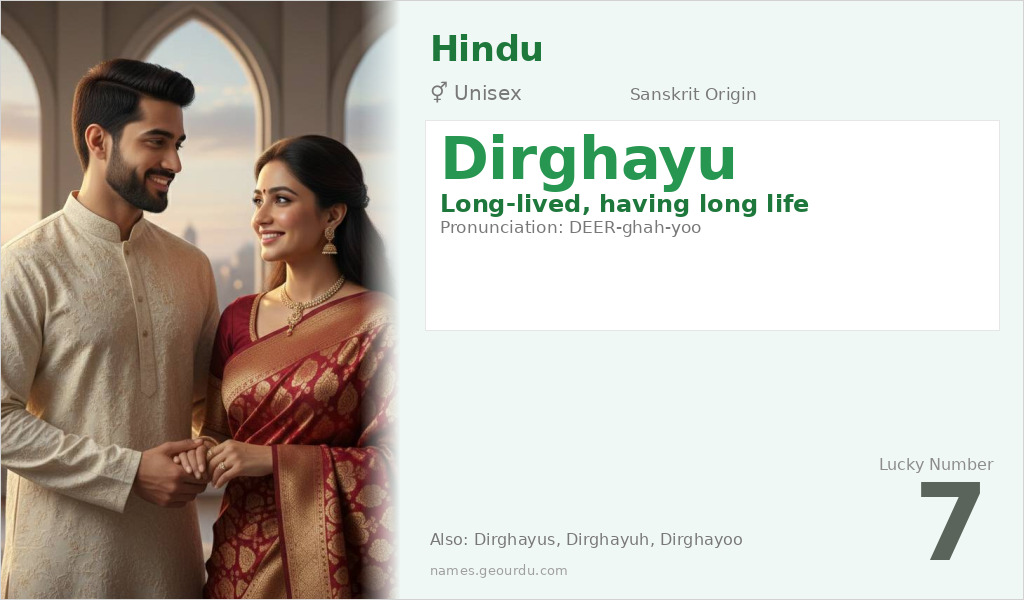
| 📛 Name | Dirghayu |
| 💎 Meaning | Long-lived, having long life |
| 👤 Gender | Unisex |
| 🕌 Religion | Hindu |
| 🌍 Origin | Sanskrit |
| 🗣 Pronunciation | DEER-ghah-yoo |
| ✍️ Urdu | درگھایو |
| ✍️ Arabic | ديرغايُو |
| 🔢 Numerology | 7 |
| ✨ Spellings | Dirghayus, Dirghayuh, Dirghayoo, Dīrghāyu |
Origin & Cultural Significance
Dirghayu originates from classical Sanskrit, the liturgical language of Hinduism, Buddhism, and Jainism. The name appears in ancient Indian texts including the Mahabharata, Puranas, and various Vedic commentaries. In Hindu tradition, names containing ‘āyu’ (life) were often given with the hope that the child would enjoy health and longevity. While primarily associated with Hindu culture, the name’s Sanskrit roots mean it could theoretically be used by anyone appreciating its linguistic heritage. Historically, Dirghayu appears as both a personal name and an epithet for deities and sages known for their extended lifespans or enduring legacies. The name reflects the ancient Indian value placed on longevity as a blessing and virtue.
Personality Traits
The meaning ‘long-lived’ naturally associates Dirghayu with qualities of endurance, patience, and resilience. Those bearing this name are often thought to possess a calm, steady demeanor and the ability to persevere through challenges. They may approach life with thoughtful consideration rather than impulsiveness, valuing lasting achievements over temporary successes. The name’s ancient roots also suggest a connection to tradition, wisdom, and cultural heritage.
Similar Names
If you like Dirghayu, consider: Dirghatamas, Dirghajihvi, Ayushman, Chiranjeevi, Dhirgha
Famous People Named Dirghayu
- Dirghayu — A sage mentioned in the Mahabharata and Puranic literature, known for his longevity and wisdom
- Dirghayu — A minor character in ancient Hindu texts, sometimes associated with the Ashvins or medicinal knowledge
Frequently Asked Questions About Dirghayu
What does Dirghayu mean?
Dirghayu means 'long-lived' or 'having long life' in Sanskrit. It is a compound of 'dirgha' (long) and 'āyu' (life), forming a possessive construction meaning 'one who possesses long life'.
Is Dirghayu a boy or girl name?
Dirghayu is a unisex name in Sanskrit tradition, though it appears more frequently for boys in historical Hindu texts. In modern usage, it can be given to children of any gender.
What is the origin of Dirghayu?
Dirghayu originates from Sanskrit, the classical language of ancient India. It appears in Hindu scriptures like the Mahabharata and Puranas, reflecting the cultural value placed on longevity and enduring qualities.