Table of Contents
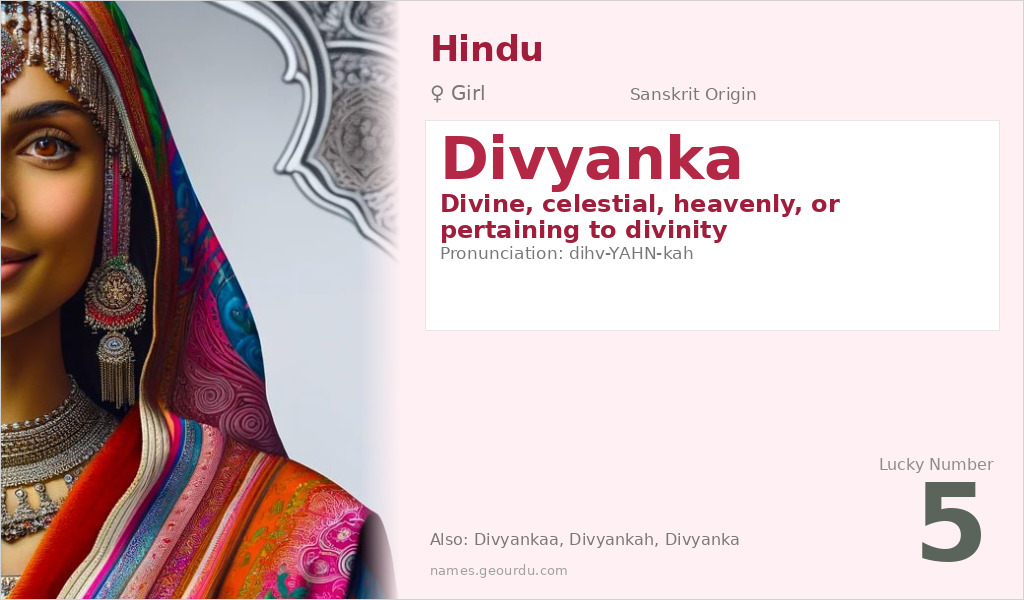
Divyanka is a beautiful and spiritually resonant name of Sanskrit origin, meaning ‘divine’ or ‘celestial.’ Primarily used for girls in Hindu communities, it evokes images of purity, sacredness, and heavenly grace. This name has gained popularity in India and among the diaspora, often chosen for its deep cultural and religious roots. In this guide, we explore the etymology, significance, and modern usage of Divyanka.
Meaning of Divyanka
Divyanka derives from the Sanskrit root ‘divya’ (दिव्य), which translates to ‘divine,’ ‘celestial,’ ‘heavenly,’ or ‘resplendent.’ The suffix ‘-anka’ is a common Sanskrit formative used to create feminine names, adding a sense of endearment or diminutiveness, akin to ‘little divine one.’ In ancient Indian texts like the Vedas and Puranas, ‘divya’ describes gods, divine beings, and sacred phenomena, emphasizing qualities of brilliance and holiness. Linguistically, it shares roots with other Indo-European words related to light and sky, such as the Latin ‘divus’ (god) and Greek ‘dios’ (divine). Thus, Divyanka carries a profound spiritual meaning, symbolizing connection to the divine realm and inherent purity.
| 📛 Name | Divyanka |
| 💎 Meaning | Divine, celestial, heavenly, or pertaining to divinity |
| 👤 Gender | Girl |
| 🕌 Religion | Hindu |
| 🌍 Origin | Sanskrit |
| 🗣 Pronunciation | dihv-YAHN-kah |
| ✍️ Urdu | دیویانکا |
| ✍️ Arabic | ديفيانكا |
| 🔢 Numerology | 5 |
| ✨ Spellings | Divyankaa, Divyankah, Divyanka |
Origin & Cultural Significance
Originating from Sanskrit, an ancient Indo-Aryan language of India, Divyanka is deeply embedded in Hindu culture and religious traditions. Sanskrit has been the liturgical language of Hinduism for millennia, and names like Divyanka reflect its rich spiritual vocabulary. The name is predominantly used in India, Nepal, and among Hindu communities worldwide, often chosen for girls to invoke divine blessings and virtues. Historically, Sanskrit names were popularized through religious scriptures and epics, and Divyanka continues this tradition, symbolizing celestial beauty and sanctity. Its usage has expanded in modern times through media and famous personalities, maintaining its cultural relevance.
Personality Traits
Those named Divyanka are often associated with traits like spirituality, intuition, and compassion, reflecting the name’s divine meaning. They may possess a calm, reflective nature and a strong moral compass, inspiring trust and admiration in others. Creativity and a love for harmony are common, making them artistic or peace-loving individuals. Overall, the name suggests a personality that seeks higher meaning and connection, embodying grace and inner strength.
Similar Names
If you like Divyanka, consider: Divya, Divyani, Divyanshi, Divyansha, Divyansh
Famous People Named Divyanka
- Divyanka Tripathi — Indian television actress known for roles in shows like 'Yeh Hai Mohabbatein'
- Divyanka Kaushik — Indian model and actress who appeared in the film 'Good Newwz'
Frequently Asked Questions About Divyanka
What does Divyanka mean?
Divyanka means 'divine,' 'celestial,' or 'heavenly,' derived from the Sanskrit word 'divya' with the feminine suffix '-anka.'
Is Divyanka a boy or girl name?
Divyanka is primarily a girl's name in Hindu culture, though its root 'divya' can be unisex; the '-anka' ending typically feminizes it.
What is the origin of Divyanka?
Divyanka originates from Sanskrit, an ancient Indian language, and is closely associated with Hindu religious and cultural traditions.