
Table of Contents
Duldul is a distinctive Arabic name with deep roots in Islamic history and tradition. Unlike most names that describe human qualities, Duldul refers to a specific historical animal – the loyal mule of Prophet Muhammad and later his grandson Imam Husain. This name carries unique cultural and religious significance within Muslim communities, particularly among those who honor Islamic historical figures. Choosing Duldul connects a child to an important chapter in Islamic heritage.
Meaning of Duldul
Duldul is an Arabic name that specifically denotes the mule owned by Prophet Muhammad, which he later gifted to his beloved grandson Imam Husain ibn Ali. The name doesn’t have a conventional lexical meaning in Arabic dictionaries but is historically documented as the proper name of this significant animal. In Islamic tradition, particularly within Shia Islam, Duldul is revered for its service and loyalty, having carried both Prophet Muhammad and Imam Husain at different times. The name gained prominence through historical accounts and religious narratives that celebrate the mule’s role. While some regional interpretations in South Asia have associated the name with strength and endurance, its primary meaning remains tied to this specific historical figure in Islamic tradition.
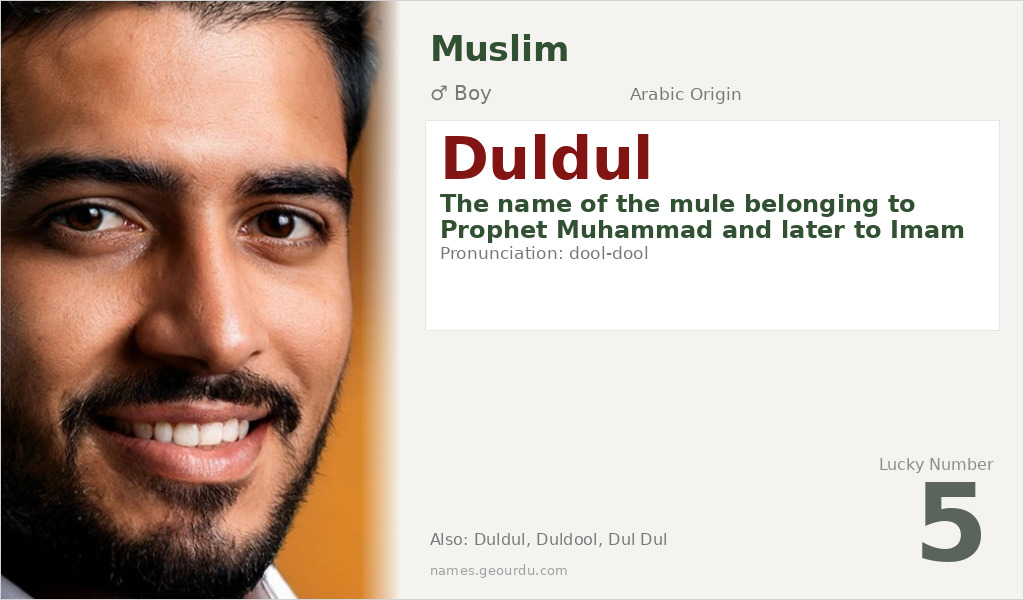
| 📛 Name | Duldul |
| 💎 Meaning | The name of the mule belonging to Prophet Muhammad and later to Imam Husain, known for its loyalty and service |
| 👤 Gender | Boy |
| 🕌 Religion | Muslim |
| 🌍 Origin | Arabic |
| 🗣 Pronunciation | dool-dool |
| ✍️ Urdu | دلدل |
| ✍️ Arabic | دلدل |
| 🔢 Numerology | 5 |
| ✨ Spellings | Duldul, Duldool, Dul Dul |
Origin & Cultural Significance
Duldul originates from Arabic and Islamic history, specifically from 7th century Arabia during the time of Prophet Muhammad. The name is deeply embedded in Islamic tradition and is particularly significant in Shia Muslim communities where the legacy of Imam Husain is profoundly honored. Historical accounts describe Duldul as a mule (not a horse as sometimes mistakenly reported) that was among the possessions of Prophet Muhammad. After the Prophet’s passing, the mule was inherited by Imam Husain and accompanied him during important events, including the journey to Karbala. The name continues to be used primarily in Muslim communities across the Middle East, South Asia, and among diaspora populations who maintain connections to Islamic historical traditions.
Personality Traits
Those named Duldul are often associated with qualities of loyalty, resilience, and steadfastness, reflecting the characteristics of the historical mule they’re named after. The name suggests a person who is reliable in difficult circumstances and maintains commitment to their principles. In cultural context, bearing this name may indicate a family’s respect for Islamic history and values of service and dedication. The historical significance of the name adds a layer of spiritual and cultural depth to the personality attributes.
Similar Names
If you like Duldul, consider: Buraq, Zuljanah, Asfar, Raksh, Faras
Famous People Named Duldul
- Duldul – The historical mule of Prophet Muhammad and Imam Husain, celebrated in Islamic tradition for its service and loyalty
- Various individuals in Muslim communities, particularly in South Asia and Middle East, who bear this name honoring the historical figure
Frequently Asked Questions About Duldul
What does Duldul mean?
Duldul is the name of the mule that belonged to Prophet Muhammad and was later gifted to his grandson Imam Husain. It's an Arabic name with specific historical significance in Islamic tradition rather than a conventional lexical meaning.
Is Duldul a boy or girl name?
Duldul is exclusively a boy's name in Muslim naming traditions. It's never used for girls due to its historical association with male figures in Islamic history and the cultural context of the name.
What is the origin of Duldul?
Duldul originates from Arabic and Islamic history, specifically referring to the mule of Prophet Muhammad from 7th century Arabia. The name is deeply rooted in Muslim tradition and is particularly significant in Shia Islamic communities.





