Table of Contents
Durba is a beautiful and spiritually significant name of Sanskrit origin, primarily used for girls in Hindu communities. Meaning ‘sacred grass,’ it carries deep religious symbolism connected to purity and auspiciousness. The name evokes images of the dūrvā grass used in Hindu rituals, particularly in worship of Lord Ganesha. With its gentle sound and profound meaning, Durba represents a connection to nature and divine traditions.
Meaning of Durba
Durba originates from the Sanskrit word ‘dūrvā’ (दूर्वा), which specifically refers to Bermuda grass or Bahama grass (Cynodon dactylon). In Hindu tradition, this grass is considered sacred and is used in various religious ceremonies, especially those dedicated to Lord Ganesha. The name literally translates to ‘sacred grass’ or ‘holy grass,’ carrying connotations of purity, auspiciousness, and spiritual connection. The dūrvā grass is mentioned in ancient Sanskrit texts and is valued for its resilience and evergreen nature, symbolizing eternal life and prosperity. As a name, Durba preserves this botanical and religious significance, making it a meaningful choice for parents seeking a name with spiritual depth.
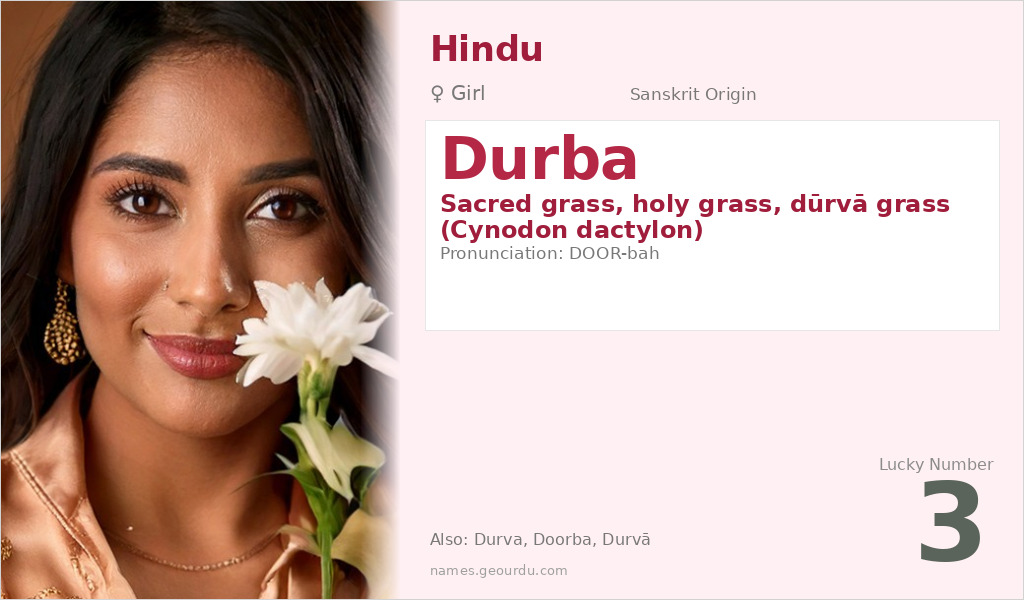
| 📛 Name | Durba |
| 💎 Meaning | Sacred grass, holy grass, dūrvā grass (Cynodon dactylon) |
| 👤 Gender | Girl |
| 🕌 Religion | Hindu |
| 🌍 Origin | Sanskrit |
| 🗣 Pronunciation | DOOR-bah |
| ✍️ Urdu | دربا |
| ✍️ Arabic | دوربا |
| 🔢 Numerology | 3 |
| ✨ Spellings | Durva, Doorba, Durvā, Durbā |
Origin & Cultural Significance
Durba has its roots in ancient Sanskrit, the classical language of India, and has been adopted into various Indian languages including Bengali, Hindi, and others. The name is primarily used within Hindu communities, reflecting the religious importance of dūrvā grass in Hindu rituals. Historically, the grass has been used in ceremonies for centuries, mentioned in Vedic texts and associated with deities like Ganesha and Vishnu. While the name is most common in India and among the Indian diaspora, its usage remains relatively traditional rather than widespread. The cultural context emphasizes purity, ritual significance, and connection to nature, making it a name with deep traditional roots.
Personality Traits
Those named Durba are often perceived as gentle, spiritual, and deeply connected to their cultural heritage. The sacred grass symbolism suggests qualities of resilience, purity, and a calming presence. They may value tradition, family rituals, and have a natural affinity for nature and simplicity. Their personality often reflects the auspicious and grounding energy associated with their name’s meaning.
Similar Names
If you like Durba, consider: Durga, Dhara, Divya, Daksha, Drishti
Famous People Named Durba
- Durba Basu — Indian classical dancer and choreographer
- Durba Mitra — Indian academic and historian
Frequently Asked Questions About Durba
What does Durba mean?
Durba means 'sacred grass' or 'holy grass,' specifically referring to dūrvā grass (Cynodon dactylon) used in Hindu rituals. It originates from the Sanskrit word 'dūrvā' (दूर्वा).
Is Durba a boy or girl name?
Durba is primarily a girl's name in Hindu naming traditions, though names can sometimes be used across genders depending on regional practices.
What is the origin of Durba?
Durba originates from Sanskrit, the classical language of India, and is used within Hindu communities. It specifically comes from the word for sacred grass used in religious ceremonies.