
Table of Contents
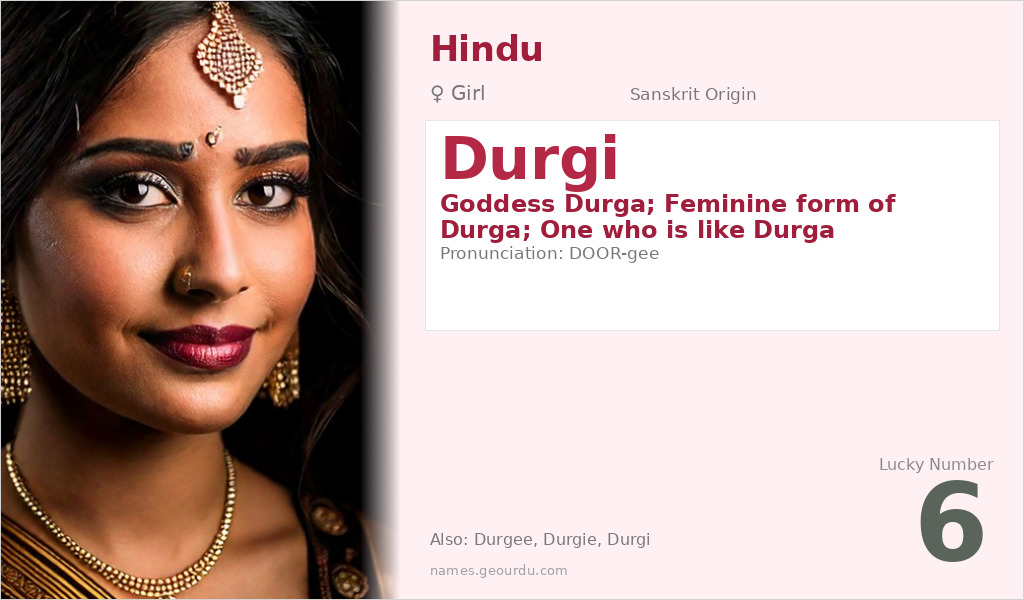
Durgi is a beautiful and powerful Hindu girl name deeply rooted in Sanskrit tradition and goddess worship. Derived from the name of the formidable Goddess Durga, it carries connotations of strength, protection, and divine femininity. This name has been cherished across various Indian communities, particularly in regions with strong Shakti (goddess) traditions. Parents choosing Durgi often seek to imbue their daughter with the qualities of resilience and spiritual grace.
Meaning of Durgi
Durgi originates from the Sanskrit word ‘Durga,’ which means ‘the inaccessible one’ or ‘the invincible one.’ The suffix ‘-i’ is a common feminine marker in Sanskrit, making Durgi essentially mean ‘feminine form of Durga’ or ‘one who is like Durga.’ In Hindu theology, Durga is the warrior goddess who combats evil and protects the universe, symbolizing power (shakti) and righteousness. The name Durgi thus inherits these divine attributes, representing protection, strength, and victory. Linguistically, it’s part of a broader category of Sanskrit names ending in ‘-i’ that denote feminine forms or associations, such as Lakshmi or Saraswati. The name appears in various regional adaptations across India, maintaining its core connection to the goddess.
| 📛 Name | Durgi |
| 💎 Meaning | Goddess Durga; Feminine form of Durga; One who is like Durga |
| 👤 Gender | Girl |
| 🕌 Religion | Hindu |
| 🌍 Origin | Sanskrit |
| 🗣 Pronunciation | DOOR-gee |
| ✍️ Urdu | درگی |
| ✍️ Arabic | دورغي |
| 🔢 Numerology | 6 |
| ✨ Spellings | Durgee, Durgie, Durgi |
Origin & Cultural Significance
Durgi has its origins in ancient Sanskrit, the classical language of Hinduism, and is primarily associated with Hindu culture and religion. It emerged as a devotional name reflecting the widespread worship of Goddess Durga, particularly in regions like Bengal, Odisha, and South India where Durga Puja is a major festival. Historically, the name has been used in both mythological contexts and by real individuals, often in families with strong Shakta (goddess-worshipping) traditions. While less common than ‘Durga’ itself, Durgi represents a more personalized or affectionate form of the goddess’s name. The name has also been adapted into various Indian languages and scripts, maintaining its religious significance across different communities.
Personality Traits
Those named Durgi are often seen as embodying the qualities of their namesake goddess—strong-willed, protective, and spiritually aware. They may exhibit leadership qualities combined with a nurturing nature, balancing power with empathy. In social settings, they tend to be respected for their determination and ability to overcome obstacles, much like Durga’s mythological victories. Their personality often reflects a deep connection to cultural roots and a sense of responsibility toward others.
Similar Names
If you like Durgi, consider: Durga, Durgapriya, Durgavati, Durgadas, Durgabai
Famous People Named Durgi
- Durgi Bai — Indian freedom fighter and social reformer from Andhra Pradesh
- Durgi Devi — Character in Hindu mythology and regional folklore
Frequently Asked Questions About Durgi
What does Durgi mean?
Durgi means 'Goddess Durga' or 'feminine form of Durga' in Sanskrit, referring to the Hindu goddess of power and protection.
Is Durgi a boy or girl name?
Durgi is exclusively a girl name, as it's the feminine form of Durga and is used for females in Hindu naming traditions.
What is the origin of Durgi?
Durgi originates from Sanskrit and Hindu culture, derived from the name of Goddess Durga, with roots in ancient Indian religious texts and traditions.





