
Table of Contents
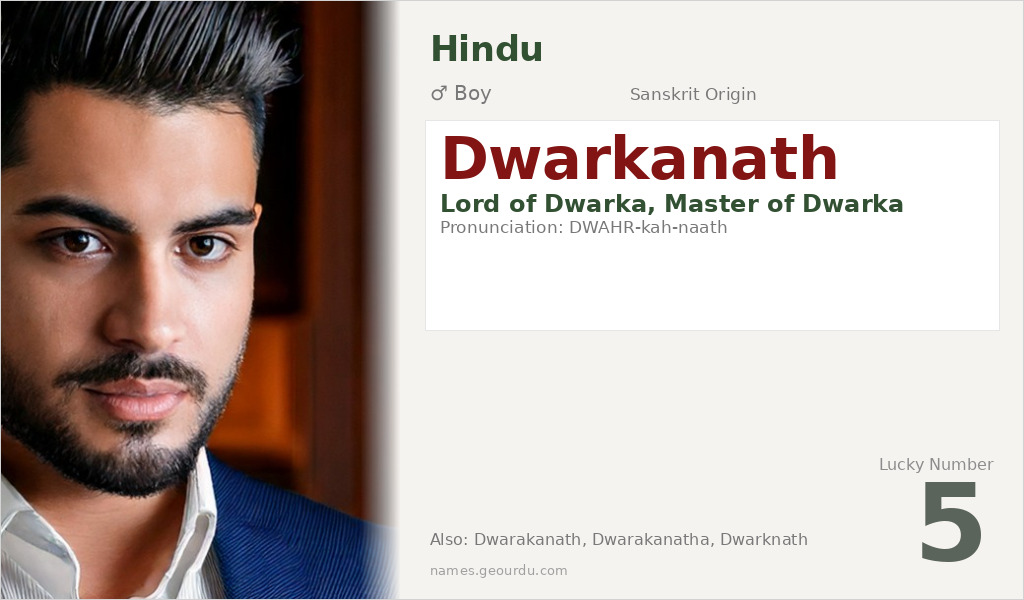
Dwarkanath is a profound and historically rich name rooted in Hindu mythology and Sanskrit tradition. Meaning ‘Lord of Dwarka’, it directly references Lord Krishna and the sacred city of Dwarka, embodying themes of divinity, protection, and sovereignty. This name has been borne by notable figures in Indian history, blending spiritual depth with cultural heritage. Explore the fascinating origins and meanings behind Dwarkanath in this comprehensive guide.
Meaning of Dwarkanath
Dwarkanath is a Sanskrit compound name derived from ‘Dwarka’ and ‘nath’. ‘Dwarka’ (द्वारका) translates to ‘gateway’ or ‘door’, symbolizing the ancient city in Gujarat that serves as a spiritual portal in Hinduism, famously associated with Lord Krishna’s kingdom. ‘Nath’ (नाथ) means ‘lord’, ‘master’, or ‘protector’, a common suffix in Indian names denoting authority and reverence. Together, Dwarkanath literally means ‘Lord of Dwarka’, specifically identifying Krishna as the ruler of that sacred city. This name is deeply embedded in Hindu texts like the Mahabharata and Puranas, where Dwarka is depicted as Krishna’s capital. Linguistically, it showcases the classical Sanskrit tradition of combining geographic and honorific elements to create meaningful, devotional names.
| 📛 Name | Dwarkanath |
| 💎 Meaning | Lord of Dwarka, Master of Dwarka |
| 👤 Gender | Boy |
| 🕌 Religion | Hindu |
| 🌍 Origin | Sanskrit |
| 🗣 Pronunciation | DWAHR-kah-naath |
| ✍️ Urdu | دوارکاناتھ |
| ✍️ Arabic | دواركاناث |
| 🔢 Numerology | 5 |
| ✨ Spellings | Dwarakanath, Dwarakanatha, Dwarknath |
Origin & Cultural Significance
Originating from Sanskrit, Dwarkanath has its roots in ancient Hindu scriptures and mythology, particularly linked to the life of Lord Krishna, who established Dwarka as his capital city. The name gained cultural prominence in India, especially among Hindu communities in regions like Gujarat, Bengal, and Maharashtra, where Krishna worship is prevalent. Historically, it has been used for both religious figures and laypersons, reflecting a blend of spiritual devotion and cultural identity. In modern times, Dwarkanath remains a respected name, often chosen for its strong historical and religious connotations, symbolizing a connection to India’s rich heritage and Vedic traditions.
Personality Traits
Those named Dwarkanath are often perceived as natural leaders with a protective and nurturing demeanor, inspired by the name’s association with Lord Krishna’s guardianship. They may possess a charismatic and creative spirit, coupled with a deep respect for tradition and spirituality. This name suggests qualities of resilience, wisdom, and a strong sense of community, making individuals bearing it likely to be influential and respected in their circles.
Similar Names
If you like Dwarkanath, consider: Krishna, Govinda, Gopinath, Jagannath, Vishwanath
Famous People Named Dwarkanath
- Dwarkanath Tagore (1794–1846) — Indian entrepreneur and philanthropist, grandfather of Rabindranath Tagore, known for his contributions to Bengal Renaissance and social reform
- Dwarkanath Kotnis (1910–1942) — Indian physician who served in China during the Second Sino-Japanese War, honored as a hero in both India and China
Frequently Asked Questions About Dwarkanath
What does Dwarkanath mean?
Dwarkanath means 'Lord of Dwarka' in Sanskrit, specifically referring to Lord Krishna as the ruler of the sacred city of Dwarka in Hindu mythology.
Is Dwarkanath a boy or girl name?
Dwarkanath is traditionally a boy name in Hindu culture, derived from masculine Sanskrit roots and associated with male deities like Krishna.
What is the origin of Dwarkanath?
Dwarkanath originates from Sanskrit, an ancient Indian language, and is deeply rooted in Hindu mythology and the cultural history of India, particularly linked to Lord Krishna and the city of Dwarka.





