Table of Contents
Edelburga is a distinguished Germanic name with deep historical roots in early medieval Europe. Meaning ‘noble fortress’ or ‘noble protection’, this name carries the weight of aristocratic heritage combined with defensive strength. Once popular among Frankish and Anglo-Saxon nobility, Edelburga offers a connection to a time when names conveyed both social status and protective qualities. Today, it remains a unique choice for parents seeking a name with historical depth and noble connotations.
Meaning of Edelburga
Edelburga derives from two Old High German elements that together create a meaningful compound name. The first element ‘edel’ (also appearing as ‘adal’ or ‘æðel’ in related Germanic languages) means ‘noble’ or ‘aristocratic’, indicating high social standing or virtuous character. The second element ‘burg’ means ‘fortress’, ‘stronghold’, or ‘protection’, representing security and defense. This combination creates the literal meaning ‘noble fortress’, though it’s often interpreted more broadly as ‘noble protection’. The name follows a common Germanic naming pattern where two meaningful elements combine to create a name with aspirational qualities. Similar compound names with ‘burg’ elements include Brunhilda (‘armored warrior woman’) and Hildeburg (‘battle fortress’).
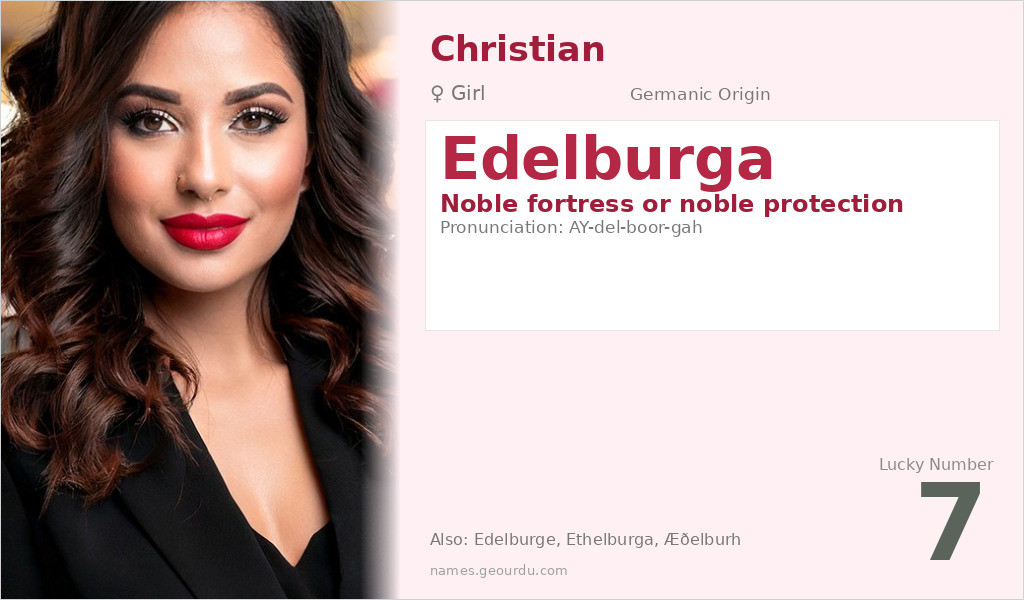
| 📛 Name | Edelburga |
| 💎 Meaning | Noble fortress or noble protection |
| 👤 Gender | Girl |
| 🕌 Religion | Christian |
| 🌍 Origin | Germanic |
| 🗣 Pronunciation | AY-del-boor-gah |
| ✍️ Urdu | ایڈلبرگا |
| ✍️ Arabic | إيدلبورغا |
| 🔢 Numerology | 7 |
| ✨ Spellings | Edelburge, Ethelburga, Æðelburh, Eadburh |
Origin & Cultural Significance
Edelburga originated among Germanic tribes during the early medieval period, particularly among the Franks and Anglo-Saxons between the 6th and 11th centuries. The name was part of a broader tradition of compound names that reflected desirable qualities in Germanic society, where nobility and protective strength were highly valued. Several historical figures bore variations of this name, most notably Saint Ethelburga of Barking, a 7th-century Anglo-Saxon abbess venerated in the Christian tradition. The name’s usage declined after the Norman Conquest but experienced occasional revivals during historical interest in medieval names. As a Germanic name adopted by Christian communities, it represents the blending of pre-Christian Germanic naming traditions with later Christian cultural contexts.
Personality Traits
Those named Edelburga are often associated with strength, dignity, and protective instincts. The name’s meaning suggests someone who combines noble character with practical defensive capabilities—someone who stands firm in their principles while safeguarding what matters most. Historically, bearers of this name were often leaders or figures of authority, suggesting natural leadership qualities. The fortress element implies resilience and stability, while the noble aspect points to ethical standards and social grace.
Similar Names
If you like Edelburga, consider: Adelheid, Edith, Brunhilda, Mathilda, Gertrude
Famous People Named Edelburga
- Saint Ethelburga of Barking — 7th century Anglo-Saxon abbess and saint, sister of Saint Erconwald
- Ethelburga of Kent — 7th century queen of Northumbria, daughter of King Æthelberht of Kent
Frequently Asked Questions About Edelburga
What does Edelburga mean?
Edelburga means 'noble fortress' or 'noble protection' in Old High German, combining 'edel' (noble) and 'burg' (fortress, protection).
Is Edelburga a boy or girl name?
Edelburga is exclusively a feminine name with historical usage as a girl's name in Germanic cultures, particularly among Franks and Anglo-Saxons.
What is the origin of Edelburga?
Edelburga originates from Old High German and was used by Germanic tribes during the early medieval period, with particular prevalence in Frankish and Anglo-Saxon societies before the Norman Conquest.