Table of Contents
Eglantine is a beautiful, botanical name with centuries of literary and cultural heritage. Derived from the sweetbrier rose, this name evokes images of wild beauty, natural elegance, and timeless charm. While not common today, Eglantine carries a distinctive floral quality that appeals to parents seeking nature-inspired names with historical depth. From medieval literature to modern usage, this name maintains its connection to the natural world.
Meaning of Eglantine
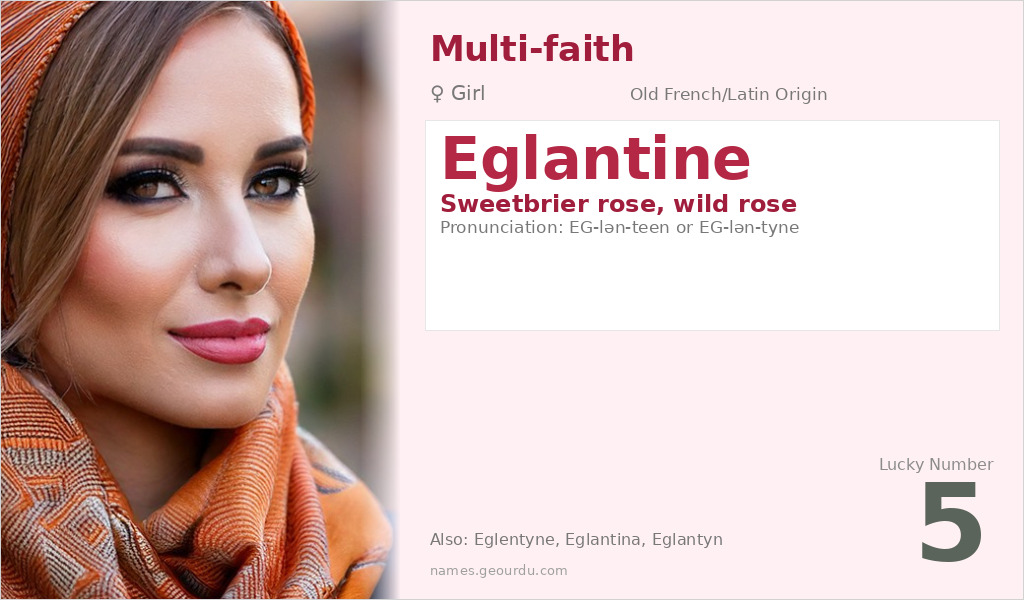
Eglantine has a clear botanical meaning: ‘sweetbrier rose’ or ‘wild rose’. The name traces back to Old French ‘aiglent’, which itself comes from Latin ‘aculentus’ meaning ‘prickly’ or ‘thorny’ — a reference to the rose’s protective thorns. This etymology reflects the name’s direct connection to Rosa eglanteria, a specific species of wild rose known for its sweet fragrance and pink flowers. The name entered English through Anglo-Norman French during the medieval period and has been used as a given name since at least the 14th century. Unlike many names that have evolved or changed meanings over time, Eglantine has maintained its consistent floral association throughout its history.
| 📛 Name | Eglantine |
| 💎 Meaning | Sweetbrier rose, wild rose |
| 👤 Gender | Girl |
| 🕌 Religion | Multi-faith |
| 🌍 Origin | Old French/Latin |
| 🗣 Pronunciation | EG-lən-teen or EG-lən-tyne |
| ✍️ Urdu | ایگلنٹائن |
| ✍️ Arabic | إيجلانتين |
| 🔢 Numerology | 5 |
| ✨ Spellings | Eglentyne, Eglantina, Eglantyn |
Origin & Cultural Significance
Eglantine originated as a common noun in Old French before becoming a given name in English and French contexts. The name appears in Geoffrey Chaucer’s ‘The Canterbury Tales’ (c. 1400) as ‘Eglentyne’, the Prioress’s name, establishing its literary pedigree early. While the name has European origins specifically from French and Latin roots, it has been adopted in various English-speaking cultures without strong religious or cultural exclusivity. The name’s popularity has fluctuated over centuries, experiencing revivals during periods of botanical name trends. Unlike names tied to specific religious traditions, Eglantine’s primary association remains with nature and literature rather than any particular faith community.
Personality Traits
The name Eglantine suggests qualities of natural beauty, resilience, and grace. Like the wild rose it represents, someone with this name might combine delicate appearance with inner strength and protective qualities. The botanical origin implies a connection to nature, growth, and seasonal cycles. Historically, literary associations with the name add layers of sophistication, piety (through Chaucer’s character), and timeless elegance to its personality profile.
Similar Names
If you like Eglantine, consider: Rosalind, Rosemary, Florence, Violet, Lily
Famous People Named Eglantine
- Eglantine Jebb — British social reformer and founder of Save the Children
- Eglantine Price — fictional character from Disney's 'Bedknobs and Broomsticks'
Frequently Asked Questions About Eglantine
What does Eglantine mean?
Eglantine means 'sweetbrier rose' or 'wild rose', derived from Old French 'aiglent' and ultimately from Latin 'aculentus' meaning 'prickly' or 'thorny'.
Is Eglantine a boy or girl name?
Eglantine is exclusively a girl's name, with historical usage as feminine in English, French, and other European naming traditions.
What is the origin of Eglantine?
Eglantine originates from Old French, with roots in Latin, specifically referring to the sweetbrier rose. It entered English through Anglo-Norman French and has been used as a given name since medieval times.