
Table of Contents
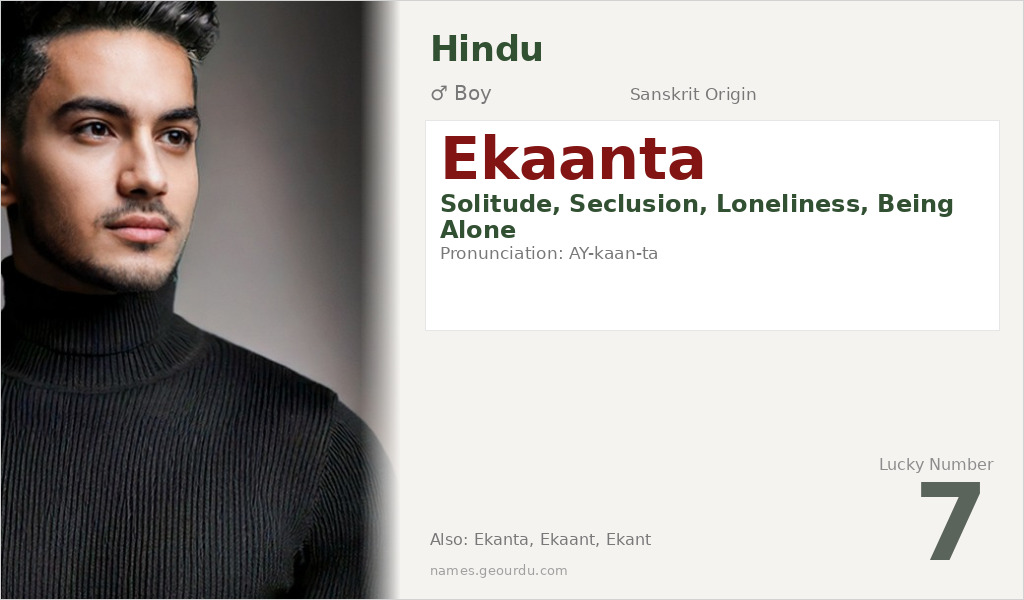
Ekaanta is a profound Sanskrit name that carries deep spiritual resonance in Hindu culture. Meaning ‘solitude’ or ‘seclusion’, this name reflects the value placed on introspection and meditation in Indian philosophical traditions. While uncommon in modern usage, Ekaanta represents an ancient naming tradition connected to spiritual practices. This guide explores the complete etymology, cultural context, and characteristics associated with this meaningful name.
Meaning of Ekaanta
Ekaanta originates from classical Sanskrit, combining ‘eka’ (एक) meaning ‘one, alone, single’ with ‘anta’ (अन्त) meaning ‘end, conclusion, finality’. The compound literally translates to ‘solitary end’ or ‘ultimate solitude’, but carries positive connotations in Hindu philosophy. In religious contexts, it refers to the state of being alone with the divine during meditation or spiritual practice. The name appears in various Hindu texts describing ascetics and spiritual seekers who withdraw from worldly attachments. Unlike modern negative associations with loneliness, Ekaanta represents chosen solitude for higher consciousness.
| 📛 Name | Ekaanta |
| 💎 Meaning | Solitude, Seclusion, Loneliness, Being Alone |
| 👤 Gender | Boy |
| 🕌 Religion | Hindu |
| 🌍 Origin | Sanskrit |
| 🗣 Pronunciation | AY-kaan-ta |
| ✍️ Urdu | ایکانتا |
| ✍️ Arabic | إيكانتا |
| 🔢 Numerology | 7 |
| ✨ Spellings | Ekanta, Ekaant, Ekant |
Origin & Cultural Significance
Ekaanta has its roots in ancient Sanskrit literature and Hindu spiritual traditions dating back over two millennia. The name reflects the importance of solitude (ekantavasa) in Indian ascetic practices, particularly among sadhus and yogis who sought isolation for meditation. While not among the most common Hindu names today, it appears in historical texts and regional naming traditions, especially in areas with strong Sanskrit scholarly heritage. The name carries philosophical weight rather than being tied to specific deities or mythological figures, making it part of a category of Sanskrit names describing spiritual states or qualities.
Personality Traits
Those named Ekaanta often exhibit contemplative and introspective qualities, valuing meaningful solitude over constant social interaction. They tend to be deep thinkers who approach life with philosophical perspective, sometimes appearing reserved but actually possessing rich inner lives. This name suggests someone who finds strength in independence and prefers authentic connections over superficial relationships, with potential for spiritual or creative depth.
Similar Names
If you like Ekaanta, consider: Ekagrata, Ekachandra, Ekadanta, Ekapada, Ekasya
Famous People Named Ekaanta
- Ekanta Das — Indian classical musician specializing in devotional music
- Ekanta Kapoor — Fictional character in Indian television, though not a historical figure
Frequently Asked Questions About Ekaanta
What does Ekaanta mean?
Ekaanta means 'solitude', 'seclusion', or 'loneliness' in Sanskrit, specifically referring to spiritual solitude in Hindu philosophical context.
Is Ekaanta a boy or girl name?
Ekaanta is traditionally a masculine name in Hindu naming conventions, though Sanskrit names can sometimes be adapted across genders in modern usage.
What is the origin of Ekaanta?
Ekaanta originates from Sanskrit, the classical language of ancient India, and is rooted in Hindu spiritual traditions valuing meditation and ascetic practices.





